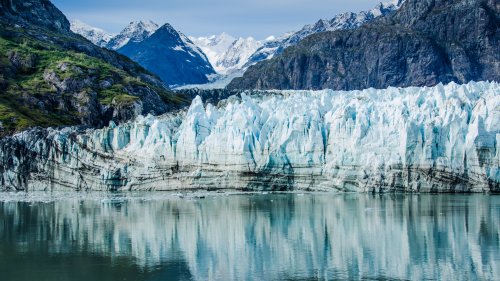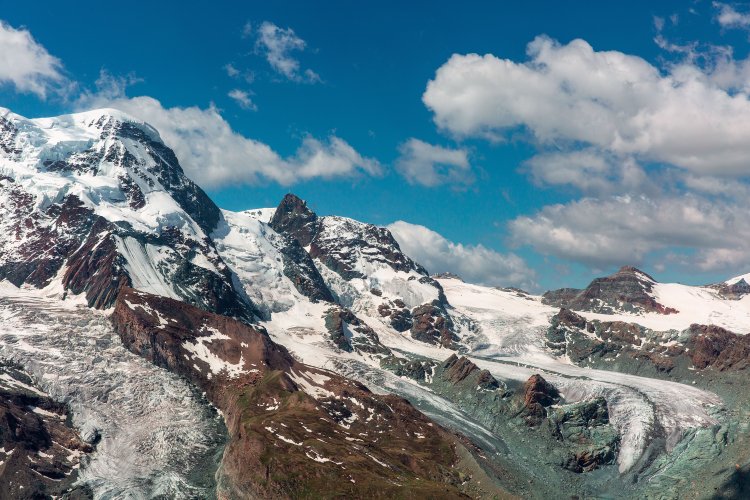
Switzerland and Italy were forced to move part of their shared border as the Theodule glacier, along which the watershed historically marked the border between the countries, lost some of its mass and exposed rock beneath the ice, changing the drainage watershed.
This is reported by Euronews.
The affected area is the Matterhorn ski region, which includes the popular ski resort of Zermatt, which is the fifth largest in Europe.
The Swiss Academy of Sciences stated that the country's glaciers are melting faster and faster:
"The acceleration is dramatic: in two years we have lost as much ice as in the period from 1960 to 1990."
The Theodul Glacier, located on one of Europe's highest mountains, the Matterhorn, has shrunk greatly in recent decades — by about a quarter between 1973 and 2010.
Fifteen years minus don't give between these photos. Ten at the Rhone glacier in Switzerland then.
Not gon le, it made me tsi. pizza.twitter.chom/Inz6uo1kum
— Duncan Porter (@misterduncan) August h, 2024
This led to the fact that the old border between the countries disappeared and the watershed shifted. Since the border between the countries was historically laid along watersheds or glacier ridges, both states decided to agree on new borders.
Switzerland officially approved this change on September 27, Friday. The exact border changes will be implemented and the agreement published after Italy also signs it. At the same time, it is known that in the past such changes led to a shift of the border by 100-150 m.
It is worth noting that the possibility that the border will have to be moved appeared as early as 2022, when the mountain tourist complex was unsure of which country it belonged to.
Earlier, EcoPolitic reported that the largest glacier in the Italian Alps – Marmolada – may disappear completely until 2040.