The Ministry of Economy, Environment, and Agriculture of Ukraine announced the launch of a new international technical assistance project for Ukraine, "Expanded Network of Protected Areas for Biodiversity Conservation and Development."
The ministry cheerfully reported that it "will be aimed at improving biodiversity conservation and increasing the resilience of the Ukrainian Carpathians to climate change as part of the implementation of measures provided for by the Convention on the Protection and Sustainable Development of the Carpathians."
In conjunction with the international technical assistance project, the Ministry of Economy will work on:
- bringing national and regional legislation closer to EU requirements and recommendations;
- ensuring the digitization of supervision and strengthening the institutional capacity of central and regional executive authorities;
- educational work aimed at shaping a new European attitude among Ukrainians towards the use and conservation of natural resources.
Sounds good, doesn't it? Certainly, if you don't know what the situation with the conservation of the unique ecosystems of the Ukrainian Carpathians really is. After all, in practice, the stated goals increasingly diverge from reality.
Business builds without permits, authorities ignore
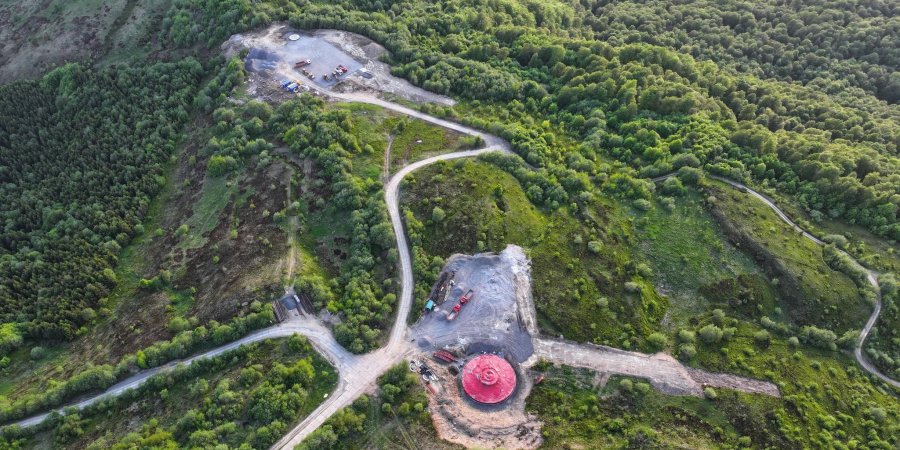
While officials talk about "preserving biodiversity" and "increasing sustainability," in the heart of the Ukrainian Carpathians — on the Runa mountain pasture in Zakarpattia Oblast — the controversial construction of a wind farm continues, which environmentalists and the public call illegal and threatening to one of the last untouched high-mountain areas in the region.
According to environmental organizations and journalistic investigations, despite the lack of environmental impact assessment (EIA) documentation, several foundations for wind turbines have already been poured on the Runa mountain pasture, and the developers — companies belonging to the Wind Parks of Ukraine LLC — plan to install at least seven more.
And what is the reaction of the authorities? The relevant ministry, the prosecutor's office, and the courts are inactive, while other state bodies—the State Environmental Inspection (SEI) and the State Inspection of Architecture and Urban Planning of Ukraine (SIAUP)—are even helping:
-
The Ministry of Economy, like the Ministry of Environmental Protection and Natural Resources of Ukraine before it, remains completely silent on this issue.
-
Back on June 30, the Specialized Environmental Prosecutor's Office of the Office of the Prosecutor General registered a collective appeal from eco-activists addressed to the newly appointed Prosecutor General Ruslan Kravchenko, with a demand to stop illegal construction of the WPP and roads for heavy equipment on Runa, and to dismiss the head of Zakarpattia environmental prosecutor’s office, Ivan Forhachi, for inactivity. The result: Forhachi was dismissed, but construction continues.
-
The courts – Zakarpattia District Administrative Court and Eighth Appellate Administrative Court – also did not step in to protect this unique natural area, denying the lawsuits seeking to suspend the construction.
-
The State Environmental Inspectorate (SEI) initially ignored numerous appeals from the public demanding an inspection, then delayed the process and did not provide the public with the inspection report. Ultimately, it “did not detect” any violations at all.
-
The State Inspectorate of Architecture and Urban Planning (SIAUP) also, in effect, protected the developer, even at a joint meeting of two parliamentary committees, claiming that the wind turbine foundations are "not the construction of a wind power plant," but rather "separate structures" which, supposedly, do not require an environmental impact assessment.
"This means we will not join the EU in 2028 or even in 2128."
Ivanna Klympush-Tsintsadze, Member of Parliament and Chair of the Verkhovna Rada Committee on Ukraine's Integration into the EU, publicly expressed her harsh assessment of the situation after a joint meeting of the European Integration and Environmental Committees held in early November.
According to her, the statements made by representatives of the State Architectural and Urban Planning Inspectorate and the State Environmental Inspection were a shocking demonstration of contempt for the public and the law.
"At the same time, I am disappointed, if not shocked, by the statements of the State Architecture and Urban Planning Inspectorate and the State Environmental Inspectorate. Representatives of these extremely important institutions, in particular the head of the State Architecture and Urban Planning Inspectorate, demonstrated everything – audacity, arrogance, and contempt for the public, except for competence. This is not how we will join the European Union, either in 2028 or in 2128...," the MP emphasized.
She also stated that during the meeting, representatives of the executive branch were essentially "acting crazy," ignoring basic norms of law and common sense.
The public stands against imitated environmental policy
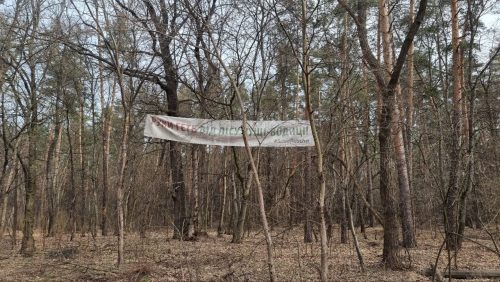
Environmental activists and human rights organizations emphasize: this is not about opposing the development of renewable energy, but rather about gross violations of laws, procedures, and the principles of sustainable development. In particular, during the construction of roads to the future wind power plant, foresters destroy habitats of rare plant species listed in the Red Book, cut down primeval forests that Ukraine is obligated to protect and preserve.
Against this backdrop, the Ministry of Economy’s upbeat statements about “sustainable development of the Carpathians” and international aid appear as follows: on the one hand, Ukraine takes money from international partners for the protection of the Carpathians, while on the other, it signs off on reports from supervisory bodies that do not register any violations during the construction of wind turbines in the highlands without an Environmental Impact Assessment.
Without the rule of law, transparent procedures, and real environmental protection, any international support programs are simply money wasted. Or more precisely, money ending up in someone’s crafty pockets.