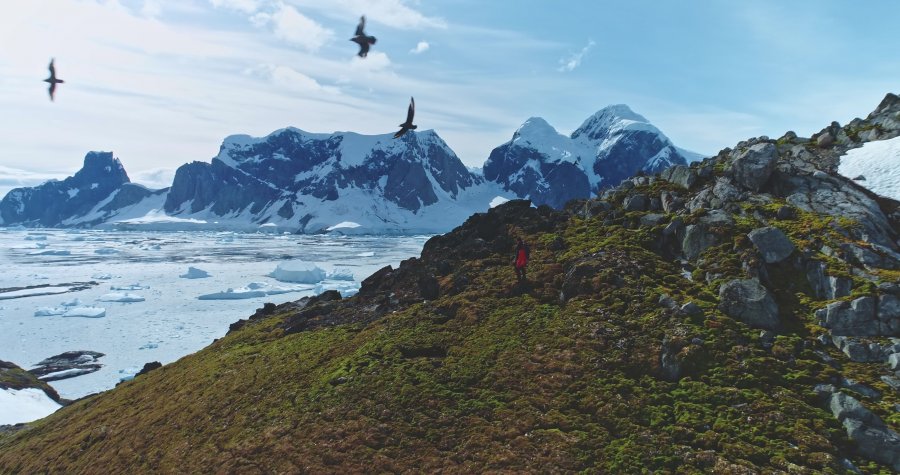
An analysis of space images from the Landsat satellite suggests that the vegetation cover of the planet's coldest continent has increased more than 10 times over the past few decades.
Such results were published by British scientists in an article for the journal Nature Geoscience.
Scientists claim that in 1986, the area covered by vegetation in Antarctica was less than 1 sq. m. km, and by 2021 – almost 12 square kilometers of green cover. They found that the spread of plants, mainly mosses, has accelerated since 2016. This time coincides with the beginning of a noticeable decrease in the area of sea ice around Antarctica. Warmer open seas could lead to wetter conditions that favor plant growth, the researchers said.
"The Antarctic landscape is still almost completely dominated by snow, ice and rocks, and only a tiny fraction is colonized by plant life. But this tiny proportion has increased dramatically, suggesting that even this vast and isolated wilderness is being affected by human-induced climate change," said Dr Thomas Roland of the University of Exeter in the UK, who co-led the study.
Scientists see this as a sign of global warming spreading to Antarctica, which is warming faster than the world average. They warn that this spread could create the conditions for invasive alien species to enter the pristine Antarctic ecosystem.
The Arctic is also warming, and in 2021 it rained instead of snow for the first time in recorded history on top of the huge Greenland ice cap.
Previously, EcoPolitic wrote about the fact that, according to scientists, Antarctica will be covered flowers until 2100. We also talked about scandal, which broke out in Ukraine because of money for the Antarctic program, and why there should not be treason here.