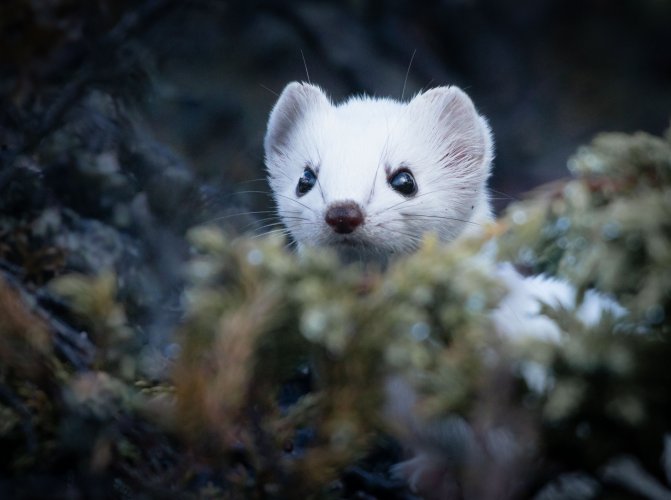
The change from summer fur to snow-white winter fur is one of the mechanisms of evolutionary adaptation that has helped a number of animals hide from predators or camouflage themselves from prey for years. However, climate change has caused a malfunction—the fur continues to change color, but nature does not. There is already evidence of this in Ukraine – a white ermine was photographed in a snowless area in the Odesa region.
The Lower Dniester National Nature Park reported that this makes predators much more visible and reduces their chances of survival.
Possible scenarios for the Ukrainian population
The national park says that for creatures that undergo seasonal molting, there are two options: migration or adaptation.
The easiest thing for animals is to move to areas where "classic" winters still exist, and their natural camouflage mechanisms will continue to give them an advantage and safety.
Evolution is also possible, but it is a long process that takes more than a dozen generations. In addition, species change is only possible when the population is large and relatively protected.
Rapid adaptation
While the animal cannot force its fur to darken with the power of thought, it tries to hide this contrast in shelters and darkness.
According to a statement from the national park, the ermine is already changing its behavior. The animal tries not to appear in open spaces, moves through thickets, and has shifted its activity to the dark period of the day.
However, new behavioral patterns cannot fully replace the natural camouflage that snow provided for ermines.
“These observations show that climate change is happening right now, and it affects even the smallest predators that have lived by the stable rules of winter for thousands of years. These photos are a marker of significant changes in nature, which we are obligated to notice and take into account in order to have time to help those who cannot adapt quickly enough,” – they commented in the Lower Dniester National Park.

Source: facebook.com/nizhnednestrovsky

Source: facebook.com/nizhnednestrovsky
EcoPolitic previously reported that Poland has banned the breeding of animals for fur. Entrepreneurs have been given eight years to completely wind down production.
Ukrainian activists are also fighting for the fate of wolves. In their opinion, these animals are being killed uncontrollably in Ukraine, in violation of the Bern Convention.