Ukraine has radically updated its strategy for animal health and welfare, bringing it into line with European approaches. The new standards are enshrined in the Law on Veterinary Medicine and Animal Welfare, which came into force in early March.
The State Service of Ukraine for Food Safety and Consumer Protection emphasizes that the law establishes rules for everyone who interacts with animals in one way or another. This includes animal owners, farmers, market operators, veterinarians, and consumers.
The value of the law
The priority of the new law is prevention and strengthening the early detection system for diseases. The Service is confident that this will minimize the spread of infections and losses to farms. The law also establishes responsibility and clear procedures for state control and response to disease outbreaks.
In addition, the law establishes higher standards for the keeping, transport, and handling of animals.
The law also regulates the rules of veterinary practice, production, circulation, and use of veterinary drugs.
The provisions of the law will be implemented in stages.
Animal welfare
The law introduces the term “animal welfare.” It is defined here as the physical and mental state of animals, associated with their living and dying conditions, which include the absence of:
- hunger, thirst, and malnutrition;
- fear and suffering;
- physical or thermal discomfort;
- pain, injuries, and diseases;
- living conditions that prevent animals from exhibiting their typical behavior.
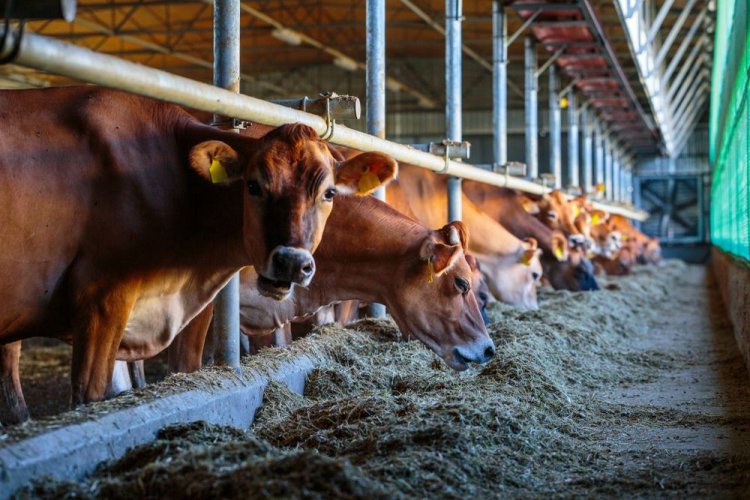
Section VI of the law sets out the obligations for preparing personnel to ensure animal welfare, as well as standards for keeping animals. In particular, animals must be provided with adequate space and have access to water and quality feed. Facilities must maintain a regulatory microclimate, including ventilation, compliance with temperature norms, gas concentration, and lighting standards.
According to Vasyl Yatsynyk, head of the main department’s division at the State Service of Ukraine on Food Safety and Consumer Protection in Ternopil region, these standards apply not only to animals on agricultural complexes but also to domestic cats and dogs.
“In the new law ‘On Veterinary Medicine,’ it is specified that all dogs and cats must be identified with a special microchip and have a veterinary passport. Incidentally, starting from March 1, the animal passport will be different. Procedures will be entered into this passport. It will also be valid abroad,” – Vasyl Yatsynyk was quoted by Suspilne.
The animal passport will later be available in the “Diia” application.
Veterinary medicines
Medicinal products in this group are now subject to rules of production, circulation, and use that comply with European Regulation 2019/6. One of the fundamental updates is indefinite state registration of medicinal products, without the need for review every five years, as was previously required. However, not only manufacturing, but also import and sale of medicinal products will be subject to licensing.
Medicines for animals will be subject to mandatory clinical trials, in particular within the framework of the international cooperation program on the harmonization of technical requirements for the registration of veterinary medicines (VICH).
The law also regulates the production of medicated feed, namely the medicines used in it.
The document proposes measures to combat antibiotic resistance. In particular, only licensed veterinarians will be able to use antibiotics and other prescription drugs for animals.
Prescriptions for drugs can be issued in paper and electronic form.
Penalties
The law increases administrative liability for violations of veterinary medicine and animal welfare legislation.
Currently, Article 107 of the Code of Administrative Offenses provides for a fine of up to UAH 170 for citizens and up to UAH 340 for officials for any violation in this area. In contrast, the updated version of the law divides violations into separate groups with more severe penalties. For example, the maximum fine for using drugs that can lead to the development of antibiotic resistance can reach UAH 6,800. For violating quarantine rules without harmful consequences, the fine can be UAH 510.
The law provides for liability for the following actions:
- failure to comply with quarantine measures;
- violation of animal health protection requirements;
- violation of animal welfare requirements;
- offering for sale or selling unregistered veterinary drugs;
- failure to comply with the requirements for the safety, quality, and efficacy of a veterinary drug established during its state registration;
- providing false information during the state registration of a veterinary drug, if this poses a threat to the life and/or health of humans and/or animals;
- violation of the requirements of the legislation on keeping records of adverse reactions to veterinary drugs, registering such adverse reactions, and reporting them to the competent authority.
Earlier, EcoPolitic reported that work is continuing in Ukraine on Law No. 11328, which is intended to protect animal rights. In particular, the document will ban "cosmetic" surgical procedures, such as ear and tail cropping, and will also restrict the commercial use of animals.