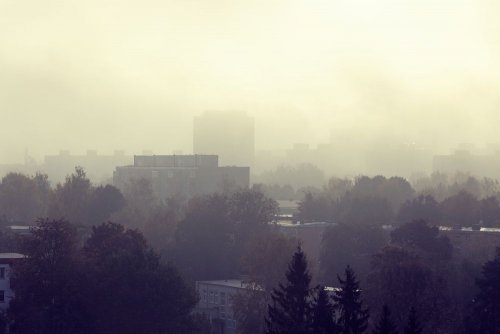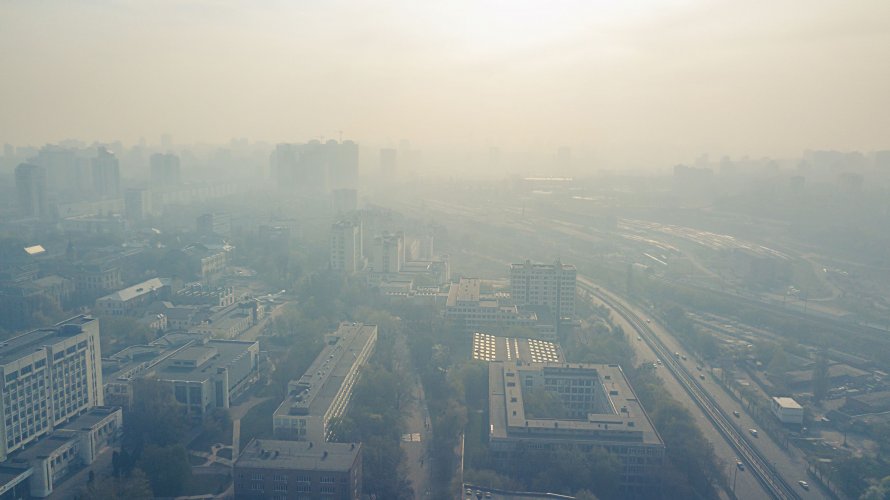
In virtually all of the country’s major cities, air quality on the morning of 23 September is safe for residents. In some places, moderate levels of pollution have been recorded, but this is not yet a reason to limit time spent outdoors.
This is evidenced by the latest data from the international monitoring platform IQAir.
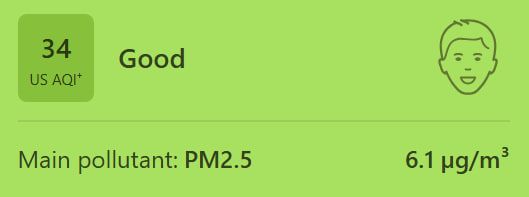
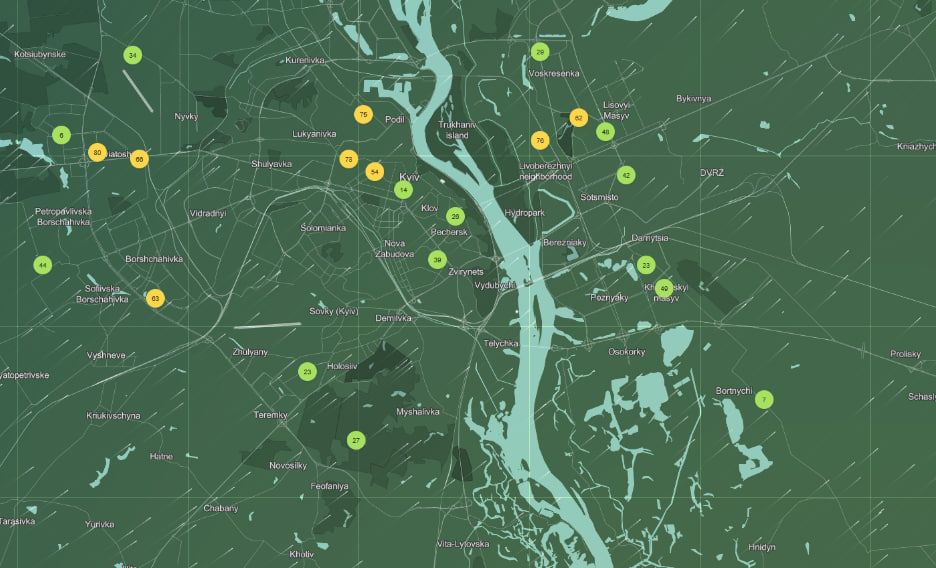
On average across Kyiv, air quality meets the requirements for the ‘green’ zone. The main pollutant is fine particulate matter of the PM2.5 fraction. Its concentration stands at 6.1 µg/m3. It should be noted that the upper limit of the standard, according to the World Health Organisation’s methodology, is 5.5 µg/m3.
In some parts of Kyiv, monitoring stations are recording average pollution levels. Among these is Sichovykh Striltsiv Street, where the concentration of particulate matter is more than four times the standard of 23.8 µg/m3. On Kyrylivska Street, this figure stands at 21.8 µg/m3, and on Kakhovska Street, it is 22.3 µg/m3.
Pollution levels are also moderate in Odesa. As of this morning, the dust concentration stands at 21.2 µg/m3.
In the other regional centres, air quality is good and safe for the public. The main pollutant is the same fine particulate matter.
- Dnipro – 7.9 µg/m3;
- Poltava – 6.1 µg/m3;
- Kharkiv – 5.7 µg/m3;
- Rivne – 5 µg/m3;
- Cherkasy – 4.8 µg/m3;
- Vinnytsia – 4.7 µg/m3;
- Zaporizhzhia – 4.5 µg/m3;
- Mykolaiv – 4.5 µg/m3;
- Khmelnytskyi – 4.5 µg/m3;
- Ivano-Frankivsk – 3.9 µg/m3;
- Lviv – 3.2 µg/m3;
- Ternopil – 3.1 µg/m3;
- Zhytomyr – 3 µg/m3;
- Chernivtsi – 2.9 µg/m3;
- Uzhhorod – 2.7 µg/m3;
- Lutsk – 2.3 µg/m3;
- Chernihiv – 1.4 µg/m3.
It is worth noting that enemy strikes can locally increase pollution levels by almost tenfold. This was discovered by Ukrainian researchers.