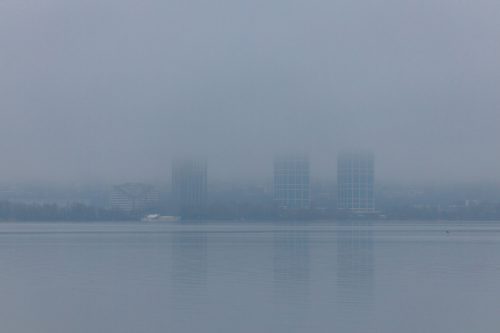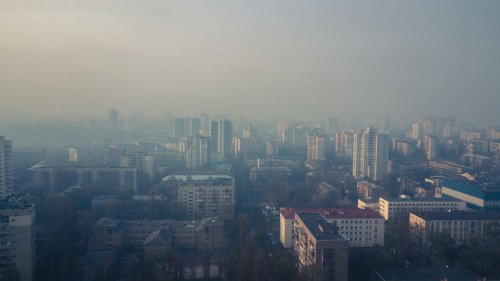
Not all regional centres in Ukraine can boast of clean air on 9 October. However, despite isolated instances of pollution levels exceeding the limit, on average, spending time outdoors in these regional centres does not pose a risk to people’s health.
EcoPolitic reports this based on data from the international monitoring platform IQAir.
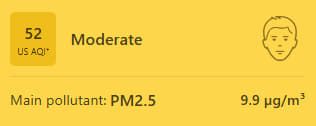
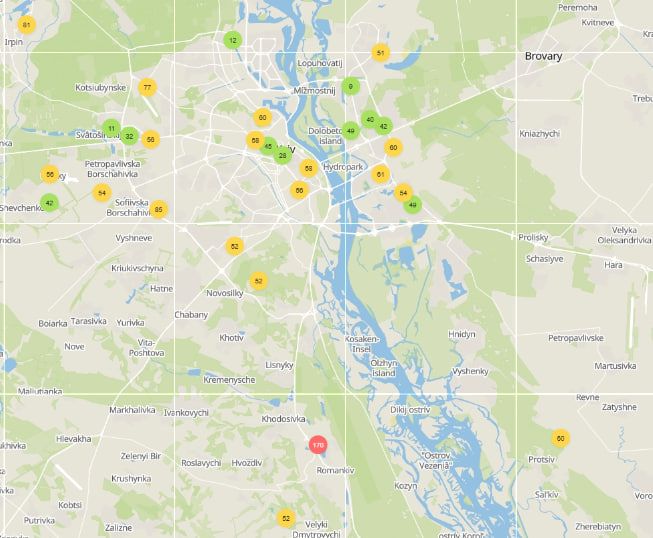
Air pollution levels in the capital are moderate, meaning they do not pose a significant risk to people. IQAir identifies PM2.5 as the main pollutant. Its average concentration is 9.9 µg/m3. According to World Health Organisation standards, the upper limit for this indicator is 5.5 µg/m3.
In some areas, pollution levels are higher than the average for Kyiv. For example, on Yevhen Konovalets Street, the dust concentration is 11.8 µg/m3, on Regeneratorna Street — 14.6 µg/m3, and on Kyrylivska Street — 14 µg/m3.
In Velyki Dmytrovychi, not far from the capital, the air remains dangerously polluted for all sections of the population. The concentration of particulate matter there stands at 82.6 µg/m3.
These major cities currently have moderate levels of air pollution:
- Dnipro — 18 µg/m3;
- Chernivtsi — 14.4 µg/m3;
- Kharkiv — 12.1 µg/m3;
- Zaporizhzhia — 12 µg/m3. Pollution resulting from a fire has also been recorded;
- Chernihiv — 10.7 µg/m3;
- Odessa — 10 µg/m3;
- Vinnytsia — 9.5 µg/m³.
The air is safe in the following regional centres:
- Zhytomyr — 8.8 µg/m3;
- Lviv — 8.2 µg/m3;
- Mykolaiv — 8.2 µg/m3;
- Poltava — 7.5 µg/m3;
- Khmelnytskyi — 6.8 µg/m3;
- Kherson — 6.1 µg/m3;
- Cherkasy — 5.7 µg/m3;
- Rivne — 5 µg/m3;
- Lutsk — 3.8 µg/m3;
- Ternopil — 2.3 µg/m3;
- Uzhhorod — 1.9 µg/m3;
- Ivano-Frankivsk — 1.7 µg/m3.
As a reminder, air pollution can trigger flare-ups of lung and cardiovascular diseases, and, with prolonged exposure, can cause these conditions to develop in healthy people. Find out more about how the environment affects the body in the article.