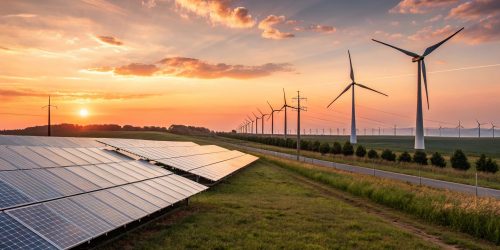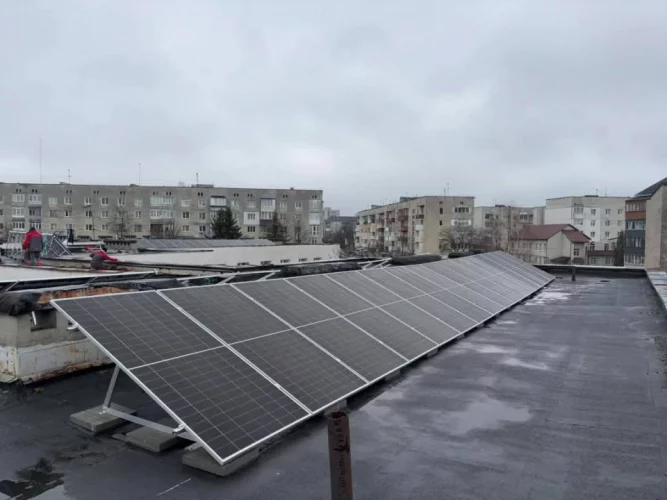
The city of Dolyna in the Ivano-Frankivsk region has an ambitious energy goal: to become fully self-sufficient. Here, a decentralized network is being created, comprising solar power plants (SPPs), energy storage systems (ESS), and cogeneration facilities, with the aim of becoming a true “energy island” in the future.
Mayor Ivan Dyryv spoke about Dolyna’s energy experience in an interview with Espreso.
Dolyna is considered one of the most energy-efficient cities in Ukraine. This winter, as across the country, there were power outages here. However, according to the mayor, this did not disrupt the operation of critical infrastructure. Kindergartens also remained open, as they are equipped with solar panels and UPS systems, as were the local water utility and the hospital.
“Our city and our community have been working toward energy conservation for many years, so we likely felt these challenges less than others or, let’s say, got through this winter more easily,” noted Ivan Dyryv.
The history of energy independence according to EU standards
As early as 2009, Dolyna joined the European initiative “Covenant of Mayors for Climate and Energy.” According to the mayor, the city committed to gradually transition to alternative energy generation and to reduce greenhouse gas emissions.
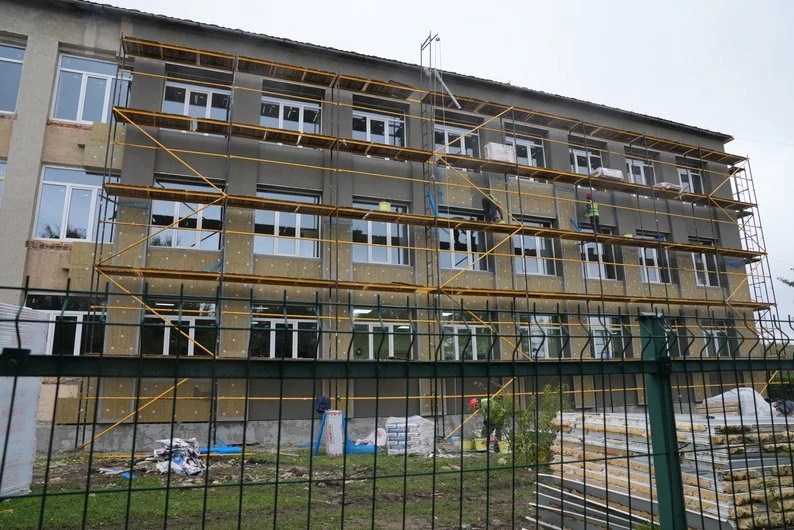
Over the years, the city has abandoned centralized heating, converted boiler houses to solid fuel instead of gas, and implemented thermal modernization of buildings. Thirty multi-storey buildings were fully upgraded thanks to the EU “COMDEP” program. Overall, the city actively cooperates with European donors to finance energy projects.
Currently, Dolyna operates according to the “Covenant of Mayors – 2030,” adhering to European and, more recently, Ukrainian targets – to achieve climate neutrality by 2050.
Source: Suspilne
War as the next driver of eco-modernization
With the onset of the full-scale war, Dolyna faced high energy prices and, in general, the very problem of energy availability.
“That’s when we had the idea to build more of our own generation facilities, municipal facilities, and, in general, to consider the possibility of operating the community's power grid in 'energy island' mode,” recalls the mayor of Dolyna.
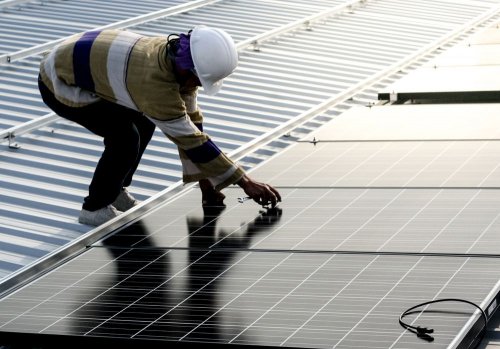
It was at this time that the city experienced a “solar boom.” Panels were installed at those facilities whose continuous operation was crucial for residents.
- at the water utility, where SPPs with a capacity of 140 and 120 kW operate alongside a 215 kW ESS,
- a heliocollector was installed at the children's hospital,
- solar stations were set up at preschools.
Storage, not just generation
The mayor points out that SPPs cover only a certain portion of the city’s energy needs. Dolyna also faced the intermittency of solar generation. To balance this, energy storage systems are installed alongside solar panels.
“This allows the water utility to avoid raising water tariffs for four years. We buy electricity hourly, with varying prices: sometimes it’s 1 or 2 hryvnias, but it can be up to 10. The storage systems enable us to accumulate energy during cheap hours and use it at peak times when electricity from the grid is expensive,” says the mayor.
Collaboration with energy companies
The mayor stated that the first network gas cogeneration plant in the region for the general grid has been built in the community. A 2 MW generator is already operating, and another one, with a capacity of 2.5 MW, is currently being commissioned.
A 12 MW solar power plant is being constructed by a business near another substation. It will be additionally equipped with energy storage systems capable of accumulating 48 MW of electricity.
“This will make us surplus in terms of generation. We will have our own energy regardless of the situation in the country. We will be able to support ourselves for a certain period, and possibly even help other communities,” emphasized Ivan Dyriy.
Challenges and obstacles
Becoming fully energy self-sufficient is a technically challenging issue. The mayor reported that there have already been two meetings at the Office of the President, as well as the need for close cooperation with the regional power company and Ukrenergo.
Initially, the Ministry of Energy was skeptical about the “energy island” idea. However, after the massive loss of generation following the attacks, their opinion changed.
During that period, the Dolyna water utility began generating excess energy and faced some competition-suppliers did not want a new player in the market. Nevertheless, in the summer of 2024, the water utility became the first municipal enterprise in Ukraine to sell surplus clean energy.
“We are moving from the centralized system of the Soviet Union to a decentralized one, where communities, municipal enterprises, and even individual citizens can participate in the market. This is an irreversible process,” noted the mayor of Dolyna.
Seventy-five percent of municipal facilities are already independent of gas-they run on biofuel. Specifically, this includes firewood, pellets, and briquettes.
In the future, the city has another ambitious goal-to provide complete autonomy for the community’s cellular network.
EcoPolitic previously reported that in the Odesa region, the largest solar energy service project by capacity has been implemented. It powers a pumping station involved in land reclamation.