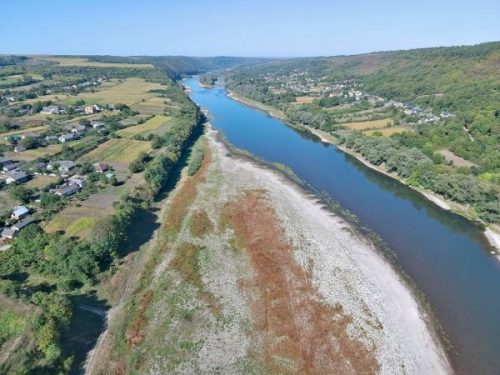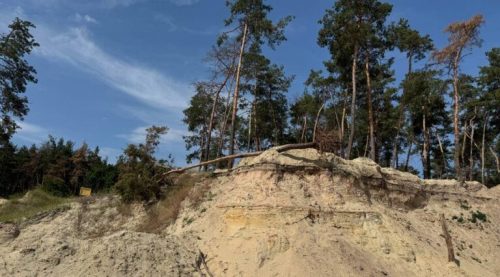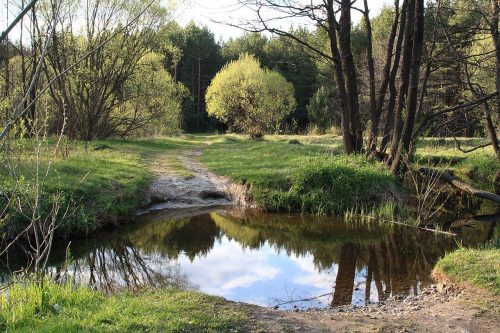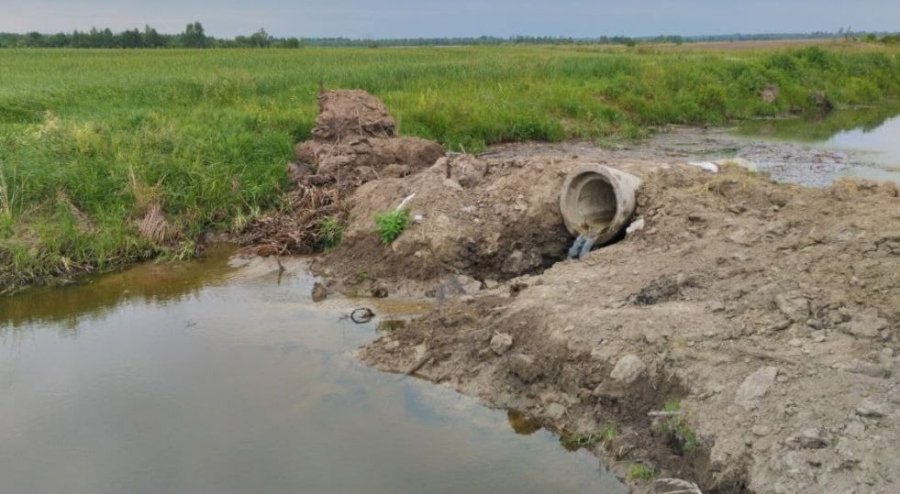
Instead of a river stretch, there are dams made of construction debris. Taking advantage of water use reform, an agricultural enterprise in Zhytomyr Oblast attempted to transform the Tesnivka and Tnia rivers into a cascade of ponds.
According to the Ukrainian Nature Conservation Group (UNCG), the Supreme Court sided with environmental activists and the State Environmental Inspection.
Manipulation of water use reform
Land reclamation reform gives agricultural producers the right to create water user associations (WUA) and manage their own affairs – to invest in the reconstruction of land reclamation networks and make optimal use of water resources. However, in this particular case, the use of some legislative norms provoked violations of others.
The destruction of the river was presented as a success, according to the UNCG. Moreover, the USAID Agro project positioned the creation of the Lesini Dzherela WUA as a model to be implemented throughout the country.
The story of saving rivers
Back in 2024, UNCG environmental activists discovered only a semblance of a river at the site of the Tesnivka—a bare riverbed without trees on the banks, plowed meadows, and dams built from construction debris. The violation was confirmed by the State Environmental Inspection of the Polissya District, which was contacted by environmentalists.
The DEI called on the Adelaide Farm to comply with the law, but the farm decided to go further and challenge the environmental inspection's order in court. The farmers insisted that they did not need the EIA's conclusion because they had the right to water intake. At the same time, they refused to consider potato irrigation as land reclamation. The Pripyat River Basin Water Resources Group also supported the farmers' misinterpretation of the concepts. According to the UNCG, it deliberately decided to consider the river a reclamation canal.
These arguments convinced the court of first instance. So the farm confidently went even further — their ambitious dam construction spread to the Tnya River. Environmental activists discovered a "fresh" dam there in the summer of 2025. By blocking the riverbed, it raised the water intake level.
However, the rivers still received judicial "permission" to exist—on September 25 this year, the Fifth Administrative Court of Appeal ordered the farmers to comply with the State Environmental Inspection's order. And on October 29, this decision was upheld by the Supreme Court of Ukraine.
“This decision is important not only for the Tnya and Tesnivka rivers. It should set a precedent: even with substantial political connections, it is impossible to destroy rivers and view them solely as a water supply source for one’s enterprise,” the Ukrainian Nature Conservation Group emphasized.