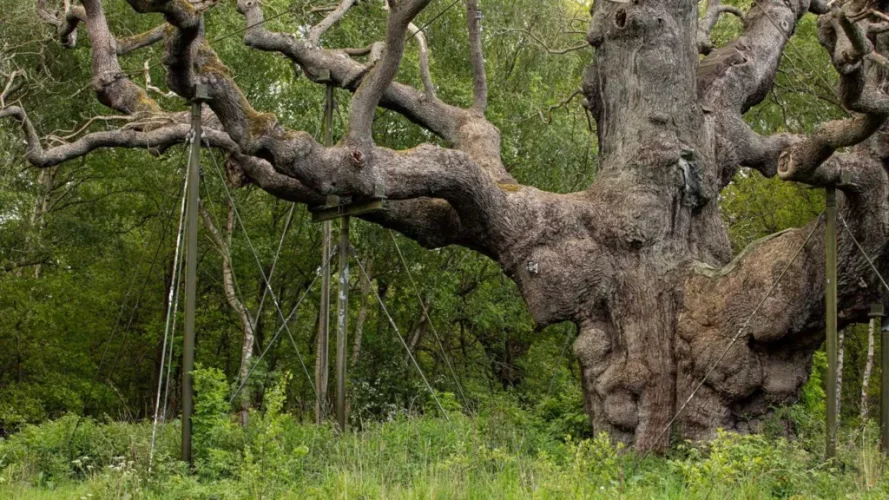
One of the most famous, oldest and largest trees in Great Britain can, according to experts, be considered dead. We are talking about the enormous oak in the legendary Sherwood Forest. Scientists did everything they could to save the tree, but they were unsuccessful.
The BBC reports on this.
The cause of death
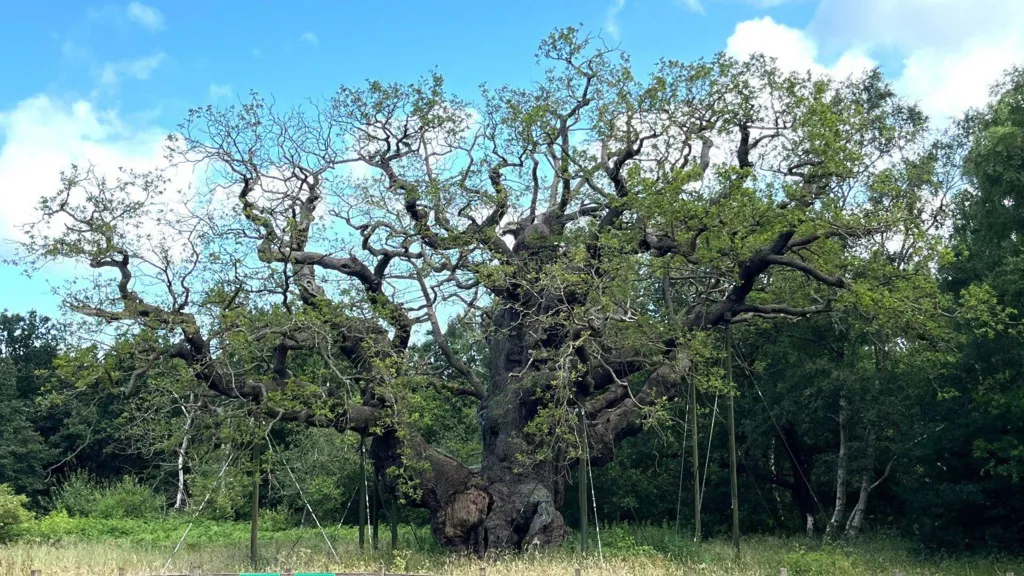
This year, for the first time in over a millennium, not a single leaf appeared on the tree. Consequently, the Royal Society for the Protection of Birds (RSPB) — a nature conservation charity that manages the forest — announced the sad news.
It is impossible to know exactly why the giant oak has died. However, experts cite a combination of factors, the key one being excessive human activity around the tree.
These problems, combined with the tree’s age, have been exacerbated by climate change, in particular the recent drought. EcoPolitic previously reported that in May, London set a new temperature ‘record’ — 16°C above the average.
Джерело: bbc.com
The tree’s future
No one plans to fell the withered giant.
“The oak will remain standing in the forest as a monument to people and wildlife,” the RSPB confirmed.
In the future, the tree’s ‘descendants’ are set to appear all over the world, as saplings are to be planted in various countries.
Ancient fame
An old legend has it that the hollow trunk of the oak served as a sort of treasure trove for Robin Hood himself, where he hid his loot.
The tree has had many ‘names’, but one of the best known is ‘The Major’. This stems from the fact that the oak was mentioned as far back as 1790 in a book by a former British Army soldier, Major Hayman Rook. It was this book that first drew tourists to the oak.
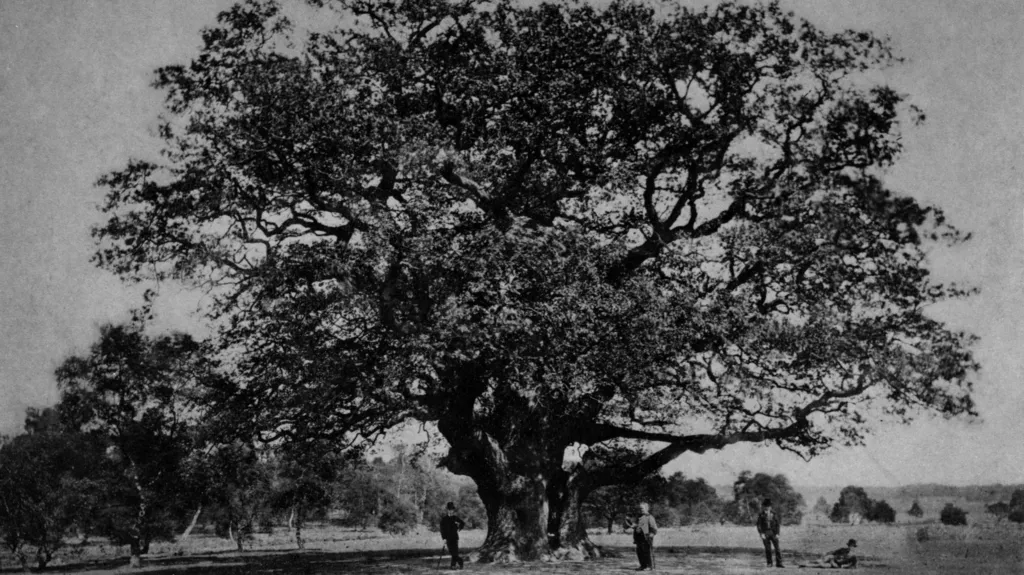
Одна з найперших фотографій дуба. Джерело: bbc.com
Due to the large number of visitors over more than 200 years, the soil around the tree has become too compacted, making it difficult for moisture and nutrients to penetrate, and thus hindering the giant’s access to water.
“Were it not for problems such as climate change and 200 years of tourists compacting the soil around it, the tree could have lived for hundreds more years, as trees do not die of old age,” emphasised Ed Pine, senior conservation adviser at the Woodland Trust.
This year’s wildfire season began well before summer. As reported by EcoPolitics, as early as the beginning of May, wildfires had swept across the US, several European countries and South-East Asia.