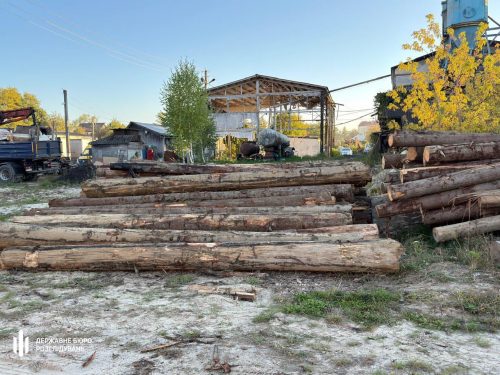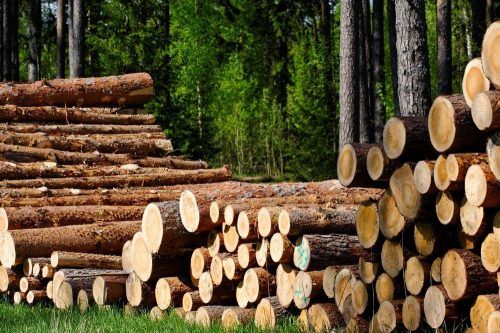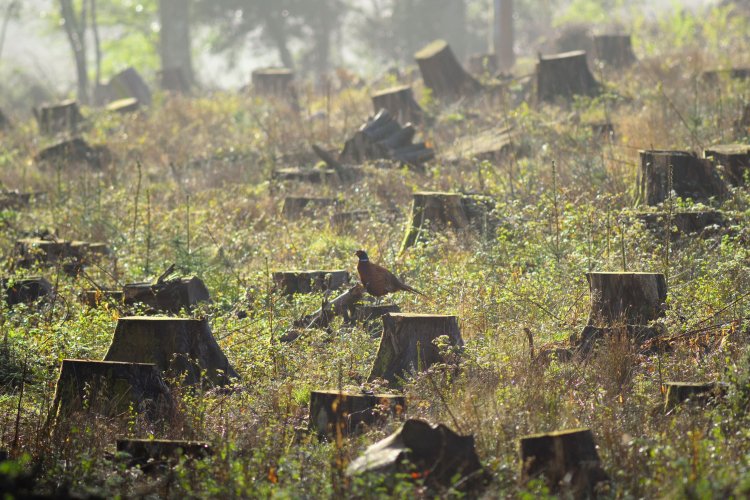
Following Viktor Orbán’s defeat and the arrival of a new government in Hungary, the new environment minister ordered an immediate halt to tree felling in protected forests. However, the moratorium lasted only about four months — the restrictions have now been lifted again. Environmental groups suspect that the new government has also succumbed to pressure from the forestry lobby and has backed away from its pre-election ‘green’ promises.
This was reported by the online publication Rapporteur.
Abstract formulations
On 30 September, László Hajdós, the Hungarian Minister for the Environment, wrote about the lifting of the moratorium. He gave assurances that there was no question of a return to large-scale felling, and that clear-cutting within the nature conservation fund would remain prohibited. The official promised “the strictest penalties” for any breaches of the latter.
However, environmentalists saw the minister’s stance as a manipulation of wording. Although clear-cutting in national parks has long been banned, a threat arises from the felling of old trees as ‘young growth’ comes to maturity. Technically, this does not constitute clear-cutting, but the felling of old trees also means the destruction of primeval forests.
"The minister has mastered the tools of forest semantic magic. The old forest is disappearing all the same, but at least we have re-framed the problem linguistically," wrote analyst András Juppán.
Conflict of interest
The debate surrounding the lifting of the moratorium highlights radically different views on forest management. For instance, WWF Hungary submitted a petition to Prime Minister Péter Magyar calling for the ban to be extended, but to no avail. The organisation argues that the country’s forests are extremely vulnerable, and that industrial logging therefore poses a grave threat to them.
The WWF cited the example of the Natura 2000 network of protected areas. There, the felling of mature trees has left young saplings unprotected from the scorching sun. Environmentalists insist that it is mature forests that act as a shield against moisture evaporation, including from the soil. Young plants, however, are not resilient enough to withstand climatic fluctuations.
However, the forestry industry takes a different view. On the contrary, they believe that felling old trees is important for the health of forests. Allegedly, mature trees deprive young saplings of light. What is more, the industry insists that such felling is the duty of foresters and is vital for forest regeneration. Consequently, industry representatives maintain that the now-lapsed moratorium was merely a political stunt, as spring and summer – when it was in force – are not, in fact, the usual times for felling.
A breach of promises
Faced with criticism, the minister published a lengthy justification for his decision. He argued that such a moratorium could have led to a humanitarian crisis, as 1.5 million households still heat their homes with firewood. At the same time, the previous government had contracts with power stations for the supply of biomass, so if these were terminated, the claims could run into billions.
Furthermore, Haidosh emphasised that felling remains prohibited in 35 per cent of the 1,441 recently inspected conservation areas, as well as for trees over 120 years old in state-owned forests.
However, lifting the moratorium could have political consequences. The Madyar government came to power on a platform of doing away with the previous approach to the exploitative use of nature. Consequently, a sudden return to such practices has sparked outrage amongst civil society and experts.
As a reminder, the State Bureau of Investigations launched a large-scale special operation to combat corruption in the forestry sector. EcoPolitic reported on the initial findings of the operation in its digest.