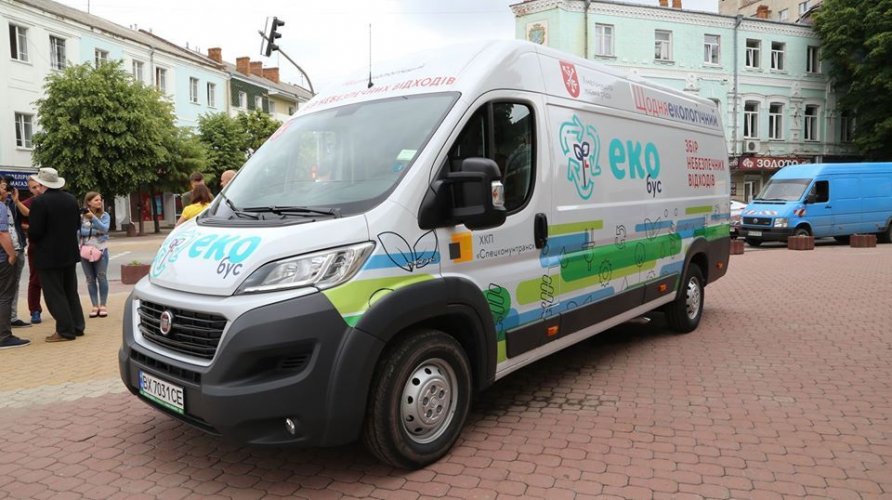
Residents of a number of regional centres in Ukraine can dispose of hazardous waste free of charge, choosing a place and time that suits them. To this end, an ‘eco-bus’ – a special vehicle that operates on a fixed schedule to collect batteries, thermometers and other items that do not belong in the bin – runs in Lviv, Poltava and Khmelnytskyi.
EcoPolitic explains exactly where the mobile waste collection points will be located and what items can be handed in there.
Lviv
In the Lviv local authority area, residents can hand in up to 10 kg of batteries, up to 10 fluorescent tubes and up to 5 mercury thermometers free of charge.
According to information from the state-owned enterprise ‘Bodnarivka’, the eco-bus will operate on Fridays and Saturdays in October from 10.00 to 17.00, moving between different locations. Hazardous waste can be handed in not only in Lviv itself, but also in Vynnyky, Bryukhovychi and Rudne.
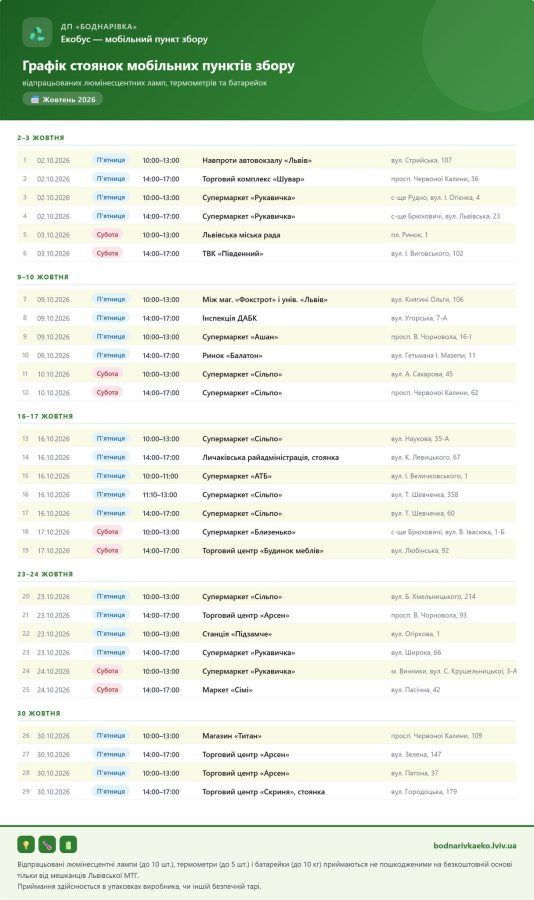
Source: State Enterprise ‘Bodnarivka’
Poltava
The Poltava eco-bus will not only operate in the regional capital. It will also collect waste in the villages of Valok, Abazivka, Brychkivka and Suprunivka.
The list of items accepted for free recycling is slightly longer here. As well as batteries, mercury-containing lamps and thermometers, the eco-bus accepts out-of-date medicines and mobile phone batteries.
According to a statement from KATP-1626, the specialised transport will operate according to the timetable from Monday to Friday, remaining at each location from 9.30 am to 5.30 pm.
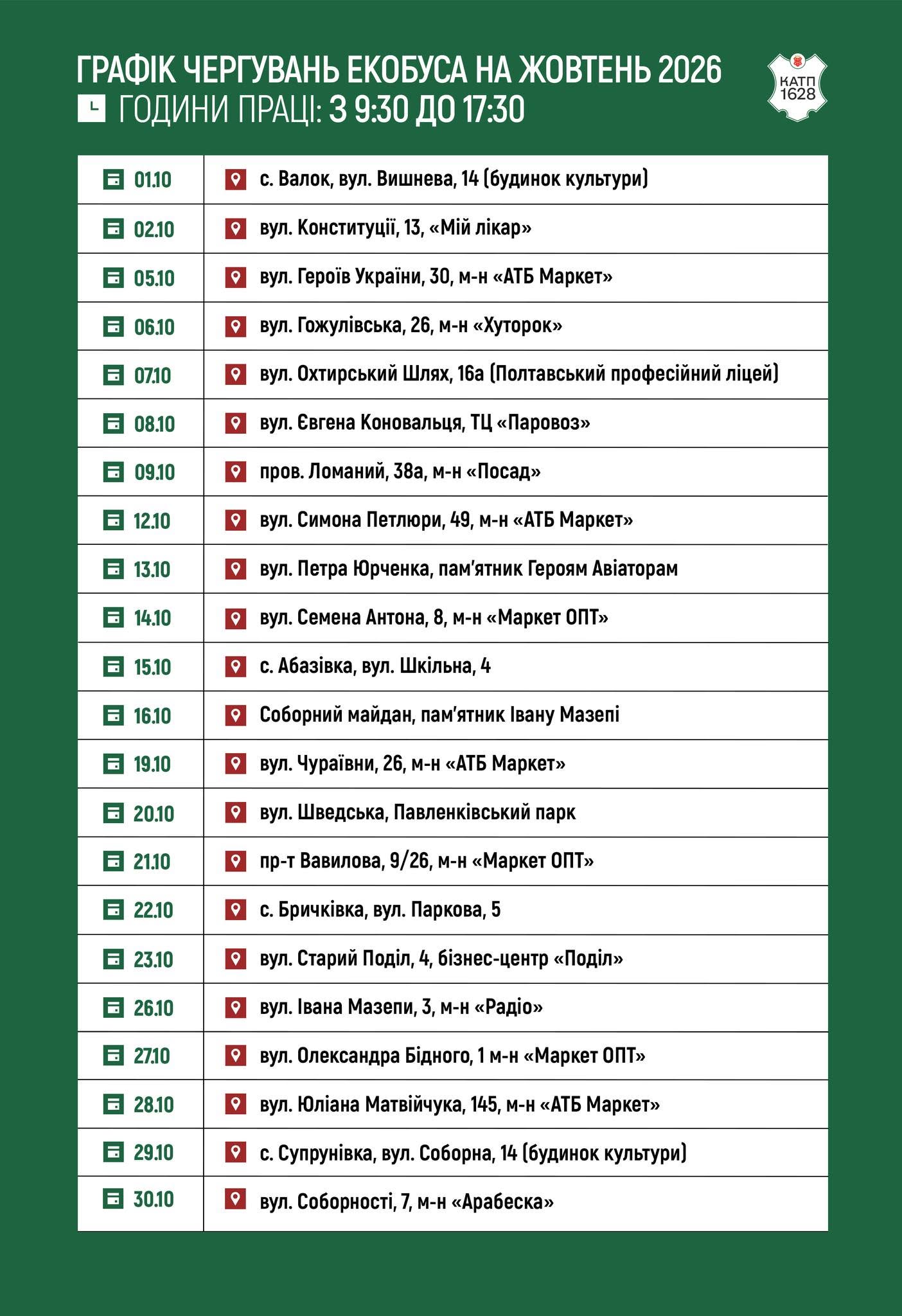
Source: KATP-1626,
Khmelnytskyi
The eco-bus will operate here in October on a slightly revised winter timetable. According to information from Khmelnytskyi City Council, on Wednesdays and Thursdays it will operate at various locations from 12:00 to 17:00, and on Fridays, Saturdays and Sundays from 9:00 to 17:00.
The eco-bus will operate in the town every day except 7 October. However, on 7 October, the eco-bus will visit the starosta district centred on the village of Oleshyn, specifically the villages of Oleshyn, Cherepivka, Cherepova, Ivankivtsi and Velyka Kalynivka.
The list of hazardous waste accepted by the Khmelnytskyi eco-bus is the most comprehensive. You can bring here used batteries and rechargeable batteries, fluorescent lamps, thermometers and other items containing mercury, varnishes, paints and solvents (in their original containers), electronic and electrical equipment, household chemicals, including cleaning products (which must be in their original containers), as well as medicines that have passed their expiry date.
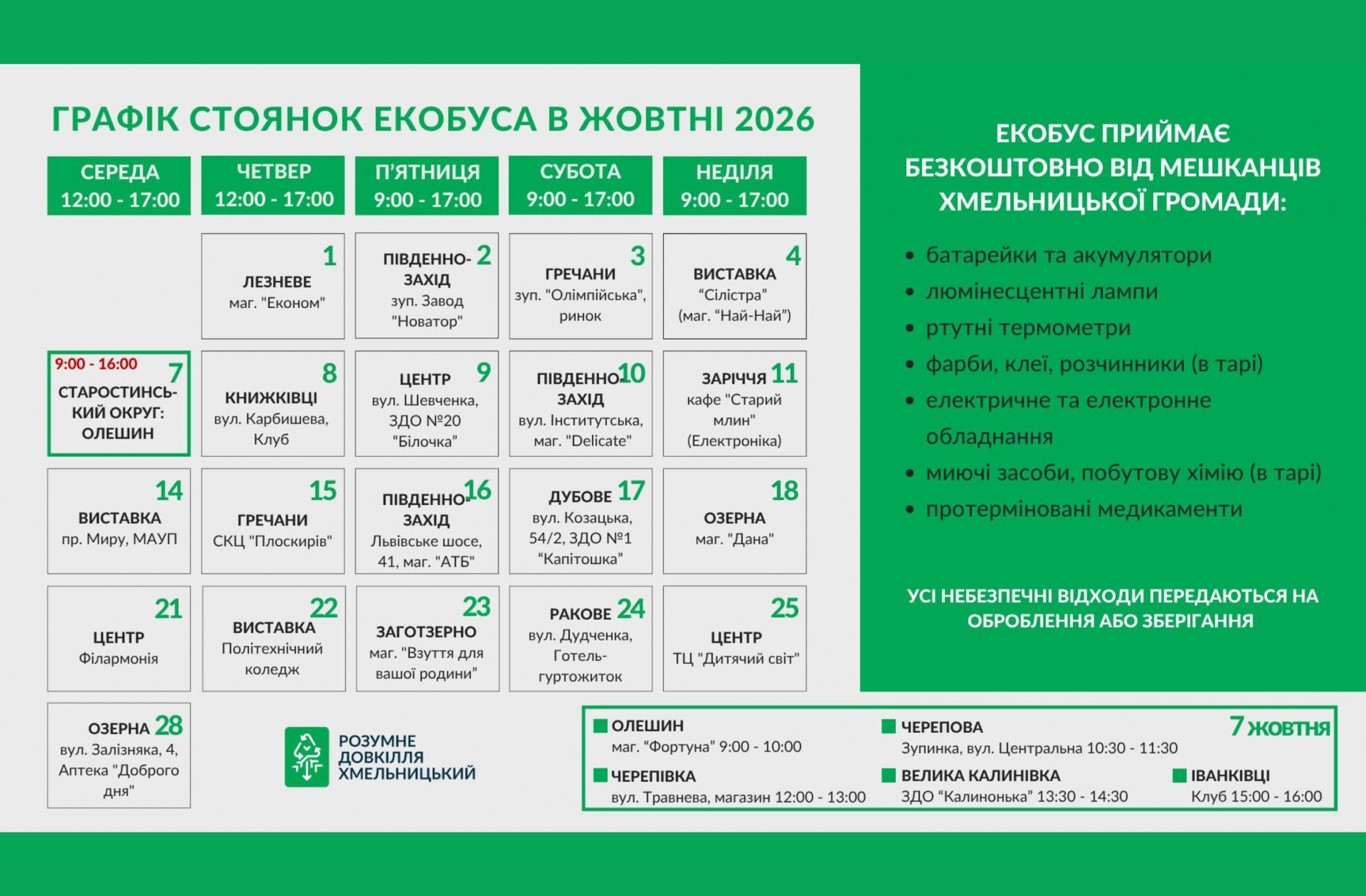
Source: Khmelnytskyi Regional Council
If you want to get into the habit of sorting your rubbish, EcoPolitics has put together some basic tips for you.