As of the morning of 24 September, no critical exceedances of pollution levels had been recorded in Ukrainian cities.
This is evidenced by the latest data from the international monitoring platform IQAir.
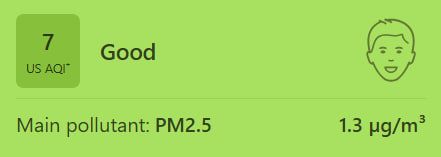
In Kyiv, according to IQAir’s criteria, air quality falls within the ‘green’ zone. The main pollutant is PM2.5 fine particulate matter, with a concentration of 1.3 µg/m3. The upper limit for this indicator, as set by the World Health Organisation, is 5.5 µg/m3.
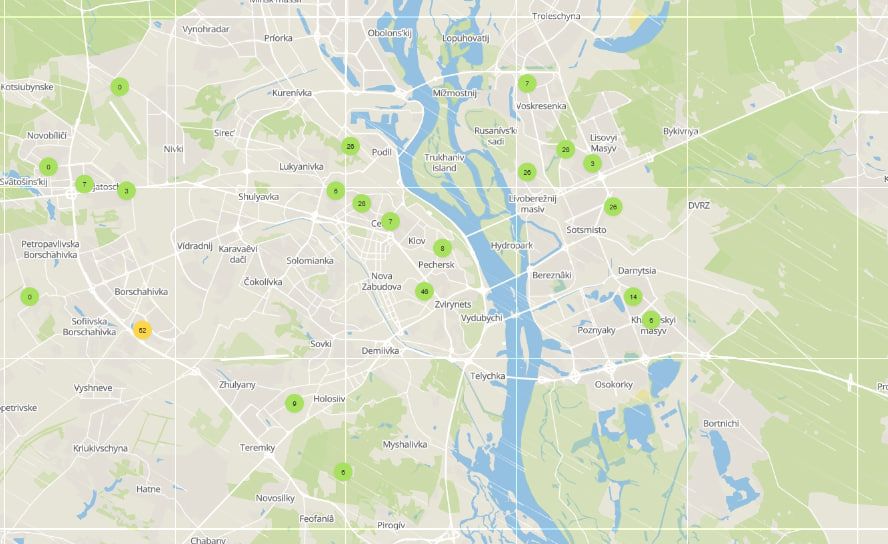
All monitoring stations installed within the city limits are reporting good air quality. In the suburban area of Sofiivska Borshchahivka, air quality is average — dust levels there reach 10 µg/m3.
There is also no significant air pollution in any of Ukraine’s regional centres. The air quality levels fall within the ‘green’ section of the scale:
- Dnipro — 8.4 µg/m3;
- Lutsk — 6.5 µg/m3;
- Uzhhorod — 6 µg/m3;
- Mykolaiv — 5 µg/m3;
- Cherkasy — 4.7 µg/m3;
- Ivano-Frankivsk — 4.2 µg/m3;
- Rivne — 4 µg/m3;
- Kherson — 3.9 µg/m3;
- Ternopil — 3.8 µg/m3;
- Zaporizhzhia — 3.6 µg/m3;
- Khmelnytskyi — 3.3 µg/m3;
- Vinnytsia — 3 µg/m3;
- Lviv — 2.7 µg/m3;
- Poltava — 2.6 µg/m3;
- Chernivtsi — 2.6 µg/m3;
- Odessa — 2.4 µg/m3;
- Zhytomyr — 2.3 µg/m3;
- Kharkiv — 2 µg/m3;
- Chernihiv — 1.9 µg/m3.
As previously reported by EcoPolitics, hostile attacks can increase local air pollution by up to ten times.
Contribute to pollution do forest fires, which are becoming an increasingly significant source of pollution every year.