Kharkiv is situated on more than a dozen rivers and small streams. Admittedly, many of them are now unrecognisable – silted up and with litter-strewn banks, they do not make a good impression at first glance. However, residents see significant potential in them – for relaxation, walks and even kayaking. And local initiatives are proving that wonderful spots can indeed be hidden beneath the layers of rubbish.
The publication "Ukrinform" reported on volunteer initiatives by Kharkiv residents who are giving small rivers a new lease of life.
Rescue from under the rubble
The Malyi Zhykhor is a small river that rises near the KhTZ housing estate and flows into the Uda River. This unremarkable stream became a lifesaving source of water for residents of the surrounding houses at the start of the full-scale war, as there are ten tapped springs on its banks.
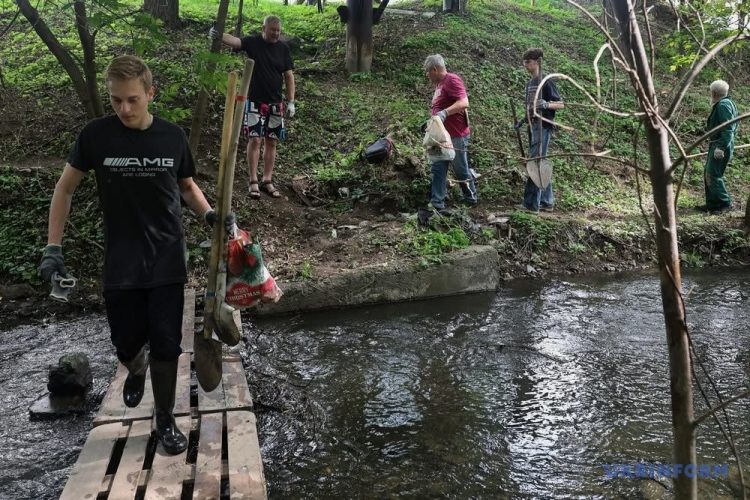
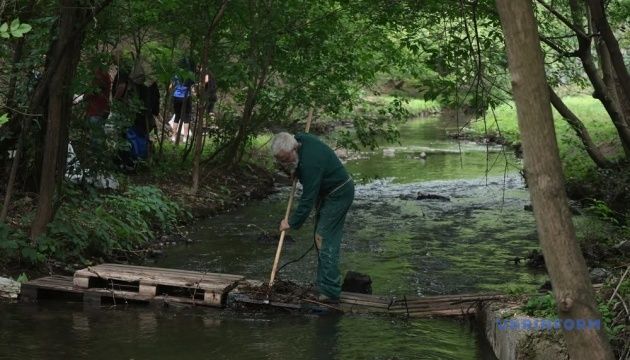
Back then, in 2022, a local pensioner, Galina Krasnobryzha, decided to go and see what was happening along the banks of the Zhikhor and recalls being horrified by the sheer amount of rubbish that people had been dumping into the ravine for decades.
"We started clearing the riverbed, but the current kept bringing in more and more rubbish. We realised we needed to clear the banks. So far, we’ve covered 650 metres. It’s another 150 metres to the spring I showed you – that will be our finish line. I reckon it’ll take another year’s work. There were old sofas here, fridges, ceramic tiles, and several hundred car tyres that people had dragged along to get from one bank to the other,” says Ms Galina.
Source: Ukrinform
Unfortunately, the river simply does not exist on paper. The woman says she was told it was either a storm drain or a burst water main. Yet even on maps dating back 300 years, both the ravine and the Mokryi Zhikhor River are marked. According to measurements by the State Environmental Inspectorate, the water here meets the standards for a river.
"I submitted a request to the State Agency for Water Resources. They replied that small rivers (and the Zhikhorets is 16 km long) should be managed by the local authorities. But it isn’t listed in the state water cadastre because the register has been undergoing a lengthy process of updating and revision since the Soviet era, and, as they say, they haven’t got round to this river yet,” the woman added.
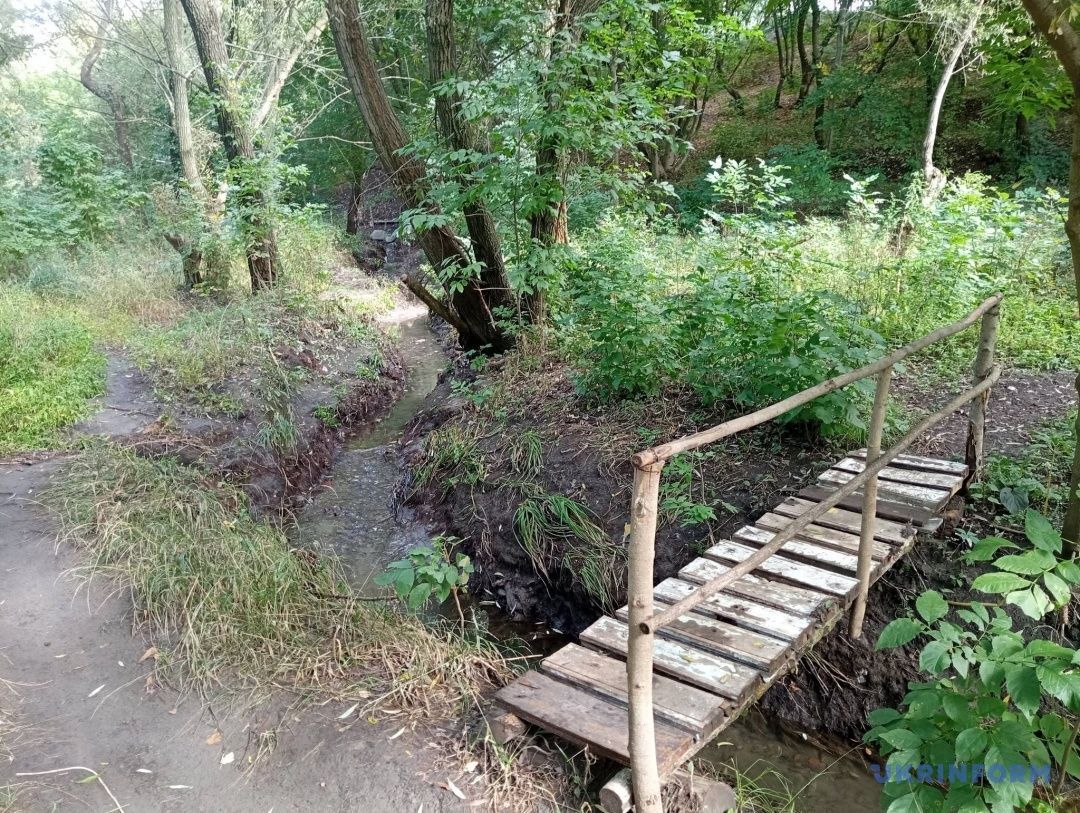
Over the years, more than 6,300 sacks of rubbish have been cleared from the riverbanks. However, the volunteers do not limit themselves to clearing rubbish – they have also cleared away the undergrowth and laid out paths with footbridges. According to Halyna Krasnobryzha, local teenagers have set up a cycle path here and have already helped with the clean-up. Local residents also come here to relax and complain about the weeds. However, she is pleased by this, as previously not a single blade of grass grew beneath the layer of rubbish.
Джерело: Укрінформ
Sports trail
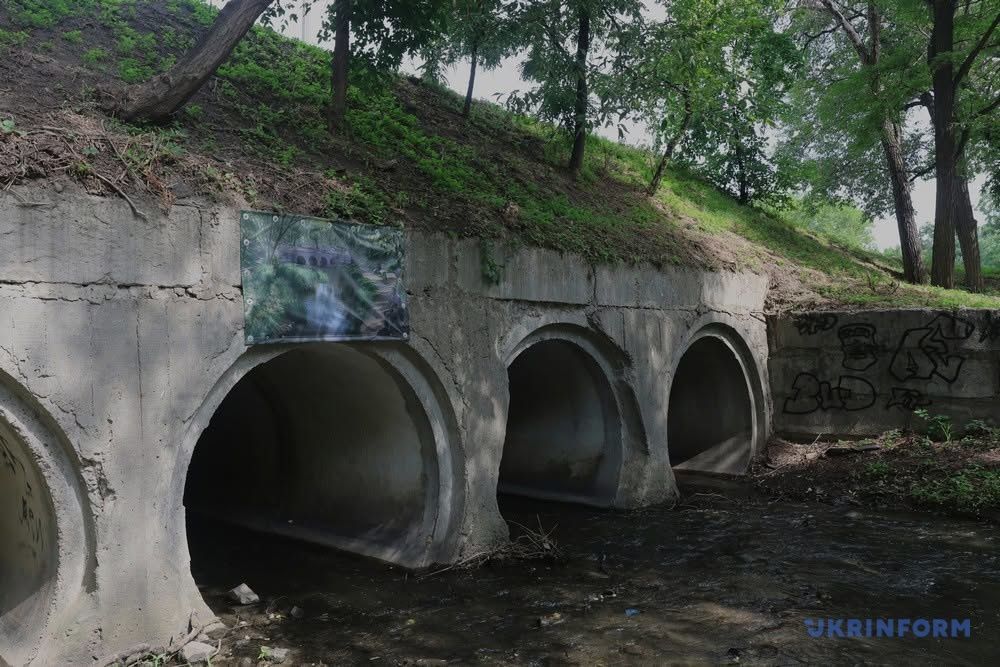
In another small river – the Nemyshlya – enthusiasts see a future route for kayaking. This idea is being promoted by Ihor Udovikov, a Kharkiv resident with 40 years’ experience in sports tourism. He believes the river can be made navigable for these vessels and has named his project ‘Kharkiv Venice’. However, in 2018, during the first presentation, he received no support.
However, the man did not give up and decided to prove that it was possible. He recalls what the river was like in his grandfathers’ day and says that it has changed to this state within his own generation.
"Surely we can do something to ensure the river is actually a river, not just a drainage ditch. Step by step. I said to myself: the idea of a recreational area – sound good? Good. With footpaths or cycle paths. And if we add kayaks, that’ll be the icing on the cake. But even if it’s just a leisure area – so be it, but at least it won’t be a rubbish tip,” says Udovikov.
Source: Ukrinform
In 2021, he took the plunge and kayaked along an experimental route. Admittedly, due to the weirs, he had to walk about half the route, but there is potential here, as a depth of just 40 cm is sufficient for kayaking.
"You’re floating along, with grass on the banks, the sun warming you, and the scenery changing – people are relaxing, an artist is painting somewhere… It’s lovely, isn’t it? You can stop and admire the views. It’s a weekend route within the city limits. A linear journey like this, where you go from point A to point B without turning back – it’s really great,” says Udovikov.
The authorities are being asked to help keep the area clean
There has never been a large-scale revitalisation of the major rivers in Kharkiv. The attention of the municipal services is focused, if at all, on individual recreational areas and, of course, on the central embankment. Consequently, the smaller rivers, whatever potential they may have, are left out of the picture.
However, the volunteers say that without ongoing efforts to keep the area clean, the results of their hard work will simply come to nothing, and they do not have the means to carry out regular cleaning.
Cleaning alone is not enough for the ‘Venice of Kharkiv’, which Igor Udovikov presented to the mayor last year.
"Yes, we have cleared the banks to show that this area has potential. But an amateur approach is not enough. We need to dredge the riverbed and bring in hydrogeologists and project designers," the man said.
The request made by volunteers from Mokryi Zhykhor, which they submitted to the town council on 1 September, is to grant the cleared area the status of a forest park zone and transfer it to the local council for maintenance.
"We’re not asking for any capital investment. And, to be honest, when we were drafting the petition, we deliberately avoided the word ‘improvements’. We don’t even need benches or litter bins. And no tarmac paths either. Footpaths are enough – the soil here is good. Let this area remain as natural as possible. When you come down here, you can’t hear the city at all! And it’s lovely here in the heat – it has its own microclimate,” said Halyna Krasnobryzha.
It has recently emerged that over 600 million hryvnias will be allocated for the dredging of the Ingulets River near Kryvyi Rih.
At the same time, Ukrainian rivers have become critically shallow this year, in some places falling below historical low-water levels. Due to the water shortage, water abstraction limits have been imposed on 300 businesses.