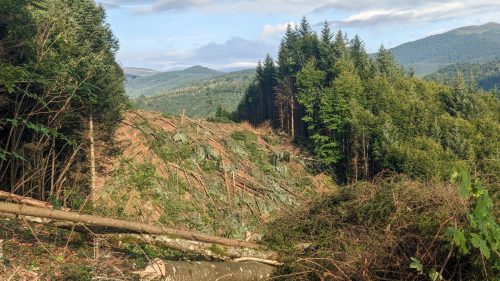
Officials failed to notice the Red List species in the Pashkivets Forest District in Zakarpattia, even though environmental activists had raised the issue on several occasions. Contrary to promises to carry out another commission-led survey of the area, on 18 August, tree felling resumed to make way for the power line. However, as well as destroying trees, this threatens to destroy the habitats of several important and rare species of flora and fauna.
The environmental group "Teren" spoke about them.
Civil society organisations and environmental experts were forced to submit numerous appeals to halt the felling of trees along the power line leading to the wind farm, which has already radically altered the Runa mountain pasture.
A pledge to look into the matter, involving all stakeholders, was made at a meeting of the Ministry of Economy attended by the new head of the state-owned enterprise ‘Forests of Ukraine’, Ihor Zubovych, and the acting head of the State Forestry Agency, Volodymyr Buchko. However, on 18 August, operations resumed without any commission investigations having been carried out.
"The main reason for this lawlessness is a systemic problem within the Ukrainian forestry sector, which has become particularly evident in Zakarpattia. Foresters are unable – and, more importantly, are desperately unwilling – to recognise Red List species and include information about them in their forest management documents. For them, these species simply ‘should not exist’, as they get in the way of logging,” claim representatives of ‘Teren’.
Endangered species
The area, which has already been partially ‘cleared’ of trees, is home to a number of rare species. On a map of the area, campaigners have marked the locations where they have recorded the presence of valuable plants and animals. Some, unfortunately, have already been destroyed.
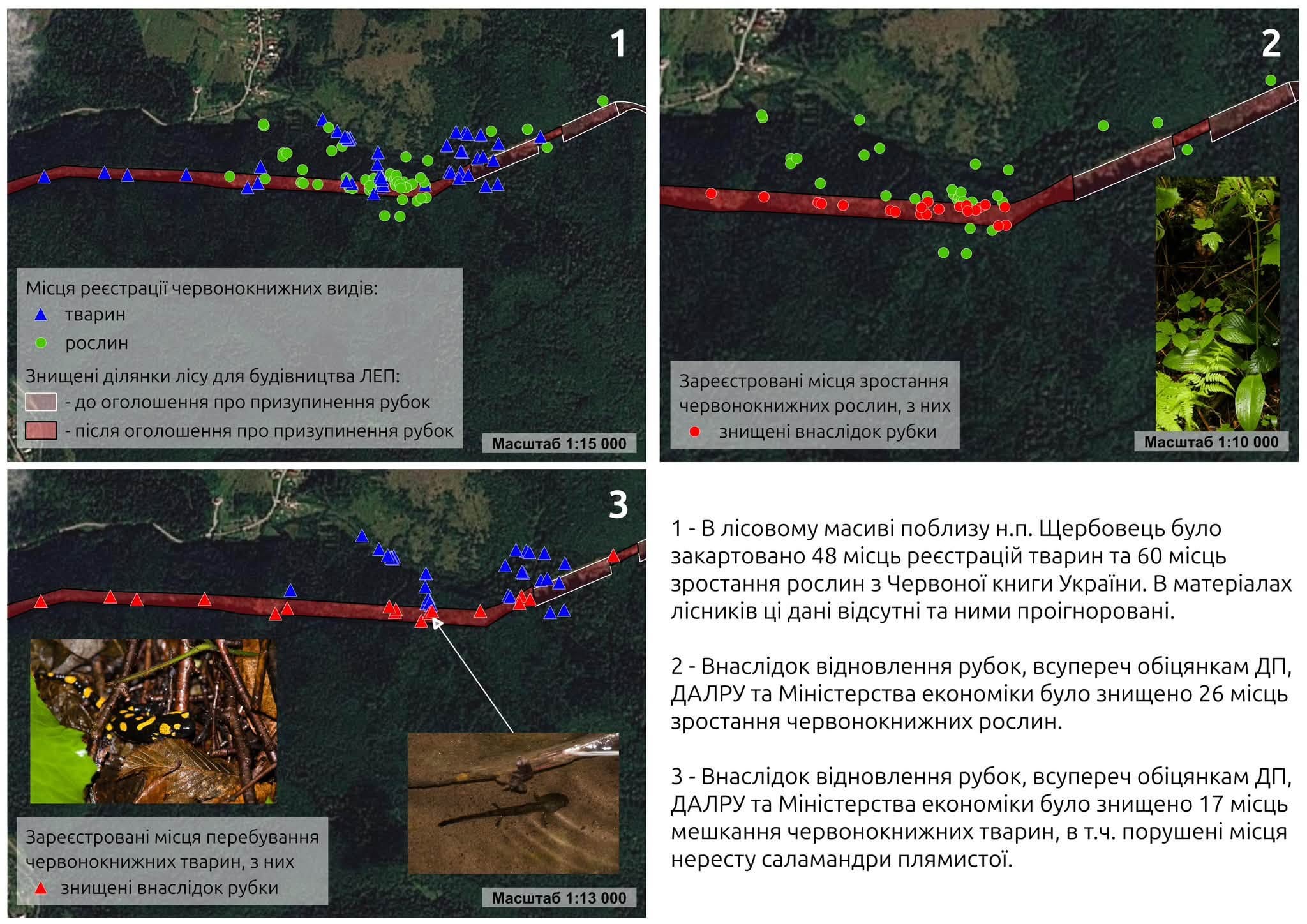
Source: "Teren"/Facebook
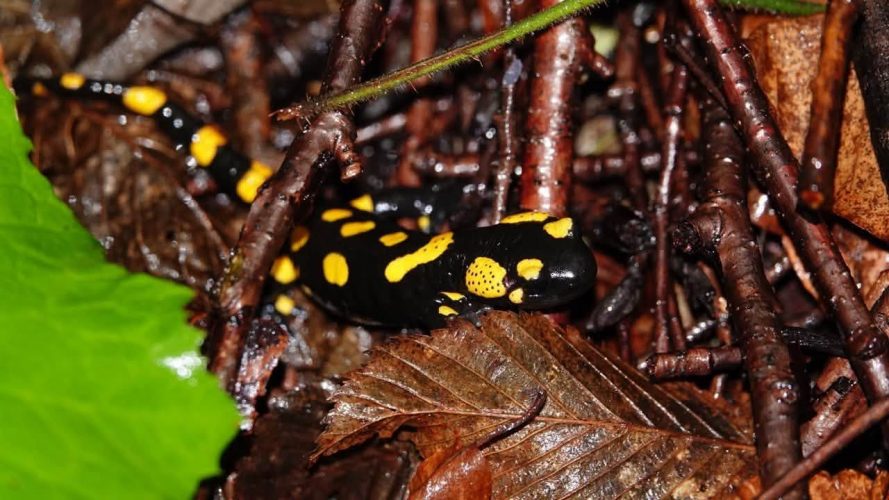
Fire salamander (Salamandra salamandra). This species has been recorded at 42 sites, 17 of which have already been destroyed. This was due, in particular, to damage to and pollution of the forest streams where the larvae live.
"These are precisely the streams that foresters, together with Fedun and Kavurka, researchers from the ‘Chernihiv Collegium’, identified as having dried up. For populations of tailed amphibians, reproductive habitats are critical to their survival; without them, the species would simply disappear," the community added.
Yellow-bellied toad (Bombina variegata). Another amphibian species listed in the Red List. Environmental activists have identified six spawning sites for this species, one of which has already been destroyed.
Two-leaved Platanthera (Platanthera bifolia). This rare orchid has been recorded at 34 sites, 13 of which have been destroyed.
Bird’s-nest orchid (Neottia nidus-avis). This is also a rare orchid that is entirely dependent on mycorrhizal relationships in forests. All three of its known habitats have been destroyed.
Annual clubmoss (Lycopodium annotinum). This is a vulnerable clubmoss-like species listed in the Red List. Eleven growth sites have been recorded, seven of which have been destroyed.
Common baranets (Huperzia selago). Two of the eight sites where this rare mountain plant grows have been destroyed.
Activists point out that these devastating losses to the natural environment have been made possible by the blatant indifference of a number of authorities and bodies. They also highlight the tacit consent of the Ministry of Economy and Environment, the State Forestry Agency and the Transcarpathian Regional State Administration.
"Instead of including these sites in the forest management plans and establishing protected areas, the forest district and the Transcarpathian Regional State Administration set up a token commission which, on 28 May, ‘found’ no animals or plants whatsoever in the dried-up puddles 150 metres from the road. We must not forget those who legitimised this commission with their signatures,” emphasised “Teren”.
EcoPolitiс reported earlier on the resumption of logging in the Zhdeniivska community.