Ukrainian lakes have a way of surprising us: some are so clear that you can see the bottom several metres below. Others lie high up in the Carpathians, where you cannot drive or walk in white trainers. There are lakes that sustain vast ecosystems, provide a haven for thousands of birds and influence the lives of entire regions.
EcoPolitic has compiled a list of seven Ukrainian lakes whose uniqueness is particularly important to preserve.
There is one very important point to note: a lake does not necessarily have to dry up completely for us to lose it. It is enough for the water to become uninhabitable, for the shores to be built up, for the natural water exchange to be disrupted, and for the plants and animals characteristic of the body of water to disappear.
1. Svitiaz — Ukraine’s ‘sea’ that lacks water
Location: Volyn Oblast.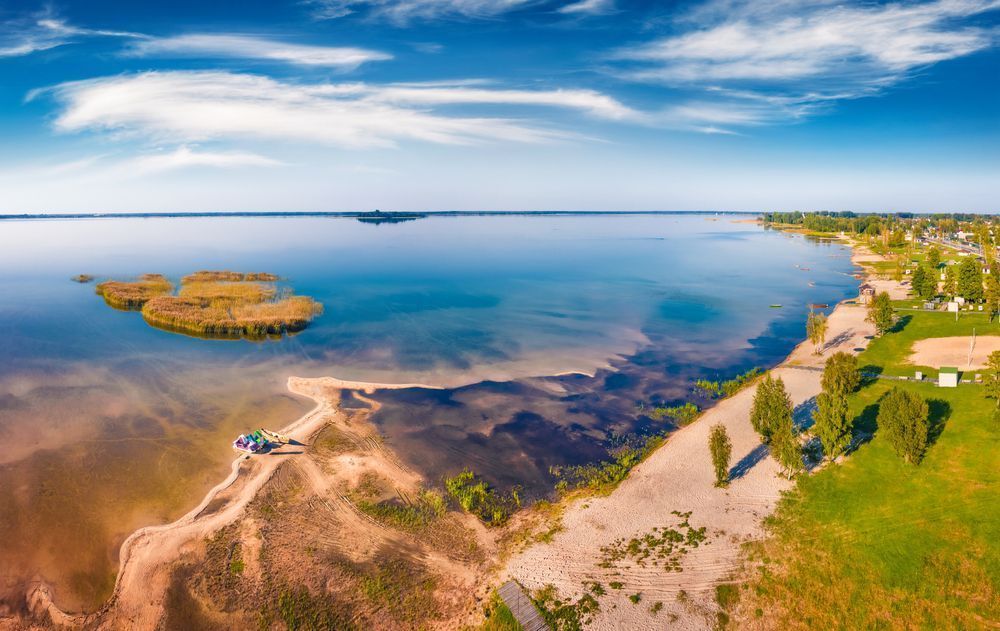
This lake needs no special introduction: it is one of the 7 natural wonders of Ukraine and the deepest natural lake in the country. Its clear water, sandy shores, and vast area, especially for a lake, have long made it one of the most popular summer holiday destinations in Ukraine.
However, popularity comes at a price. Svitiaz and the entire Shatsk lake system are highly sensitive to changes in the water regime. Drought periods caused by climate change, decreased precipitation, high temperatures, and changes in the groundwater level are reducing the lake's water volume.
Both last summer and this summer, vacationers have noted alarming changes: the water has noticeably receded from the shores. Some areas that were underwater just a few years ago have now become dry land.
On top of natural factors comes human pressure: coastal development, tourist load, wastewater, and interference with nearby territories. Scientists believe that one of the reasons for Svitiaz's shallowing may be large-scale mining operations at the Khotyslav quarry on the territory of Belarus.
The main paradox of this resort lake is that the more people want to enjoy its natural beauty, the more carefully this nature must be protected from the vacationers themselves.
2. Synevyr – a treasure that may not withstand tourists' excessive affection
Location: Zakarpattia region.
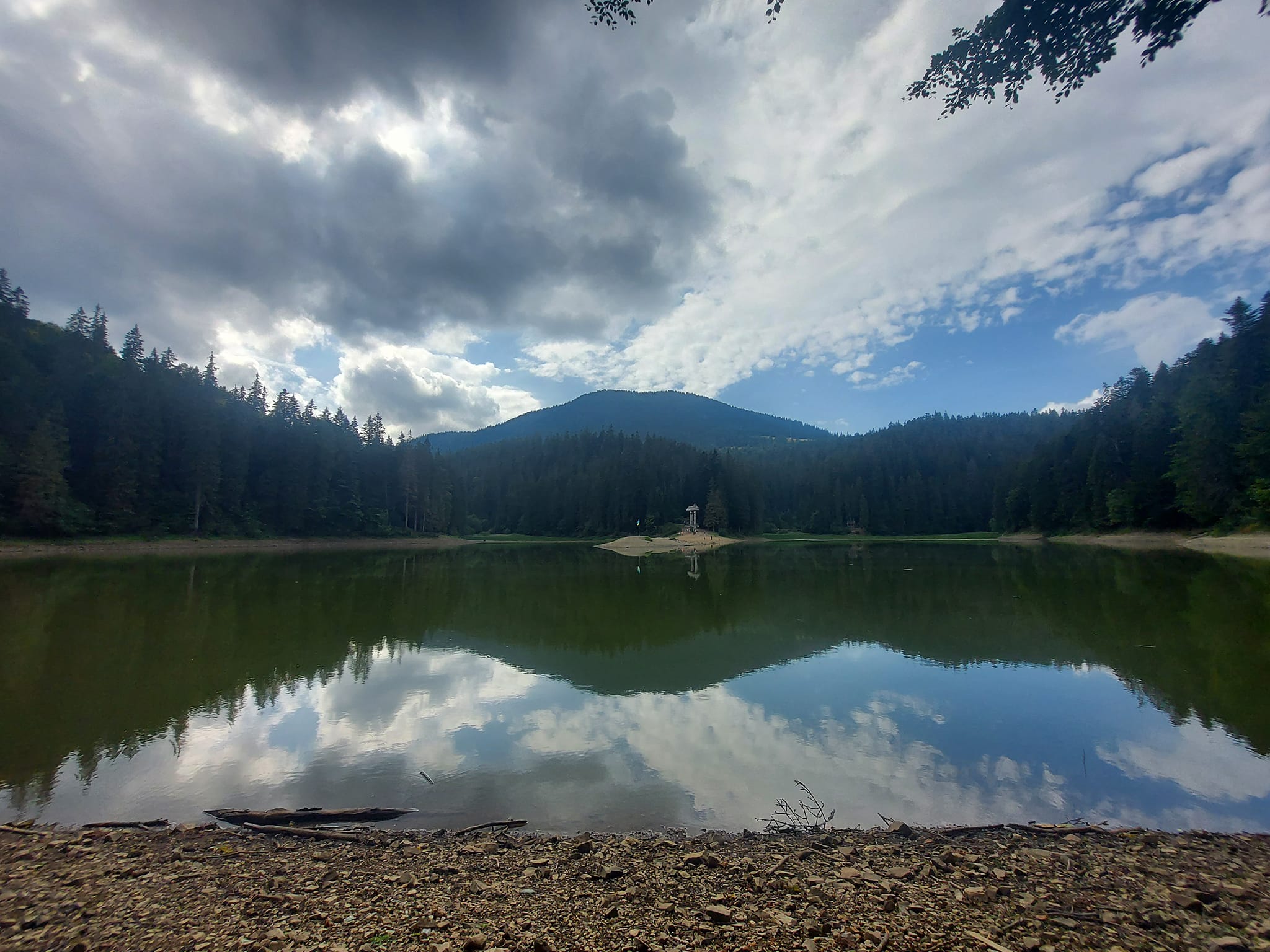
Synevyr is called the Sea Eye of the Carpathians, as the lake lies amid mountains and coniferous forests and is one of the most recognizable natural symbols of Ukraine. It is the largest and deepest high-mountain lake in the country.
Its origin is linked to mountain landslides that blocked the stream's valley. As a result, a body of water formed among the Carpathians, around which many beautiful legends later grew.
Today, the main threat to Synevyr is the pressure from modern tourism.
Thousands of visitors mean transport, litter, trampling of vegetation, food facilities, and constant pressure on the area surrounding the lake.
The good news is that Synevyr is located within a national nature park and has protected status. The bad news is that a status on paper alone doesn't remove plastic cups or reduce the number of cars.
Therefore, for Synevyr, the key must be balance: showcasing one of Ukraine’s most beautiful bodies of water to visitors while avoiding turning it into another attraction with parking right by the shoreline.
3. Yalpug – the largest Ukrainian lake whose fate is not determined by Ukraine alone
Location: Odesa region.
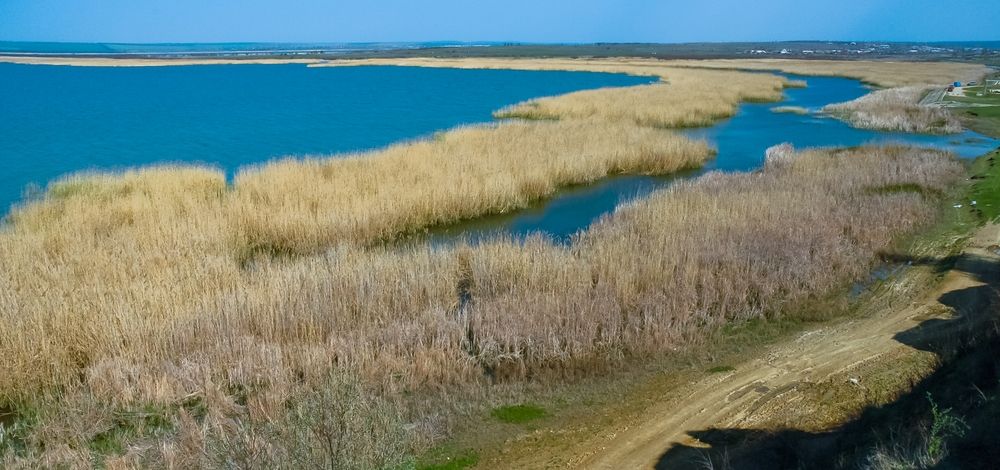
Yalpug is one of those bodies of water whose scale is especially noticeable only on a map. It is the largest natural freshwater lake in Ukraine by area and an important part of the water system of Ukrainian Prydunavia.
Its value is not just its size. The lake sustains local wetland ecosystems, serves as a habitat for fish and birds, and is important for local communities.
However, Yalpug has a unique feature: its condition largely depends on water coming from rivers, particularly those originating in neighboring Moldova.
And water does not recognize borders: upstream, the rivers feeding Yalpug are regularly contaminated with agrochemicals, untreated effluent, or other pollutants. The consequences are “blooming” waters and mass fish kills due to oxygen shortages, ultimately affecting the Ukrainian lake.
Adding to this are droughts, high temperatures, evaporation, and an overall water deficit in the south – making it clear that sheer size does not make Yalpug invulnerable. Global climate change led to a record low water level in the lake at the end of spring. Local residents do not recall the lake ever being in such a state before. The harvest of local farmers is also under threat.
4. Bile Lake – a Polissya gem threatened by changes in its water regime
Location: Rivne region.
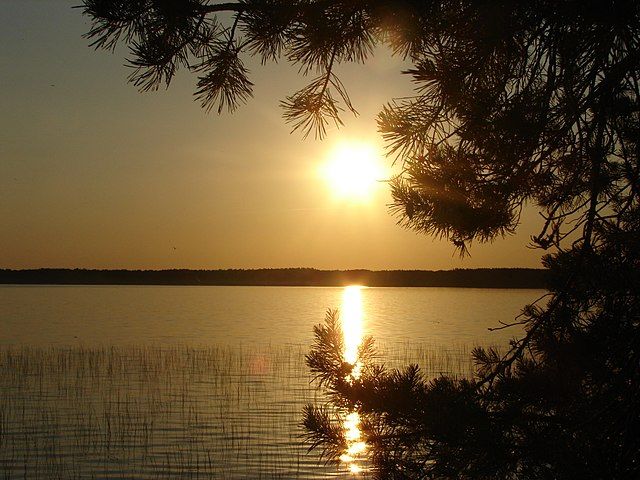
Karst Lake "Bile." Photo: Oksana Holovko
This unique karst lake is the only lake in Ukraine with elevated glycerin content in its water (up to 6.37 mg/l). For this reason, it is called the “lake of youth” and a natural spa for the skin.
Since Bile Lake is located in Polissya – a region where the lives of lakes, swamps, forests, and groundwater are closely interconnected – one of the main threats it faces is a change in the hydrological regime.
Draining of adjacent areas, a drop in groundwater level, prolonged droughts, and high summer temperatures can transform the lake even without direct pollution. In May this year, locals reported significant shallowing of the lake.
Moreover, the healing properties of the water at Bile Lake attract thousands of visitors each year. Therefore, the impact of tourism cannot be ignored: litter, cars along its shores, and trampling place excessive recreational pressure on its ecosystems.
5. Brebeneskul – the highest lake in Ukraine
Location: Zakarpattia region.
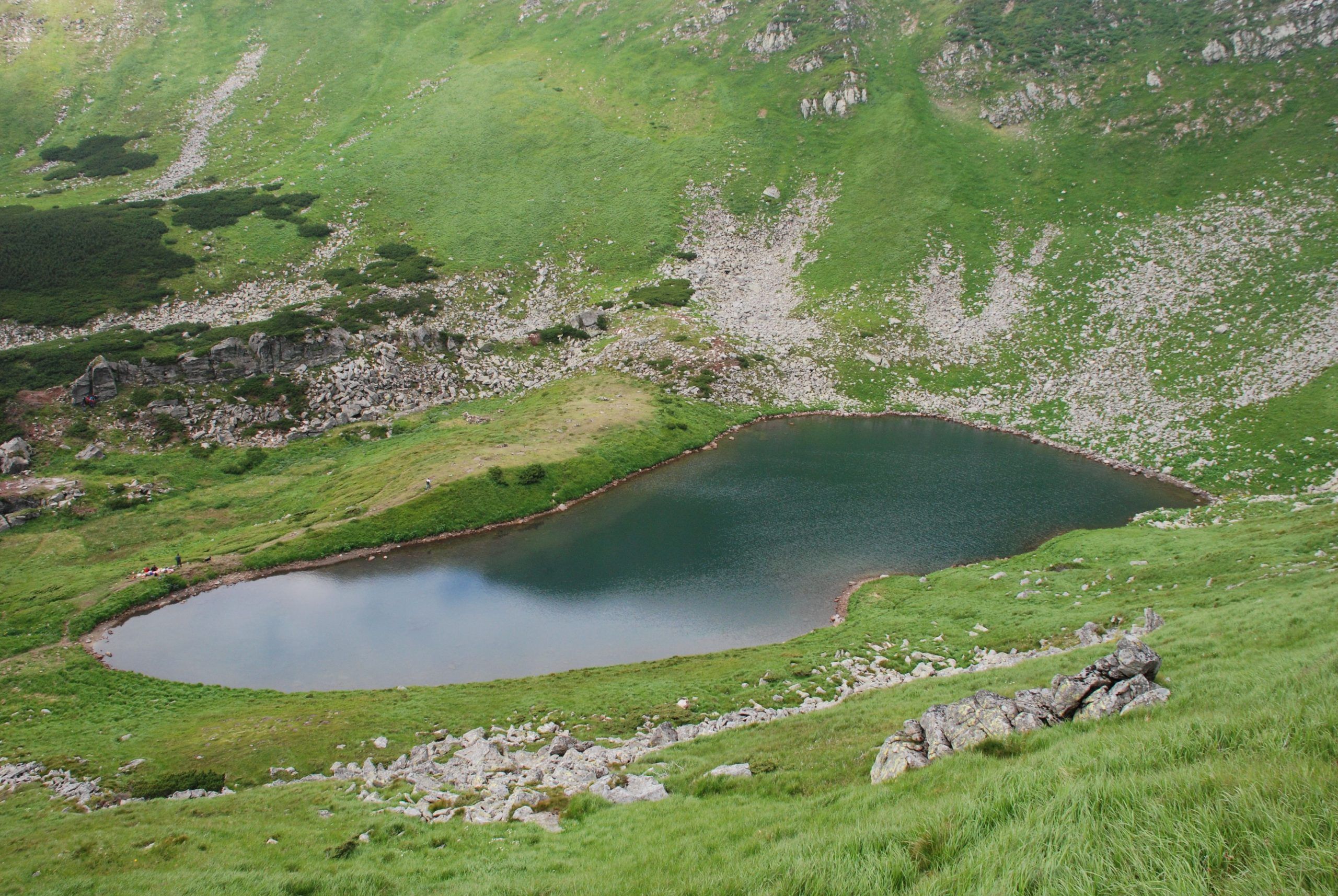
Photo: wikipedia.org. Author: LorikNov.
To reach this picturesque high-mountain lake, you'll need to put in a good amount of legwork. It lies in a basin between the mountain of the same name and Mount Hutyn Tomnatyk. This location makes Lake Brebeneskul a place where different seasons converge in a single day.
It is small, cold, and extremely photogenic-an ideal candidate for Instagram. And that is exactly where the problems begin.
What for a tourist appears to be a narrow trampled path or a tent spot can mean years of damage for alpine vegetation. After all, high-mountain ecosystems recover much more slowly than urban lawns.
Add to that trash, campfires, chaotic campsites, and the overall growing tourist pressure on Chornohora.
Another risk is climate change. High-altitude bodies of water are especially sensitive to changes in temperature, precipitation patterns, and the duration of snow cover.
You don't have to build high-rises at Brebeneskul to harm it. Sometimes, a few thousand tourists who believe that one discarded bag makes no difference are enough.
6. Solotvyno Lakes – a resort on the edge of karst sinkholes
Location: Zakarpattia region.
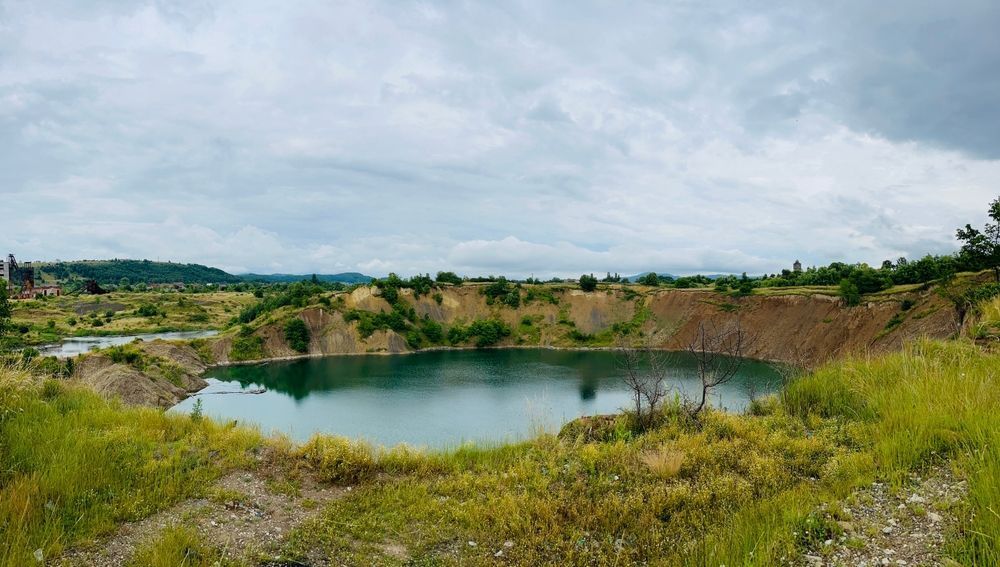
The village of Solotvyno in Zakarpattia is famous for its salt lakes and its long history of salt extraction. It was industrial human intervention that not only created these lakes but also triggered many of the area's current problems. These lakes formed as a result of subsidence due to salt mining at nearby sites, and now, karst processes threaten to swallow them together with the surrounding territory.
The largest lake of the group-Kunigunda-was once called the “Ukrainian Dead Sea.” The salt concentration here was so high that drowning was impossible. Scientists claim that the lake's therapeutic properties were in no way inferior to the well-known Israeli sea.
But now tourists note that the lakes are significantly shallower, and the salt content in their water has decreased. There is also very little therapeutic mud left. Vacationers also complain about dirt and litter, which can often be seen along the shores.
The Solotvyno lakes are unique in that here, it is almost impossible to draw a clear line between nature and the consequences of human activity. Salt created a unique landscape and turned Solotvyno into a resort, yet its industrial extraction simultaneously set processes in motion that now threaten this landscape.
Therefore, “losing the Solotvyno lakes” does not just mean seeing less water on the map. It is about the risk of a further transformation of the entire area-the lakes, the soils, the groundwater, and Solotvyno itself as a resort.
7. Sasyk (Kunduk) – the lake people created for 'improvement'
Location: Odesa region.
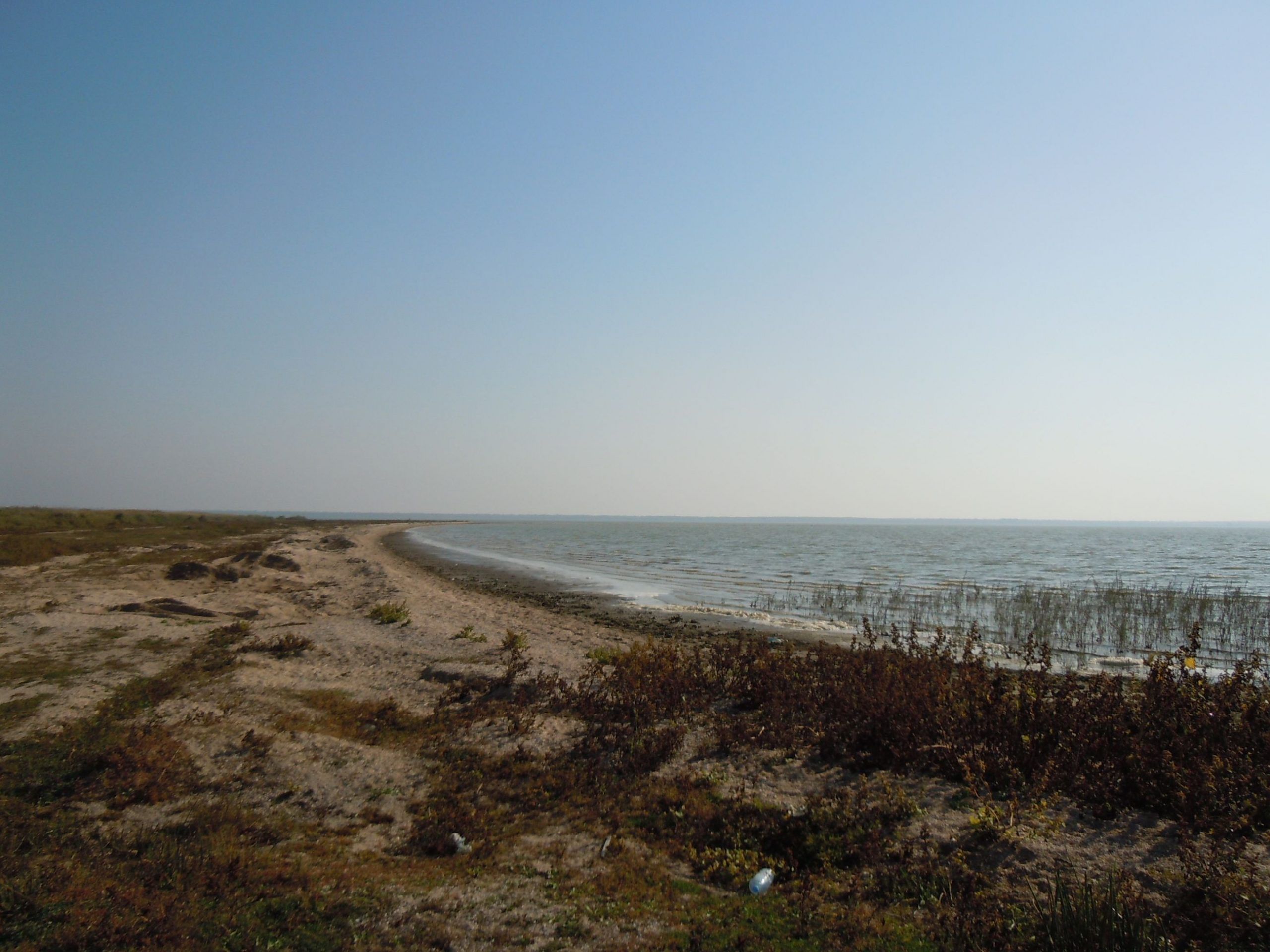
Photo: wikipedia.org. Author: Yuriy Kvach.
The story of Sasyk, Ukraine’s largest artificial lake, is a prime example of how large-scale interventions in nature almost always create more problems than they solve.
It was once a saltwater estuary connected to the Black Sea. During the Soviet era, the body of water was separated by a dam and desalinated so that its water could be used for domestic purposes and fish farming.
But things did not go to plan: the artificial lake was never successfully converted into a fully freshwater body, as the salt reserves in the bottom sediments proved to be much greater than predicted. Consequently, fish catches fell short of the targets set in the desalination project, and the water in Kunduk remains unsuitable for irrigating fields.
Now, following this dubious ‘improvement’, the water in the estuary ‘blooms’ every few years, and the fish die from suffocation. This alteration to the natural water exchange has significantly transformed the ecosystem. Issues concerning water quality, salinisation, ‘blooms’ and the future of the estuary have been the subject of debate for many years. There are several projects aimed at restoring the Sasyk Estuary to its natural state, but they are still awaiting implementation.
Lakes disappear not only when the water vanishes
It is important to realize that a natural lake is not like a hotel swimming pool. It is not enough just to add more water or clean the filter to restore everything to its original condition.
If the water exchange system around it changes, the lake itself also gradually transforms. That is why protecting lakes means much more than simply avoiding water pollution.
We need to safeguard their catchment areas, forests, wetlands, and shorelines, regulate development, purify wastewater, and keep in mind that due to climate change, water in Ukraine is becoming an increasingly valuable and vital resource.
If you think we are exaggerating the threat when talking about the loss of large lakes, you are only giving yourself false comfort. Here is a striking example: this summer, the largest lake in Khmelnytskyi region – Svyate Lake, which had existed for over 10,000 years – completely dried up.