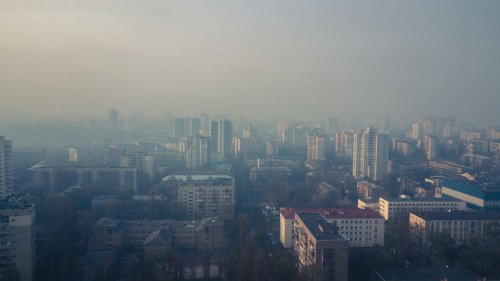
On Thursday, 6 August, the vast majority of Ukrainian cities are experiencing moderate levels of air pollution. There is no cause for concern for people with sensitive respiratory and cardiovascular systems. However, a heatwave has hit a number of cities.
This is reported by EcoPolitic, citing data from the international monitoring platform IQAir.
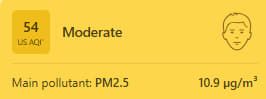
In Kyiv, air quality has improved slightly compared with levels recorded on Wednesday, 5 August, when the city came under a massive Russian attack. Moderate levels of pollution are currently being recorded. The concentration of the main pollutant — PM2.5 particulate matter — stands at 10.9 µg/m³. To put this into perspective, the upper limit for this indicator, according to World Health Organisation standards, is 5.5 µg/m³.
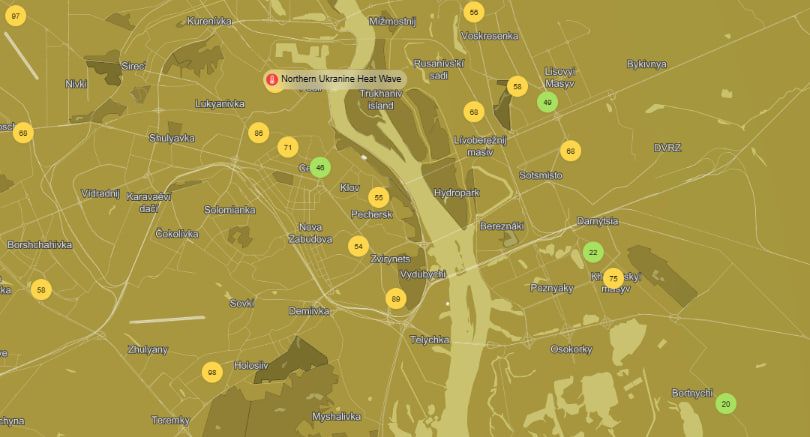
The vast majority of monitoring stations report a “yellow” level of pollution. The highest dust concentration – on Sichovykh Striltsiv Street (27.9 µg/m3). The capital is also in the heatwave zone.
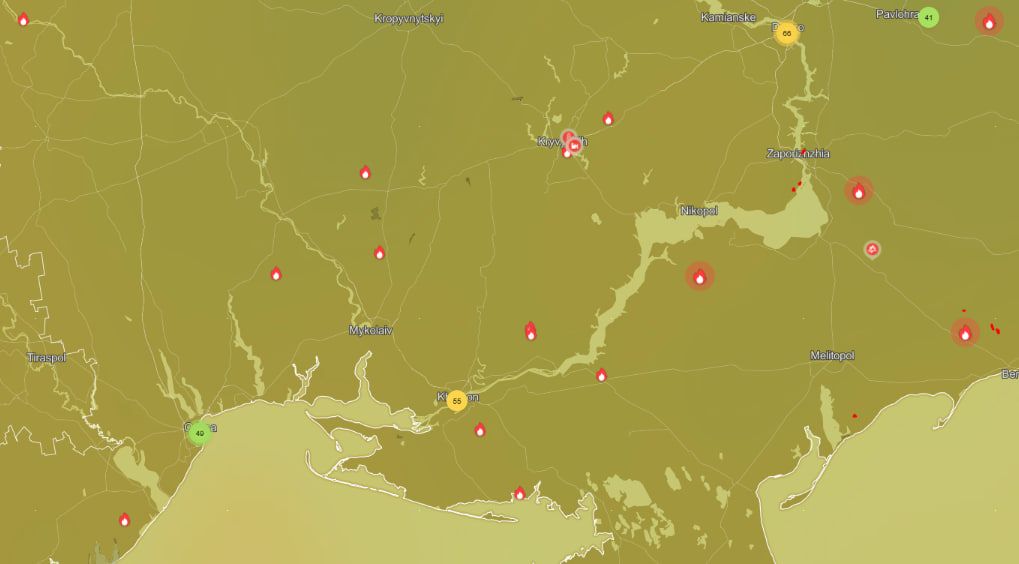
Virtually all cities in Ukraine, including the capital, remain in the “yellow” zone for pollution levels. The fine dust concentration in several regional centers is as follows:
- Dnipro – 10 µg/m3;
- Lviv – 10.9 µg/m3;
- Kharkiv – 10.5 µg/m3;
- Poltava – 12.5 µg/m3;
- Zhytomyr – 11.9 µg/m3;
- Vinnytsia – 13.8 µg/m3;
- Rivne – 13 µg/m3;
- Lutsk – 12.4 µg/m3;
- Cherkasy – 9.5 µg/m3;
- Mykolaiv – 12.3 µg/m3;
- Ternopil – 16 µg/m3;
Air is considered safe in Ivano-Frankivsk (dust content – 8.3 µg/m3) and Odesa (dust content – 7.8 µg/m3).
There are several fire outbreaks in the south. Two special “red” warnings are in effect for Kryvyi Rih – due to the threat of industrial pollution and the southern boundary of Ukraine's heatwave spreading.
Earlier, EcoPolitic reported on a study by Ukrainian scientists on the impact of the war on air quality. It shows both an overall decline in pollution due to the stoppage of industry and local exceedances by dozens of times due to enemy attacks.