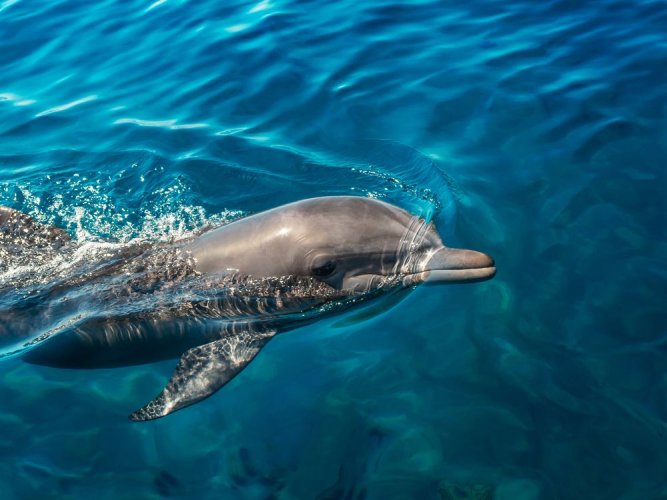
Due to the impact of military operations in the Black Sea, cetaceans – bottlenose dolphins, Azov dolphins and white-beaked dolphins – continue to die in large numbers. Animals that are already dead or barely alive are often washed up on the coast of the Odesa and Mykolaiv regions, where local residents or holidaymakers may come across them. However, handling such animals requires strict adherence to the rules.
Ivan Rusev, head of the research department at the Tuzly Estuaries National Nature Park, outlined the procedure on his Facebook page.
1. The dolphin is alive and swimming in the sea unaided
In this case, it is strictly forbidden to ‘rescue’ it or attempt to drag it further out to sea.
People should simply not hinder the animal’s movement; if something is preventing it from moving, remove any obstacles or barriers.
2. The dolphin is still alive but being washed ashore by the current
This indicates that the animal is too weak. It may be injured, concussed, or seriously ill.
The rule in this case is the same – leave the animal alone. Even if people want to help, without the proper expertise, they may only make things worse. Do not pick up or touch the dolphin. Do not try to push it into the sea – a weakened and disoriented animal is likely to drown in deeper water.
The researcher recommends taking several photos of the animal, recording the exact location or GPS coordinates, and urgently reporting the information to the following contacts:
- Tuzly Lagoons National Nature Park: +38 (097) 576 27 05, +38 (068) 881 61 94 – by phone, via WhatsApp, Viber, Telegram; to Ivan Rusev in Facebook Messenger here; or by email at npp.tuzlim0101@gmail.com;
- Representatives of the local authorities and the territorial community in whose area the animal was found.
3. The dolphin has died
If you find a dead animal, you should also report the information via the contacts above. Additionally, take clear photographs and provide coordinates.
Separately, Ivan Rusev emphasizes the importance of observing safety rules.
“Remember that the Black Sea is considered an active combat zone, do not forget about the risk of mines on the coastline, and keep in mind that sick animals may be carriers and spreaders of infectious agents, especially under wartime conditions. Do not touch the bodies of dead animals without protective gloves,” said the reserve representative.
EcoPolitic previously reported that in just the past two months, 83 dolphin carcasses were washed up on the Tuzly Lagoons National Nature Park’s shores. Preliminary estimates suggest that the number of cetaceans killed by the war may exceed 100,000 individuals.