At present, national retailers, manufacturers, petrol stations and mobile operators are actively exploring the potential of solar power plants. Some are merely experimenting and seeking funding, but many companies can already boast significant progress in developing their own ‘green’ power generation.
EcoPolitic has analysed the state of solar electrification among Ukrainian companies and prepared an overview of the achievements and plans of the largest businesses for its readers.
A paradigm shift
With the outbreak of full-scale war, the fundamental incentive for the development of solar energy has changed. Whereas until February 2022 the focus was on profiting from the ‘green’ tariff, it is now a matter of business survival. All sectors of the economy are irrevocably energy-dependent, so a power cut means production stoppages, shop closures, spoilage of goods, and the loss of customers and revenue.
Consequently, a shift in mindset has been observed in recent years: from industrial solar power plants to small-scale installations for self-consumption.
This shift is “motivated” by two factors:
- instability of energy supply. Due to systematic shelling of energy infrastructure by the enemy, the situation has become unpredictable;
- growth in industrial electricity tariffs. Considering that alongside this, the cost of everything is increasing – from equipment components to logistics – the desire to save at least on energy is quite natural.
Depending on their profile, businesses are seeking different points of application for solar power plants. This will be discussed further.
ATB
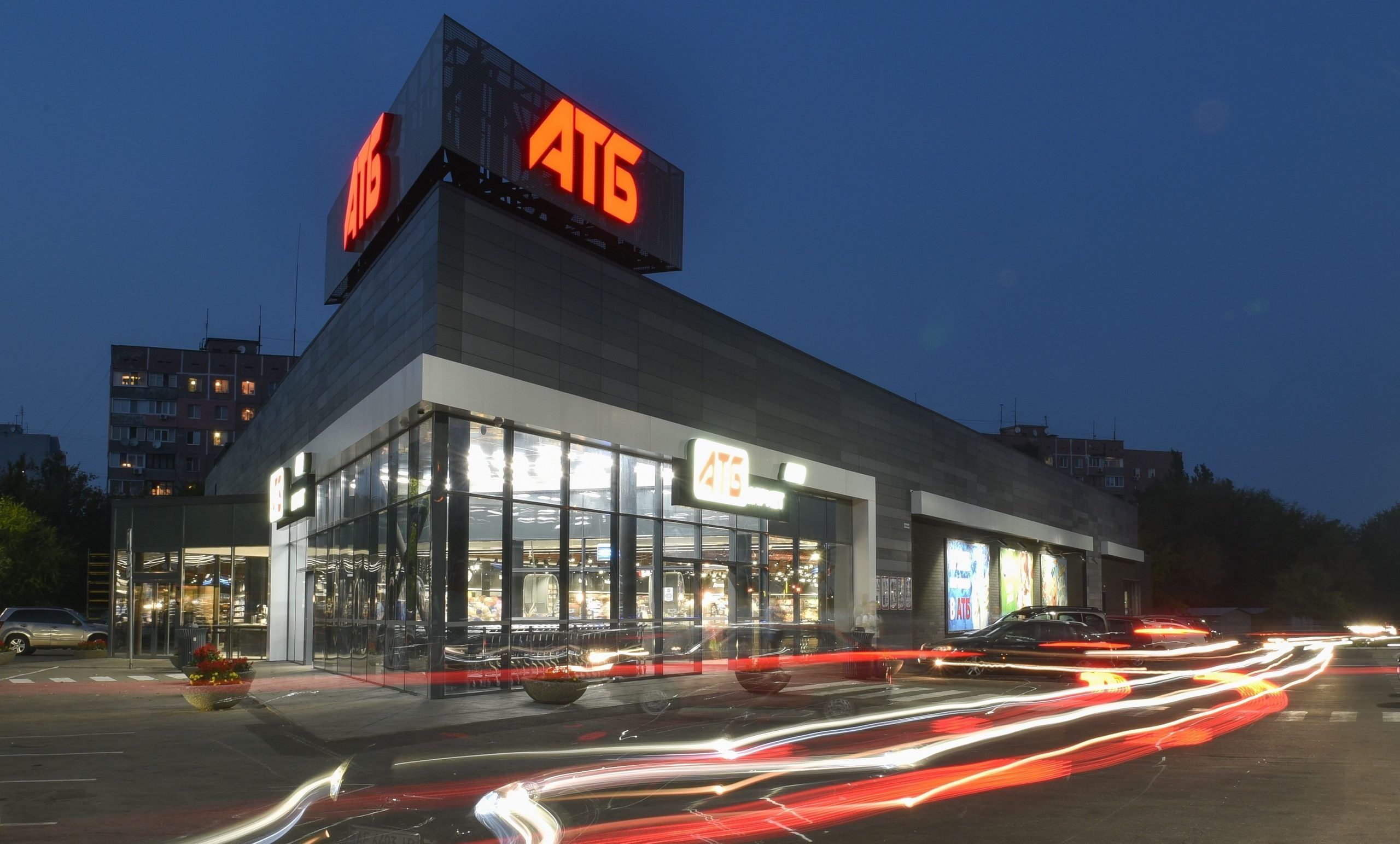
By the end of winter 2026, ATB already had 213 solar power plants in its stores. Of these, 210 are standard rooftop solar stations, while three – a relatively new solution for Ukraine – are CARPORT systems, where panels are installed on parking canopies. Plans for 2026 included installing solar power plants at 21 more stores.
As of the end of 2025, the chain had already invested over UAH 342 million in solar generation and storage. The total installed capacity amounts to 20.5 MW, which covers 20–25% of the stores’ needs. The average power station at ATB is about 100 kW, so a store can generate up to 72 MWh of energy per year.
In general, the installation of solar power plants has been incorporated into the construction concept for all new stores in the chain.
Source: ATB
Epicentr
In the very first year of developing the solar energy segment, namely in 2023, the company commissioned five solar power plants with a combined capacity of almost 6 MW. Ten thousand solar panels were installed on the roofs of its hypermarkets.
As of the end of September 2025, the chain already had 15 MW of its own generation across nine power plants. The total investment in these projects reached $6 million. In the first quarter of 2026, Epicentr planned to commission an additional 30 MW of solar capacity. To implement further plans, investments totaling $44 million are required.
Silpo
The “Silpo” supermarket chain is also investing in energy autonomy for its stores, albeit with more modest ambitions.
Іnformation regarding this area of the company’s operations is somewhat limited. However, as of early March 2026, 13 supermarkets already had their own solar power plants. For comparison, by the end of 2024 there were only three.

Source: Silpo
Vodafone Ukraine
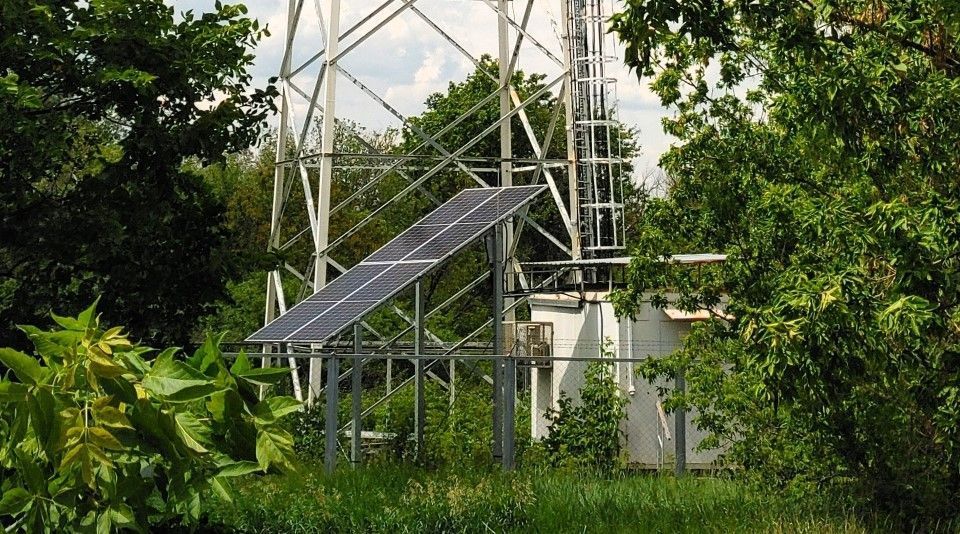
Already at the end of June this year, one hundred Vodafone mobile communication towers were equipped with solar power plants, as was announced in October 2025. The total installed capacity of the stations is 360 kW. According to the company, this can cover about 30% of the energy consumption of communication equipment.
Vodafone states that this is only the first stage of "green" energy modernization. The next ones are set to start immediately.
Source: Vodafone
Kyivstar
The mobile market leader decided to take a completely different approach. Kyivstar is investing in the purchase of existing solar power plants. The goal is not to power communication equipment for customer needs but to diversify its portfolio and reduce operational risks associated with energy supply instability.
In other words, the company will supply energy to the national power grid, which "will allow Kyivstar to partially hedge risks related to electricity price fluctuations".
At the end of May 2026, the company officially announced the acquisition of six solar plants in Lviv region. Their total capacity is 105 MW. Previously, in December 2025, Kyivstar reported purchasing a solar plant with a capacity of about 13 MW.
Lifecell
The mobile operator lifecell announced the testing of solar panels at base stations back in October 2022. It referred to solar panels in southern Ukraine with an area of 84 m2 and a capacity of 16 kW. Thanks to storage batteries, this was enough for 36 hours of autonomous operation.
However, the solar plant project has since "stalled." There have been no new releases on the company's website. As of April 2025, the company briefly mentioned that three years ago it launched a pilot project using solar panels. However, the main focus was on supplying energy to base stations via batteries and generators.
OKKO
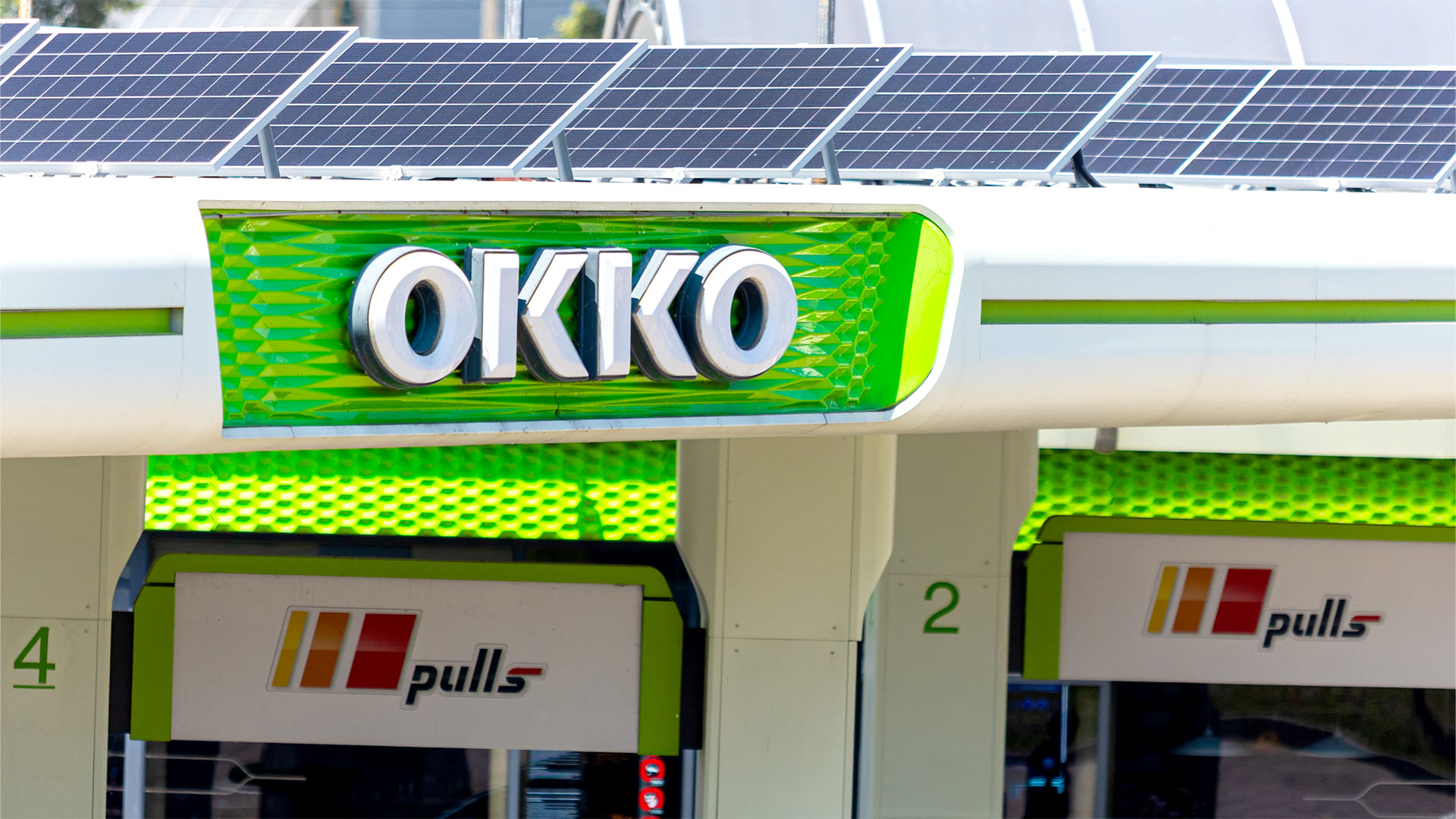
During 2025, the OKKO gas station network installed solar power plants on the roofs of 64 of its filling stations. By that time, 265 complexes already had their own generation, with a total capacity of 6 MW. According to the company’s data, this covered 8.4% of electricity needs.
The company began to actively develop this area back in 2021. In five years, OKKO invested over $3 million in the construction of solar power plants. The business emphasizes that, thanks to electricity cost savings, the majority of investments have already been recovered.
By the end of 2026, the network plans to increase the number of filling stations with their own solar power plants to over 300. This will require an additional $0.5 million in investment.
However, autonomy and cost savings still prevail. OKKO cited as an example solar power plants on the rooftops in Irpin and Hatne, with a capacity of 69 and 48 kW, respectively. Both have the potential to be expanded to 100 kW. Even now, during the peak period, they are able to cover up to 50% of the filling station complex's own consumption.
Source: OKKO
Metinvest
The Metinvest Group is only planning to develop its own solar power generation. In May 2025, the business announced plans to build two solar power plants – with 23.8 MW at Central GOK and 13.3 MW at the Kametstal Metallurgical Plant.
In the summer of this year, 2026, information emerged about intentions to build solar power plants with a total capacity of 37 MW. Where exactly these “green” generation facilities will be located is still unknown.
Kernel
At the end of winter, the Kernel agroholding company announced plans to build a 250 MW solar power plant of its own. The facility is to be located in Chernivtsi region. However, the company intends to sell the generated energy to the general power grid.
The company is already testing solar panels for transport purposes. Photovoltaic modules from a Danish manufacturer have been installed on the company’s trucks that transport its products. The company expects to reduce fuel consumption by 7%, and thus reduce transport emissions by the same 7%.
Another pilot project is being implemented at the company’s elevators. One in Kirovohrad region has been equipped with 100 kW, another in Poltava region – with 150 kW. Already, this is sufficient to power technological processes.
Kernel has also announced its intention to invest in community energy resilience. The first €2.5 million will be allocated for construction of solar power plants for social and educational institutions.
MHP
The international food and agri-tech company MHP announced that in 2024 alone, it commissioned 15 MW of solar power plants for its own needs.
EcoPolitic previously reported that during 2025, about 1.5 GW of new generation capacity were installed in Ukraine. In the previous year, this figure was 800 MW. Overall, at the beginning of 2026, the total capacity of Ukrainian solar energy was estimated at approximately 8.35 GW.