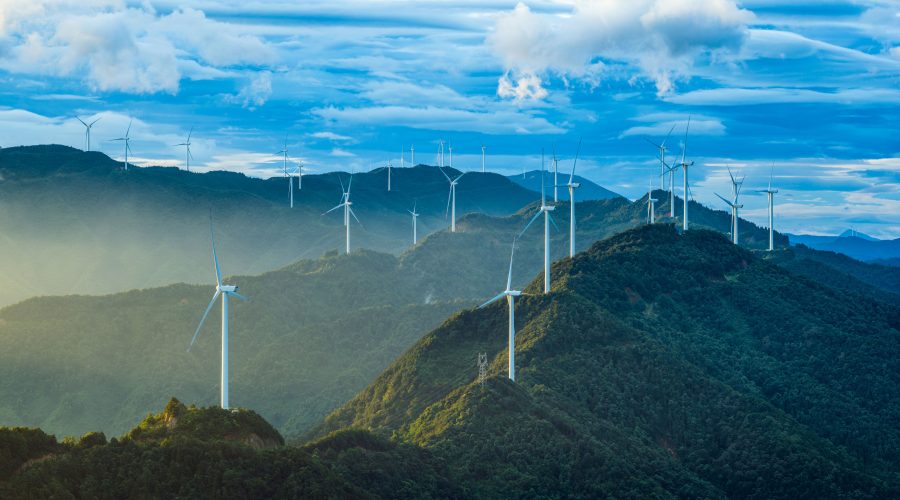
Seven wind farms are set to be built in the high-altitude region of the Carpathians within the Zakarpattia Oblast. This is the number of sites specified in the amendments to the regional planning scheme. However, the specific list of locations is being kept secret, and the Ministry of Defence has refused to provide this information even in response to a direct request from environmentalists.
This has been reported by the ‘Free Svydovets’ community.
These are specific areas of ‘public interest’, the list of which they do not wish to disclose. The list of these locations was determined by the Ministry of Defence of Ukraine on the instructions of the Prime Minister of Ukraine, Yulia Svyrydenko, dated 23 October 2025, No. 33943/1/25.
The wind farms are planned to be situated at an altitude of 800 metres above sea level.
Access denied
Representatives of the environmental group “Save Pikuy” contacted the Ministry of Defence directly, as well as the Department of Architecture and Urban Planning of the Transcarpathian Regional State Administration. The request concerned the exact list of sites in the Carpathian Mountains that are to be developed with wind turbines. However, the request for information was denied.
Mountain WPP
Construction and planning for new WPPs in the Carpathians is experiencing a true boom. In addition to the seven government-proposed sites, the local authorities have suggested another ten locations. According to information from Espreso, these are potential WPP sites in the following communities:
- Mezhhirska: near the villages of Maidan, Verkhnii Bystryi, and Lopushne;
- Nyzhnioveritska: near the villages of Verkhni Vorota and Lazy;
- Stavnenska: the northern part of Polonyna Runa;
- Teresvyanska: near the villages of Kryva and Hrushovo;
- Bohdanska: the village of Roztoky;
- Dubiwska: Polonyna Apetska.
What’s wrong with the wind turbines
Energy developments in the Carpathians have sparked significant public debate. This has been caused by a number of violations by developers, questionable oversight by government agencies, complete disregard for the environmental value of the Carpathian highlands, and large-scale deforestation for infrastructure construction.
Perhaps the most notorious case surrounds the construction of a WPP at Polonyna Runa, which effectively demonstrated the methods being used to develop the Carpathians.
Despite opposition from experts, the public, and even members of parliament, the Ministry of Economy issued an environmental impact assessment for the project. It is indicative that this occurred post-factum, after the wind turbine foundations had already been built. Later, the Ministry of Development acknowledged that constructing these foundations separately from the full project constituted a violation of the law.
Also, the Ministry of Economy promised an individual approach to each specific wind power plant as well as the absence of logging. However, for the construction of a wind power plant on the summit of Pikuy, trees were still cut down to lay power lines. Only recently, the destruction of the forest was suspended because ecologists once again demonstrated that rare species of animals inhabit that area.