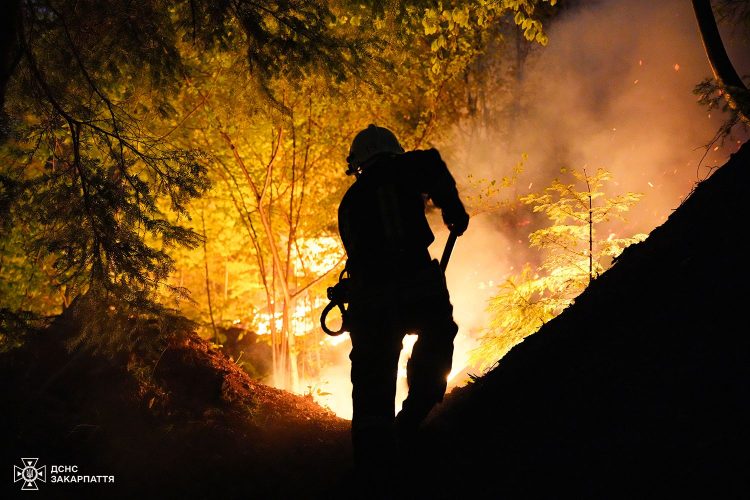
The fire has engulfed 75 hectares of land in the Verkhniy Volovets Forest District in the Mukachevo District. Efforts to extinguish this large-scale forest fire have been underway for nearly 20 hours. As of the morning of May 6, 243 people—including State Emergency Service personnel, particularly from neighboring regions, and foresters—are working to bring the fire under control.
This was reported by the Main Directorate of the State Emergency Service of Ukraine in Zakarpattia Oblast.
It all began with a report of a forest floor fire near the village of Volovets. The Rescue Service received information about the emergency at 3:27 p.m. on May 5.
At that time, the approximate area of the fire was estimated at 15 hectares. Initially, 44 rescuers and 13 pieces of specialized equipment were deployed to extinguish the fire.
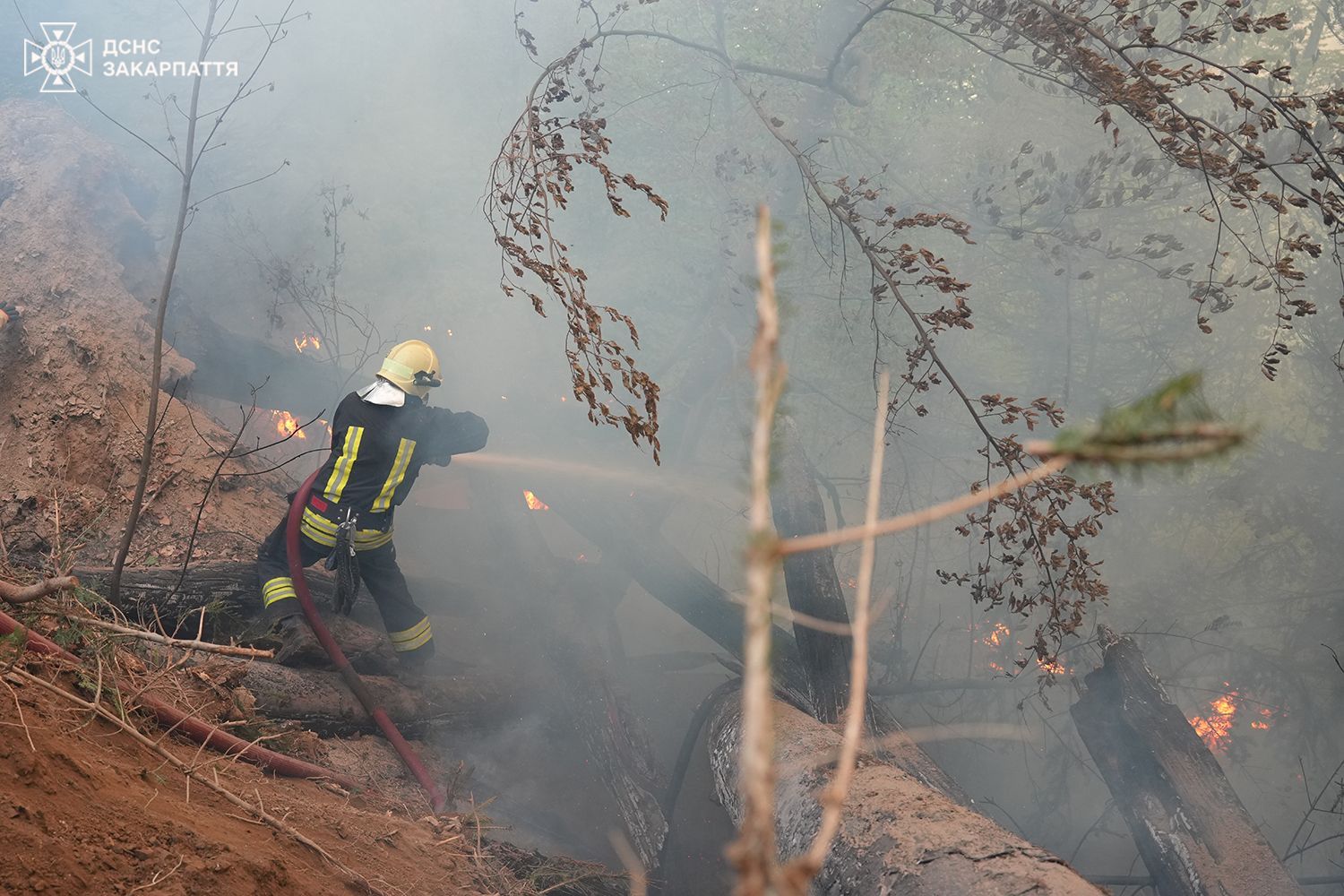
Source: Main Directorate of the State Emergency Service of Ukraine in Zakarpattia Oblast
However, shortly afterwards, the scale of the fire increased several times over. By 21:10, emergency workers reported that the fire had already spread to 75 hectares. An operations headquarters had to be set up at the site, and employees of the Carpathian Forest Office were brought in.
A total of 250 people, including rescuers, forest office workers, and local residents, were involved in extinguishing the fire. The effort was supported by 24 units of specialized equipment, and SES had to deploy its own aviation assets.
The firefighting operation continued overnight and into the morning. As of 8:00, 243 people and 46 pieces of equipment were involved in extinguishing the fire. Rescuers from Ivano-Frankivsk and Lviv regions have been called in to assist their colleagues in Zakarpattia.
Currently, 46 units of equipment are operating at the site, and once again, aviation support is planned.
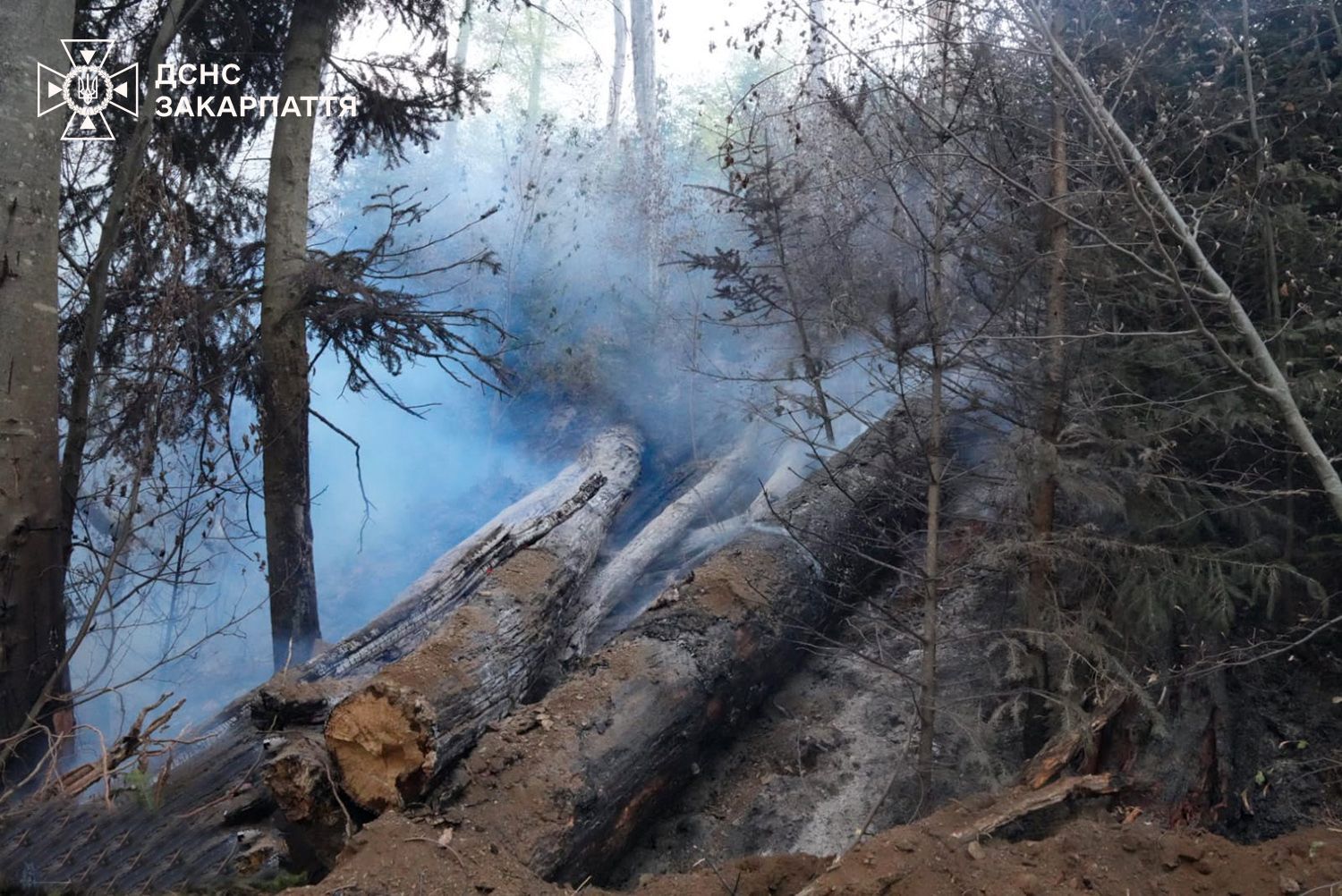
Source: Main Directorate of the State Emergency Service of Ukraine in Zakarpattia Oblast
The causes of the fire have not yet been reported.
EcoPolitic previously reported that around the world, the forest fire season started too early. Experts attribute this to a shortage of precipitation and a global rise in temperatures.