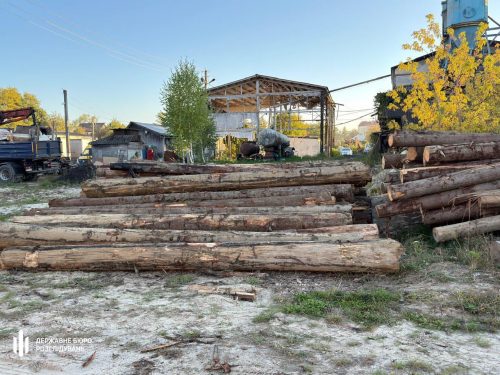
In theory, clear-cutting is a method for improving forest health. In practice, however, this already controversial approach has become an effective tool for harvesting valuable timber. This widespread problem may stem from either a lack of objectivity in justifying the logging or outright fraud.
This was reported by the NGO "Forest Initiatives and Society."
Experts have repeatedly documented cases where unscrupulous forest users cut down healthy trees instead of diseased ones. Only timely third-party oversight helps to detect such abuses.
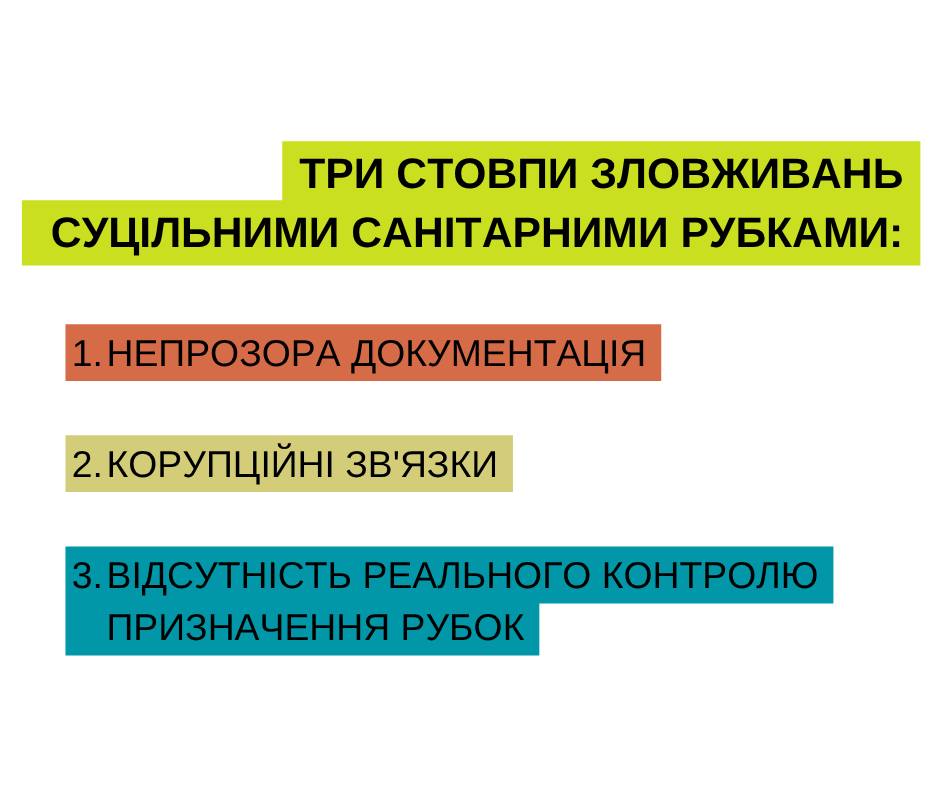
Source: NGO “Forest Initiatives and Society”
Types of forest crime schemes
Specialists have systematized the manipulations most often used to mask timber harvesting as sanitary logging.
Document falsification. On paper, any tree can be deemed diseased or standing deadwood. Forest pathologists or foresters intentionally downgrade forest stand categories to fabricate legal grounds for clear-cutting.
Biased inspections. To achieve the “right” conclusions regarding the state of trees, forest users commission inspections from compliant forest protection authorities.
Ignoring healthy trees. Areas targeted for logging often contain a majority of healthy or only minimally weakened trees.
Area manipulation. Foresters deliberately create obstacles to checking the logged area by providing vague information on markers or improperly marking boundaries.
Parcel fragmentation. For small areas, the procedure for environmental impact assessment (EIA) is not mandatory. Therefore, large areas are intentionally divided into smaller parcels to avoid additional oversight.
How to counter illegal “sanitary” logging
Forest experts emphasize that the public has its own levers of influence to counter abuses. Primarily, this involves vigilant monitoring of forest users’ activities:
- monitoring planned logging in public sources;
- proactive participation in examination commissions.
If suspicious logging is detected, “FIS” encourages submitting information using the form.
“Your message can significantly speed up the process of uncovering unjustified sanitary logging,” the organization emphasizes.
EcoPolitic highlights large-scale forest logging in its digest of environmental crimes.
For example, in Kherson region, foresters used the effects of hostile shelling as cover and divided the logged area into parcels of up to 1 hectare. This enabled them to destroy over 2,000 trees worth 7.9 million UAH.
The amount of damage caused by pseudo-sanitary logging in Donetsk region amounted to more than 14.6 million UAH. There, a criminal group led by the former director of Sloviansk Forestry State Enterprise "Forests of Ukraine" used the services of a loyal organisation. DSLP "Kharkivlisozakhyst" did not even physically inspect the forest stand, yet provided information convenient for logging.