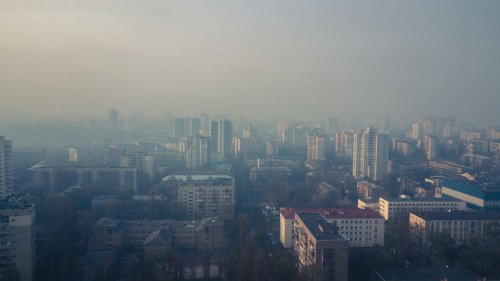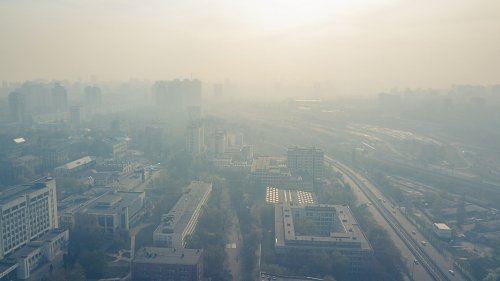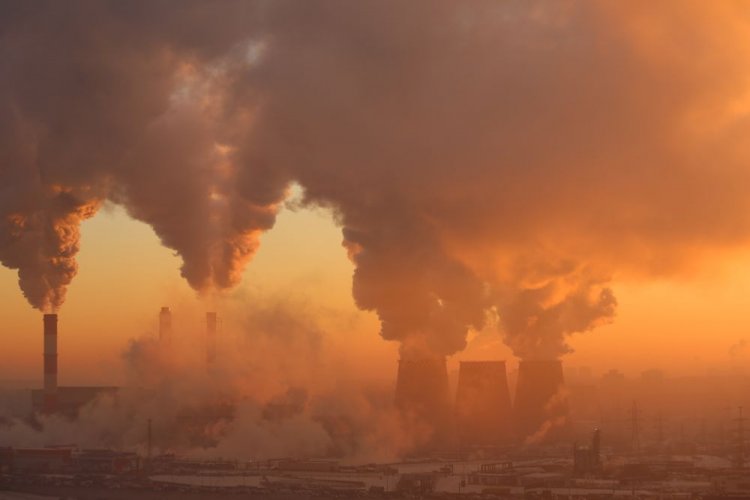
In 2025, residents of most cities around the world breathed air with elevated pollution levels. The previous year saw a 3% decrease in such cases, illustrating a general trend toward declining air quality. The situation is exacerbated by climate change and large-scale wildfires, which have led to additional emissions of toxic substances.
This is evidenced by the findings of the annual report from the Swiss monitoring platform IQAir.
Overview of the situation
The IQAir system includes 9,446 air quality monitoring stations in 143 countries worldwide. In 2025, data from 12 countries and territories not included in 2024 were analyzed. Seven of these were included in the global analysis for the first time.
Compared to the previous year, PM2.5 pollution increased in 54 countries and decreased in 75. The average pollution level remained unchanged in two countries.
Global and regional conclusions
In 2025, air met World Health Organization (WHO) standards in only 14% of the analyzed cities. The previous year, this figure was 17%. IQAir reminds us that the upper limit for pollution recommended by WHO is 5.5 μg/m3.
Only 13 (9%) out of 143 countries and territories had air complying with WHO standards for particulate matter. These included Puerto Rico, Iceland, Estonia, French Polynesia, US Virgin Islands, Barbados, Australia, New Caledonia, Andorra, Bermuda, Réunion, Grenada, and Panama.
The most polluted air in 2025 was recorded in the following countries:
- Pakistan – 67.3 μg/m3;
- Bangladesh – 66.1 μg/m3;
- Tajikistan – 57.3 μg/m3;
- Chad – 53.6 μg/m3;
- Democratic Republic of the Congo – 50.2 μg/m3.
For Europe, the trends are somewhat mixed. In 23 countries, the pollution level increased, while in 18 it decreased. IQAir emphasizes that factors such as wood-burning for heating, forest fires, and dust pollution from the Sahara influenced seasonal air pollution levels. Notably, because of these, air quality in Switzerland and Greece deteriorated by 30%.
Cities with the most polluted air
The city with the worst air quality on the planet was Loni in India, where the average concentration of particulate matter was 22 times higher than the WHO level – 112.5 μg/m3. Compared to the previous year, pollution increased by 23%.
Of the most polluted cities on Earth, 25 are located in India, China, and Pakistan. Remarkably, among the four cities with the lowest air quality, three are in India.
Throughout 2025, no city in East Asia had air quality that met the WHO standards.
In the United States, the most polluted city was El Paso, Texas – due to dust storms, the PM2.5 level there rose by 46% to 11.4 μg/m3. The cleanest city was Seattle, Washington.
Where is the cleanest air?
The city with the lowest PM2.5 concentration was Nieuwoudtville, South Africa, where the average annual concentration was 1 μg/m3.
Among regions, Oceania remains the cleanest according to the report, with 61% of its cities meeting WHO air quality standards. However, record cold in New South Wales, Australia, in June 2025 led to seasonal spikes in PM2.5.
EcoPolitic previously reported that Ukrainian scientists have, for the first time, analyzed the impact of the war on air quality. Due to enemy attacks, local pollution levels can increase up to 10 times.