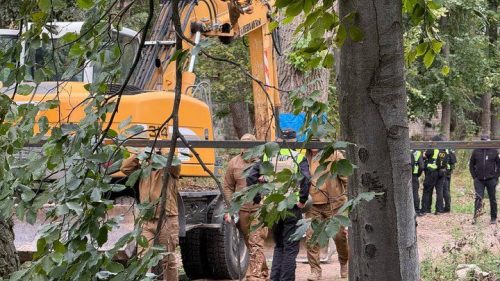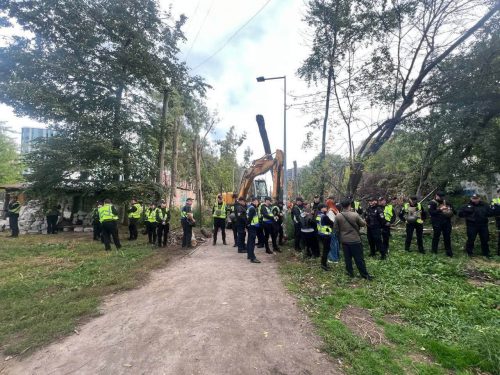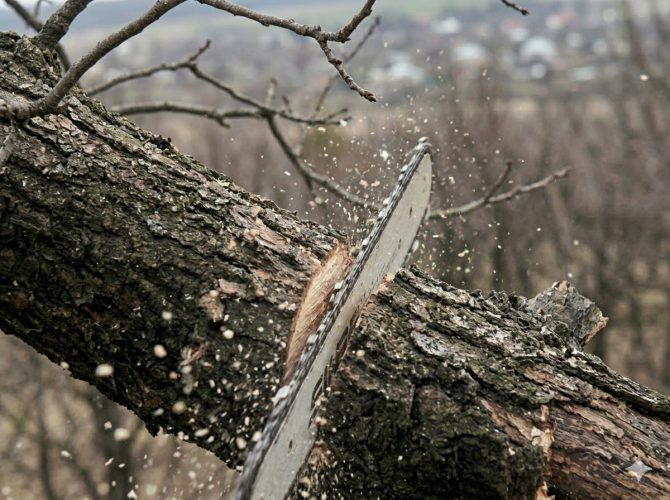
With the arrival of spring, it has become increasingly common to see municipal workers with chainsaws trimming branches in Ukrainian cities. In some places, this is done quite aggressively, sparking outrage among residents. But does the law consider this to be damage to trees?
The State Environmental Inspection explained the types and rules of pruning, as well as the impact on green spaces that is considered a violation.
When are trees pruned in cities?
Tree canopy maintenance is performed throughout the trees’ entire lifespan. This is an important condition for their proper development. However, there are clear restrictions on when this can be done. These standards are set forth in Order No. 105 of the Ministry of Construction from 2006, “On the Approval of Rules for the Maintenance of Green Spaces in Populated Areas of Ukraine.”
According to the document, trees cannot be pruned during the active growing season. Pruning is permitted in the fall after the leaves have fallen or in the spring, before the buds have opened. Suckers near the root collar and on the trunk are subject to removal.
The time restriction does not apply to dry branches—they may be removed throughout the year as they are discovered.
Different types of pruning
The removal of dead or diseased parts of a tree is classified as sanitary pruning. Shaping pruning is used to give plantings a defined shape with evenly distributed scaffold branches; it is typically performed on alley and row plantings.
In addition, the degree of pruning may differ depending on the age, condition, and species of the tree. Pruning can be light, moderate, or severe.
Most criticism in cities is directed at drastic rejuvenation pruning. Frequently, tree crowns are cut back almost to the base of the main branches. However, decisions on how to care for local trees are made by individual communities. For example, in Ternopil, drastic crown reduction is prohibited.
Urban horticultural work performers
The responsibility for green spaces lies with the asset holders of these sites. This particularly concerns landscaping objects owned by the state or municipalities.
The regulations prohibit damaging trees or any other plants without the permission of the asset holder.
Direct care for green spaces on streets, boulevards, and squares in Ukrainian cities must be performed by a special company or green management enterprise equipped with the necessary machinery and specialists.
What changes to trees are considered damage?
The types of pruning listed above are not considered tree damage by law and do not require compensation.
However, there is a classification of green space damage for which specific rates for calculation are established. According to the government’s resolution No. 559 from 1996, the following applies:
- breaking of tree tops or stripping the crown from 1/3 to 1/2 of its length;
- stripping 10–30% of the bark around the trunk circumference, regardless of its length;
- stripping and breaking of scaffold roots from 1/4 to 1/2 of the trunk’s circumference;
- breaking, cutting, or pruning of lateral branches;
- anthropogenic tilting of a tree up to 30% from the vertical axis without uprooting the roots.
This refers to the impact without stopping the tree's growth. As for tree destruction, different rules apply; however, according to experts, they are not strict enough to deter violators.
EcoPolitic reported that fines for tree felling are often lower than the value of the felled tree itself, which makes this crime simply profitable.