Although Poltava region removed waste management from its environmental program, it left the environmental tax fund as one of the sources of financing for the purchase of garbage trucks and landfills within the framework of another document. In smaller communities, the use of special funds for landscaping and engineering communications was not even concealed, but rather "sewn into" other programs.
EcoPolitic continues its series of articles on the use of environmental tax funds at the local level.
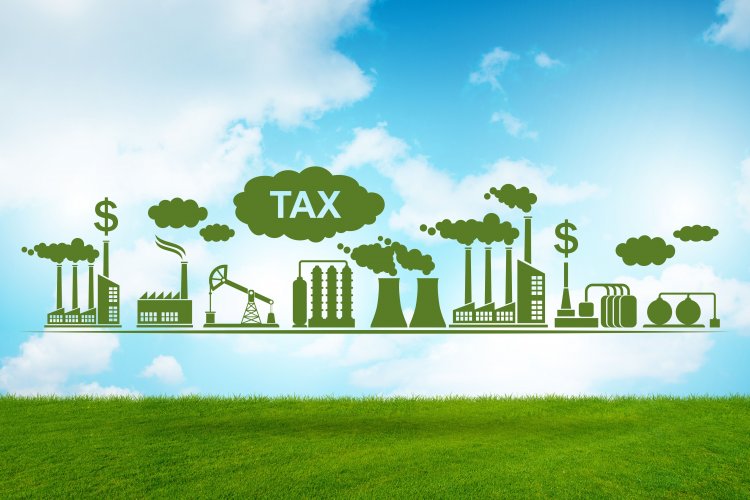
This tax is paid by polluters for various types of negative impact on the environment, from CO2 emissions to waste storage. Part of these funds "settle" in the state budget, but the rest replenishes special environmental protection funds in the regions. The use of these funds is targeted, only for environmental measures.
The problem usually lies in what a particular council or community means by "environment". Typically, guided by outdated documents, regions use the eco-tax to address issues of improvement and maintenance of drainage systems. The Poltava region is no exception.
"Environmental friendliness" as envisioned by the regional council
The Poltava Regional Council has outlined its vision for nature conservation in the Regional Program for Environmental Protection, Rational Use of Natural Resources, and Environmental Safety for 2022–2027.
It opens with a set of measures related to water management. In particular, it refers to the restoration of the regime of the Sula, Psel, Khorol, Vorskla, and Oril rivers with the development of projects and the implementation of environmental impact assessments. The eco-program provides for the certification of small rivers, the strengthening of banks, and the elimination of plugging of self-draining artesian wells.
The environmental program of Poltava region continues with the preservation of the natural reserve fund. Its activities include the development of projects and scientific justifications for the expansion and maintenance of natural reserve fund objects, the reservation of valuable lands, and the conduct of environmental education activities.
Poltava region also plans to develop an environmental monitoring system through the purchase of relevant equipment and organizational measures.
So where are the waste and sewerage measures typical for other regions? Remarkably, they are not included in the environmental program. In contrast to other regions whose environmental strategies EcoPolitics has previously examined, Poltava decided to separate these measures.
That is, the document does not contain a large section on the construction of new wastewater networks, reconstruction of treatment facilities, or repair of pumping stations. In Poltava region, all these measures were incorporated into the regional program “Drinking Water of Poltava Region for 2022–2026.” Meanwhile, the procurement of bins and the arrangement of landfills, which some regions also usually classify as environmental, were included in the Regional Waste Management Plan.
However, the correct program structure is of less interest than the use of environmental tax funds. But for waste management, they will definitely be used. On page 411 of the section "Financing Opportunities by Sources" we see that the region plans, among other things, to use the Environmental Protection Fund's resources in the budgets of the region and territorial communities.
As for whether environmental tax funds are envisaged for use in sewerage, we cannot say – in the financing section of the "water" program, the sources listed are rather general: state budget funds (allocated for targeted purposes), as well as regional and territorial community budgets. The region may also receive resources from "other sources not prohibited by law." The special fund formed from environmental tax revenues is not mentioned here.
Does this mean that environmental funds will not be touched in solving problems with utility infrastructure? We are not certain. It can only be assumed that the developers decided not to specify this.
So what is the situation in smaller settlements?
The Kremenchuk Environmental Protection Program for 2021–2025 provided a clearer understanding of the sources of funding for specific measures. Let us consider those that include a share of money from the Environmental Protection Fund.
Here are a few controversial examples:
- Purchase of an autonomous sewage pumping station, reconstruction of the sewer collector, retrofitting of facilities for receiving liquid waste. Responsibility here lies, of course, not with environmentalists but with the Department of Housing and Utilities and the Kremenchukvodokanal municipal utility. In general, there are dozens of measures in the sewerage block.
- Cleaning of drainage channels. Here, funds will be managed jointly by the Department of Housing and Utilities and the Blagoustrii Kremenchuka municipal utility.
- Greening of the city and suburban communities, inventory of green plantings, reconstruction of the “Prydniprovsky” park.
- Procurement of garbage containers and waste collection vehicles, even construction of a fence around the landfill and preparation of documentation for landfill reconstruction.
Of course, there are also purely environmental measures, such as air pollution monitoring, improving the ecological status of rivers, and maintenance of nature reserve fund sites. However, in the amounts of allocated funds, there is a clear advantage for waste and sewerage projects.
The Environmental Program of the Velykorublivska village territorial community covers only three blocks related to waste, water bodies, and plants. In addition to eliminating illegal dumpsites, the “Municipal Solid Waste Management” section includes the development of land management documentation for the landfill. Meanwhile, under “Protection and Rational Use of Natural Plant Resources,” we see purely greening measures – tree crown trimming, removal of deadwood, and, of course, planting flowerbeds and ornamental gardens.
The Machukhivska Village Council has an even shorter program for environmental protection for 2026–2030. Here, waste is not addressed, but greening of the community is not forgotten. Purchasing seedlings and arranging flowerbeds are also classified as environmental activities.
It should be noted that in both village environmental programs, the special fund of the environmental tax is indicated as the main source of financing for the activities.
While studying the allocation of environmental tax funds in the regions, EcoPolitic has already analyzed environmental programs in Odesa, Vinnytsia, Rivne, Zhytomyr, Ivano-Frankivsk, Cherkasy, and other regions.