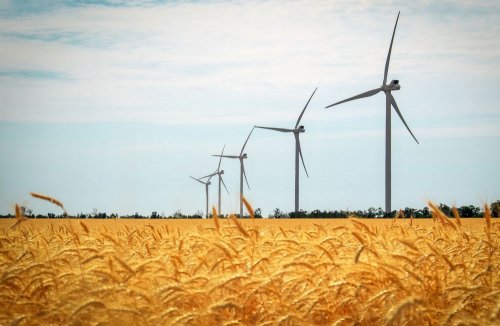
The Ministry of Energy plans to improve certain provisions in the field of energy management. Behind this neutral wording lies a draft law that significantly weakens the ability to prevent environmental damage from the construction and operation of wind farms. Other side effects include reduced community participation and transparency in construction in general.
The NGO Ecoclub has highlighted the provisions of the new draft law that are of particular concern. Environmental activists are calling on the community to submit their proposals and comments by January 12 to prevent loopholes from being created to circumvent legal procedures.
Legal fragmentation of wind turbines
In the new draft law, a wind turbine is not a single object, but several parts. In particular, its foundation is considered separately. According to environmentalists, this creates a successful legislative conflict that will make it possible to:
- separately formalize and approve the execution of work;
- fragment the environmental impact assessment (EIA) procedure, although in reality the environmental impact is caused by the facility as a whole.
Roads on foreign land
If the document is adopted in its current form, WPPs will have the right to use foreign land to access energy facilities. This is planned to be implemented through the instrument of land easements.
In practice, this could become an obstacle to guaranteeing the rights of communities and other landowners. Such changes will enable wind giants to build roads on foreign territories despite the plans of the actual land managers. If fair rules for agreeing on such easements and compensation for them are not established, such a decision could become an acute problem in the regions.
Permission not to change the intended use
The construction of wind farms will be permitted on land of any functional use without changing its intended use. Environmental experts consider this a gross violation.
It is the new category of land plots that is a safeguard, followed by legally defined checks, approval of works, and control over land use.
Such relaxation will enable developers to bypass legal procedures and will add tension to relations with communities where wind power plants are being built.
No need for a new EIA when changing parameters
During construction, projects often go through changes—from turbine power to road planning. The new bill will let developers rewrite the project however they want without going through a new environmental impact assessment. There will be no requirement to recalculate whether the negative impact on nature has increased, and this is cause for concern.
The EIA conclusion will be valid for 10 years instead of 5
The risk of this provision is that new decisions will be made based on outdated information. Experts emphasize that the data for the EIA procedure cannot be relevant forever. The impact on the environment changes, as do the condition of territories and environmental protection regimes.
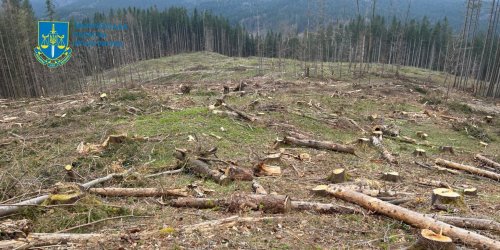
The environmental community is observing in real time what the construction of new wind farms could look like, using the example of the Runa mountain pasture in Zakarpattia.
EcoPolitic systematically covers this issue – from the logging of primeval forests, community protests, the favoring of the developer by the State Inspectorate for Architecture and Urban Planning (DIAM), to the role of the State Environmental Inspectorate (DEI) and the courts.
Recently, the parliamentary committees on European integration and environmental policy held an off-site meeting there, following which they published an extensive final decision. Whether the ministries, government, law enforcement agencies, and local councils will fulfill the tasks set out there remains to be seen.