The EU aimed to reduce household waste by 55% and packaging by 65% by the end of 2025. However, a report by the European Court of Auditors (ECA) showed that only nine countries are capable of achieving this.
Euronews reports that auditors consider the main reasons for the failure to be a lack of funding and control over its use, as well as the weakness of the recycling industry.
Leaders and outsiders
Some countries have successfully integrated circular policy standards. Therefore, it is likely that they will achieve their targets. These countries include Germany, Austria, Denmark, Belgium, the Czech Republic, Slovenia, the Netherlands, Italy, and Luxembourg.
Others have not been able to sufficiently establish the process of recycling and reusing waste. Among the reasons, auditors cite a lack of government funding, the ineffectiveness of the deposit return scheme for packaging, and an increase in the tax on waste disposal.

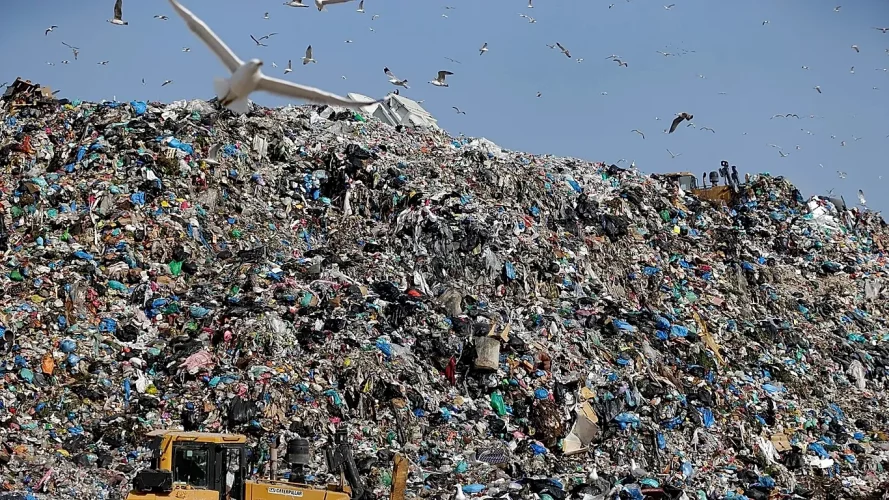
Source: AP Photo
Recycling as a shaky foundation for circularity
Waste recycling is one of the key tools for achieving circular policy goals. However, this industry is currently experiencing challenging times. Several factors contribute to this:
- high tariffs. Rising energy prices have led to increased operational costs for recycling companies;
- low demand. Waste recycled in the European Union is not particularly popular within the EU itself;
- foreign competition. The market has been filled with imported plastic of unverified quality.
Thus, European recycled plastic has a low market value, undermining the economic performance of enterprises. In addition, it must be transported ever further to reach buyers. This, in turn, results in fuel emissions that can negate all environmental efforts of recycling.
The system does not work without control
The European Commission helps EU member states implement circular policy measures. However, it turns out that it does not monitor whether these measures are actually being implemented. In ten years, the institution has never visited a country to check compliance with circularity requirements.
At the same time, even detected violations of waste legislation do not receive a timely and tangible response from the EU leadership. For example, the EU executive only responded in 2024 to countries that failed to comply with the requirements in 2008.
Incentives and support
However, the EU has not lost hope of motivating citizens and businesses to recycle and reuse waste. To this end, the European Union has adopted a series of measures within the framework of new legislative changes.
Also, starting in January 2029, a mandatory deposit return scheme will be introduced for certain types of packaging. Extended producer responsibility (EPR) has been mandatory since the beginning of 2025.
The new circular economy law is expected to be published as early as 2026.
EcoPolitic reported that a pilot project to implement a national EPR system was recently launched in Ukraine. Based on its results, recommendations will be prepared and the standards will be scaled up to the entire country.