The Ukrainian Cabinet of Ministers has announced a series of decisions to support decentralized energy production. The aim is to increase the resilience of communities to enemy attacks on energy facilities. However, the incentives relate to the production of energy—heat and electricity—from gas and diesel, which does not bring Ukraine closer to its decarbonization goals.
According to the Cabinet of Ministers of Ukraine, the simplification of certain procedures should facilitate the creation of new cogeneration capacities and their connection to the common energy system. In particular, the government has resumed the competition for the construction of new generation facilities.
Preferential gas price
Frontline regions will be able to purchase gas at a price of UAH 19,000 per 1,000 cubic meters for cogeneration plants.
The price will be valid for one year for electricity producers. This applies to thermal power plants and power stations, gas piston and gas turbine installations.
Capacity – without limits
Previously, a lower limit of 1 MW restricted the possibility for relatively small facilities-such as schools, hospitals, and small and medium-sized enterprises-to build their own boiler houses. This restriction no longer applies.
The simplification extends to all types of units: gas, diesel, cogeneration modules, and energy storage systems.
Drilling wells without permits
Simplified permits were previously tested in Donetsk and Dnipropetrovsk regions. Now, the government has scaled this practice to all regions of Ukraine.
All regional military administrations can drill wells for access to water without any restrictions. No special documentation or land allocation is required. The Cabinet of Ministers justifies this decision by the need for a stable water supply for people, industry, and heat generation facilities.
EcoPolitic wrote that Poland also encourages the development of cogeneration at the state level. However, here they will co-finance projects using renewable energy sources, in particular biogas, biomethane, and biomass.
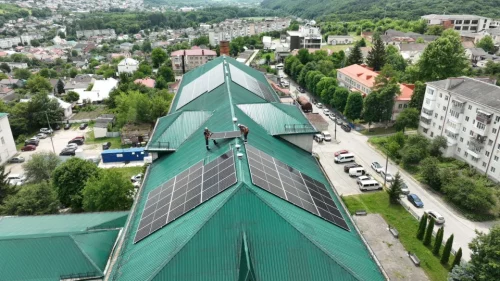
Earlier, the Ukrainian government announced new conditions for the installation of solar and wind power plants for citizens. The state will immediately compensate 30% of the loan amount.