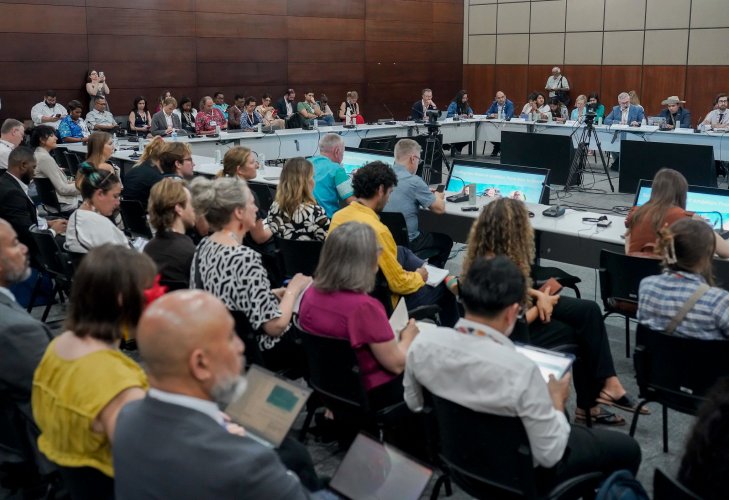
The key topic of the next day of the COP30 climate conference was the preservation of the world's oceans and their integration into a "clean" economy. Other topics of discussion included the ethics of climate action, coordination of adaptation plans, and responsible timber construction.
EcoPolitic has prepared an overview of the main events of November 18 based on data from the COP30 communications group.
Protecting the oceans
Seventeen more countries have joined the Blue NDC Challenge initiative. They have committed to incorporating ocean protection measures into their national climate strategies.
The conference discussed the launch of the "blue" solutions plan. This involves coordinated cooperation in five areas:
- conservation of the marine environment;
- aquatic food products;
- renewable ocean energy;
- shipping;
- coastal tourism.
The One Ocean Partnership initiative has been launched. The plan is to attract $20 billion into the regenerative "blue" economy by 2030, creating 20 million jobs.
Preserving vulnerable biomes
Climate change threatens the extinction of mangrove forests, salt marshes, and peatlands. COP30 discussed tools for attracting additional funding to preserve and restore these natural environments.
Protecting forests in construction
Fifteen countries and more than 300 industry partners announced their cooperation in the responsible use of wood under the Principles for Responsible Timber Construction.
Sustainable timber construction is also at the heart of the Building for Forests Acceleration Plan. The aim is to involve 30 countries in this initiative by 2028. It has already been supported by Canada, Japan, Germany, Sweden, France, and other countries. The plan aims to align timber construction with national strategies to combat climate change and preserve forests.
Coordinated adaptation
The COP saw the launch of the Alliance for the Implementation of National Adaptation Plans. This UN initiative aims to coordinate countries' environmental actions and facilitate the search for public and private investment for their implementation.
Ethics of climate resilience
A report on the Global Ethical Stocktake (GES) was presented at the high-level meeting. It is an analysis of discussions held in various regions of the world in 2025 on the ethical and cultural factors of combating climate change. Climate efforts must be fair to all of humanity, so ethics must become a mandatory component in the development and implementation of environmental programs.
As EcoPolitic wrote, the largest mechanism for financing forest conservation, the Tropical Forest Forever Facility (TFFF), was launched earlier at COP30.