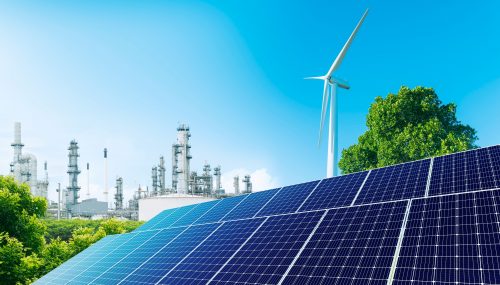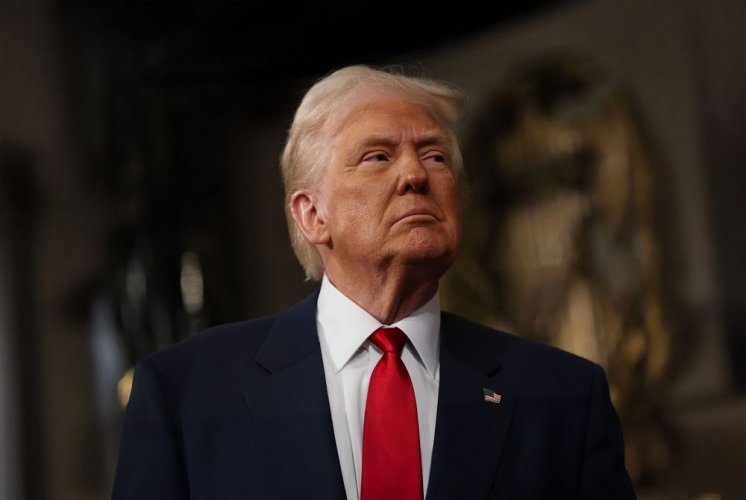
The administration of US President Donald Trump is blocking 321 grants to finance 223 environmental projects worth $7.6 billion that were aimed at renewable energy and the US energy system.
This was stated by US Secretary of Energy Chris Wright, C&EN reports.
Among the energy infrastructure projects that will be canceled:
1) renewable energy production;
2) hydrogen production;
3) grid modernization, carbon capture;
4) infrastructure for cars.
This step follows the US Department of Energy’s reduction of industrial decarbonization funding by $3.7 billion in early June. On October 7, an additional list of 600 projects set for cancellation by the Department of Energy was announced. In particular, the projects on the $7.6 billion list are part of an overall total of $20 billion.
Chris Wright accuses the former leadership of the US Department of Energy of rushing to allocate funding in the last months of former US President Joe Biden’s administration. According to him, the allocation was carried out with inadequate documentation. The Secretary added that 26% of the cancelled grants were concluded between Election Day in 2024 and Inauguration Day in 2025.
Experts added that the cancellation of funding mainly affects states that gave a minority of votes to President Donald Trump in the 2024 presidential election. Only about seven of these relate to projects in states he won. The US Department of Energy notes that organizations have 30 days to appeal the decision regarding the funding of each project.
“The demand for a number of innovative energy technologies is rising rapidly, and the US has simply become less competitive,” stated the US Clean Air Task Force Senior Director Conrad Schneider.
EcoPolitic readers will recall that after his inauguration, US President Donald Trump signed an executive order to withdraw the United States from the Paris Climate Agreement.
The newly elected president wanted to put an end to the leasing of land and water for wind energy and to cancel the actions of the administration of former US President Joe Biden, which promote the development of electric vehicles.
Also in February, the administration of US President Donald Trump canceled the allocation of $4 billion to the world's largest Green Climate Fund.
Additionally, in April, the US imposed new duties of up to 3521% on imports of solar panels from four Southeast Asian countries: Cambodia, Vietnam, Malaysia, and Thailand.
Experts believe that the increased tariffs are a win for domestic producers, but at the same time strengthen the opposing forces that already threaten the development of renewable energy in the United States.
Finally, in March, the administration of US President Donald Trump withdrew the United States from the UN Climate Change Fund.
At the 2023 climate conference, the United States promised to contribute $17.5 million to the fund, and the EU – $245 million, including $100 million from Germany. The decision was the latest step by the Trump administration to withdraw the United States from international agreements. The decision to withdraw from the UN fund was almost immediately condemned by the chairman of the African Negotiating Group, Ali Mohamed.