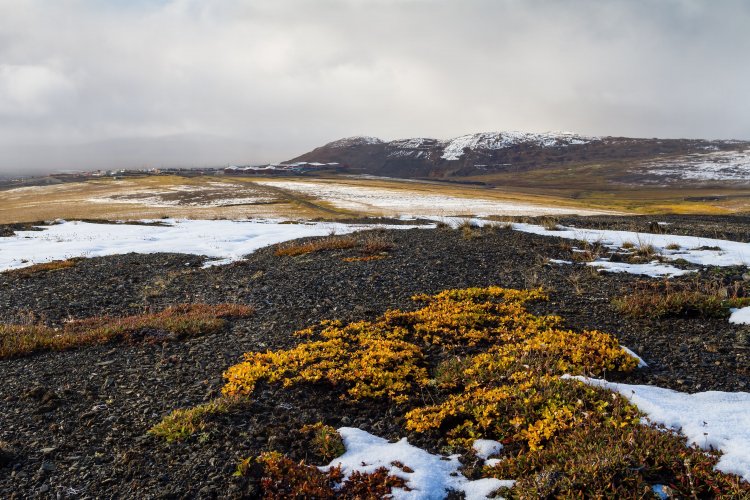
The Arctic tundra, which has long served as a natural carbon sink for the planet, is now turning into a source of carbon.
Such conclusions were published by scientists in the report of the US National Oceanic and Atmospheric Administration (NOAA) for 2024, Euronews writes. 97 scientists from 11 different countries worked on it.
They found that the Arctic is warming 4 times faster than the world average. The researchers explained that the Arctic tundra has stored carbon dioxide for thousands of years in frozen soil, and now, due to changes caused by high temperatures and intense forest fires, it has begun to release it.
As temperatures rise, the vast reserves of frozen organic matter begin to decompose, releasing carbon dioxide and methane, two key greenhouse gases that contribute to global warming. Previously, the tundra absorbed more carbon than it emitted, but now this balance is upset, and it is increasingly becoming a source of harmful emissions.
Experts say that this process is an example of a dangerous feedback loop. Greenhouse gases released as a result of permafrost thawing increase global warming, which in turn accelerates the thawing of permafrost. This creates a “vicious circle” that could have catastrophic consequences not only for the Arctic but for the entire world. Changes in this region of the planet are already affecting the global climate, in particular by contributing to rising sea levels and changing weather patterns in different regions.
Scientists are calling for urgent measures to reduce greenhouse gas emissions and introduce technologies that will help mitigate the effects of climate change. In their opinion, it is also necessary to strengthen the monitoring of Arctic ecosystems to better understand the processes taking place there. At the same time, it is important to invest in the preservation of the Arctic environment, as these ecosystems play a key role in stabilizing the climate on the planet.
Earlier, EcoPolitic reported that according to scientists, 2024 will be the warmest year in history and the first calendar year above 1.5°C.