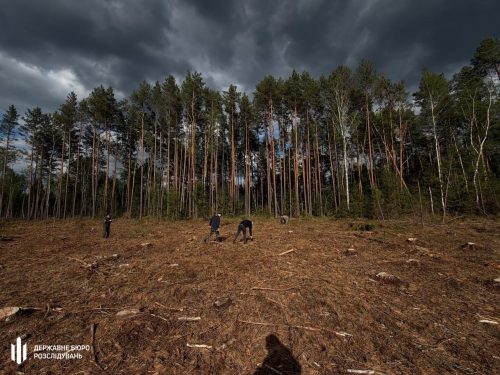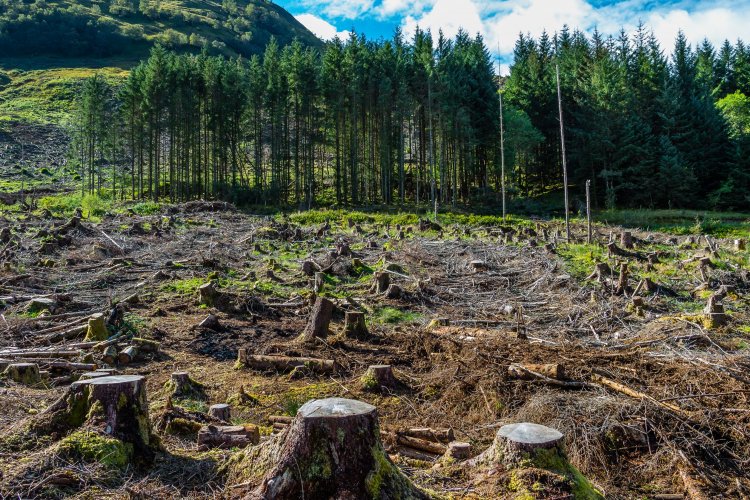
Since the beginning of the full-scale war in Ukraine, the situation with illegal logging has become very complicated. A number of factors contribute to this.
They were named by activists of the initiative nature protection group Free Svydovets on Facebook.
These reasons, in their opinion, include:
1. A ban on any form of gatherings and protests. This does not give the public the opportunity to protect forests from unauthorized destruction in this way.
2. Limited or temporarily closed access to many documents that make it possible to verify the legality of logging: EIA, cadastral maps, information on logging sites, etc.
3. Destruction of forests in the territories of hostilities and illegal felling in nature conservation territories occupied by Russia.
Free Svydovets recalled that only according to official statistics, millions of hectares of forests were damaged due to the war.
4. The need for firewood and wood for on-site reconstruction.
Making numerous changes to the legislation that removed environmental protection bans on logging. Activists say that the government in this way helped increase the volume of logging in 2023-2024 to support the economy of Ukraine.
"Forests have become easier to turn into territory for building, agricultural activities or for use in infrastructure projects," they add.
5. Suspension of the leading nature protection legislation in forestry. According to experts, a moratorium on inspections by the State Environmental Inspection of Ukraine was in effect until 2023. Currently, the State Environmental Inspectorate must obtain permission from the Ministry of Environment to carry out inspections.
"And in most cases, the department does not issue such permits. That is, illegal logging remains "unnoticed", Free Svydovets is sure.
6. Abolition of the need to carry out an environmental impact assessment (EIA) for "projects related to post-war reconstruction".
"All this makes it difficult to track and fight against illegal logging and allows projects with a serious impact on the environment, such as "Svydovets", "Bystrytsia" and "Turbat", to go through the EIA procedure without any public participation," the activists concluded.
EcoPolitic previously reported, that according to experts, a third of the wood in Ukraine is being prepared illegal And the other day we informed about the exposure of accomplices in Transcarpathia, who conducted fictitious sanitary cuttings for more than 2 million hryvnias.