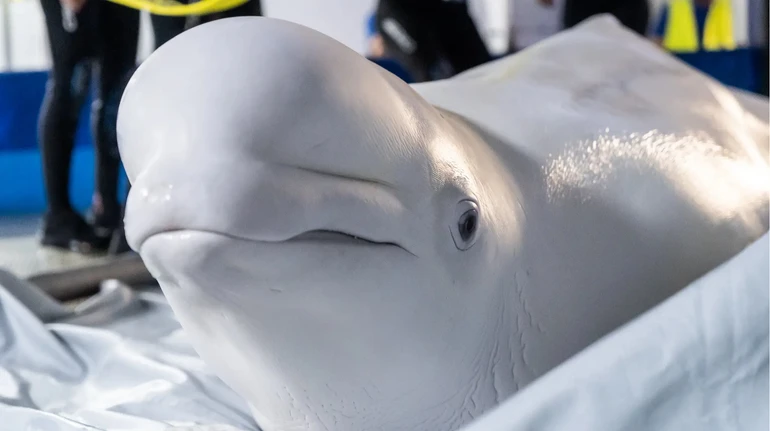
Two beluga whales, Plombir and Miranda, were evacuated from the Nemo Dolphinarium due to the intensification of Russian shelling of Kharkiv. They were transported to the largest oceanarium in Europe, Oceanogràfic de Valencia, located in Valencia, Spain.
This was reported by The New York Times.
The natural habitat for 15-year-old Plombir and 14-year-old Miranda is the Arctic. Therefore, cold water is vital for them. Due to the Russian shelling of the energy infrastructure, the dolphinarium began to be powered by a generator. The owners of the Kharkiv branch of the Nemo dolphinarium found it difficult to maintain a comfortable water temperature for the beluga whales. And recently, one of the shells fell right next to Nemo.
In addition, the whales' diet has recently been halved due to the lack of squid, herring, mackerel and other fresh fish.
Considering all these factors, the owners of the dolphinarium decided to evacuate the mammals. The transportation operation lasted 36 hours. It included a 12-hour land journey to reach Moldova and a five-hour flight that ended successfully in Valencia.
Video: facebook.com/oceanograficvl
The grueling journey was marred by problems with shipping crates that proved cramped for the beluga whales and the lack of heavy lifting cranes at the Moldovan airport needed to move them. A special cargo plane equipped with its own crane had to be hired to transport the whales.
Dan Ash, president of the Association of Zoos and Aquariums and former head of the US Fish and Wildlife Service, said it was "probably the most complex marine mammal rescue operation ever undertaken" and required "the world's most elite team of experts."
The other day EcoPolitics told that researchers from the New England Aquarium in Boston discovered a rare gray whale that died out in the Atlantic Ocean 200 years ago.