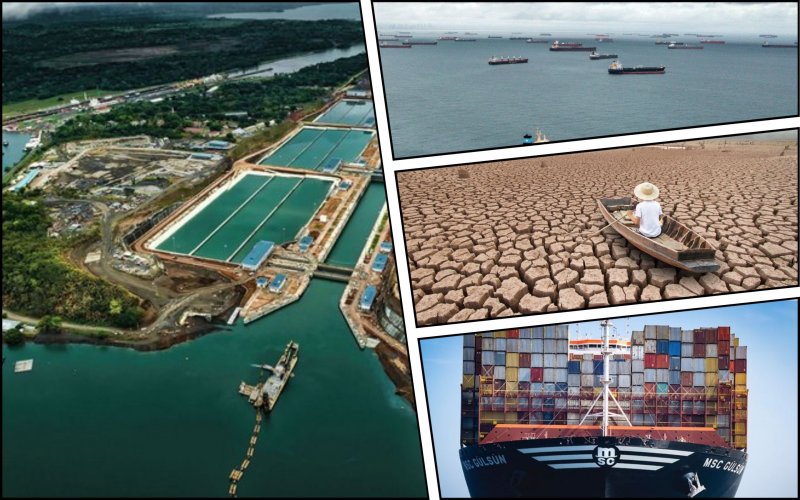
The Panama Canal Authority (ACP) in November cut the number of transits through the canal to 25 a day, down from 31, amid a record 70-year drought.
This has caused long delays for dozens of ships, which will increase the cost of shipping goods around the world, including liquefied natural gas from the US, reports BBC.
It is noted that the drought was caused by the El Nino oceanic phenomenon, which increased the impact of climate change. After all, the higher water temperature in the central and eastern tropical parts of the Pacific Ocean contributes to the drought in Panama.
The material said that previously 13-14 thousand ships used the channel annually. The main source of filling the canal is Lake Gatun, which is fed by rains. The water level in the lake continues to drop to an unprecedented level for this time of year.
ASR has warned that the number of vessels passing through the canal will be reduced to 18 per day over the next three months. This is necessary to preserve scarce water reserves.
It is noted that for the first time in history, restrictions on the number of vessels were introduced at the beginning of 2023.
Earlier, EcoPolitic wrote, that in August, the water level in the Panama Canal, which connects the Pacific and Atlantic oceans, dropped to a dangerously low level due to a historic drought against the backdrop of climate change.
As EcoPolitic previously reported, at the beginning of August, the EU climate change service Copernicus set a new record for the average daily global sea surface temperature (20.96°C).