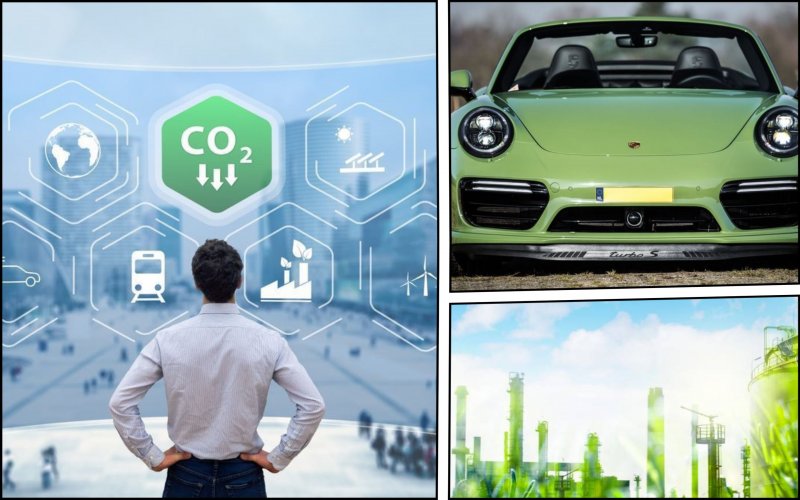
Automotive company Porsche AG and Swedish industrial startup H2 Green Steel have signed an agreement to supply low-carbon steel to decarbonize the automotive value chain by 2030.
From 2026, Porsche plans to use up to 35,000 tons of green steel per year for serial production of cars, reports Just Auto.
The article emphasized that this is the second similar agreement of H2 Green Steel. The first was with the Volkswagen Group automobile company.
H2 Green Steel plans to start production of green steel from the end of 2025 at a plant in Boden, Sweden, it said. The company will use renewable electricity and hydrogen. This will reduce carbon emissions by 95%, compared to traditional production using coking coal.
The material said that such steel will be used by Porsche and a number of its direct suppliers.
The CEO of H2 Green Steel, Henrik Henriksson, emphasized that this agreement will be a real boost both for the company and for the transformation of the steel industry. After all, steel production is largely driven by demand from the automotive industry.
"Porsche is working to create a carbon-neutral balance along the entire value chain for its vehicles by 2030. Low-CO2 steel plays a key role in our sustainability strategy," said Barbara Frenkel, Member of the Executive Board for Purchasing at Porsche AG.
She added that the share of steel in Porsche cars has been steadily decreasing in recent years. After all, the company increasingly relies on aluminum to create a lightweight structure. However, steel remains one of the key elements of sports car construction. The company also aims to increase the use of recycled materials and green electricity.
Earlier, EcoPolitic wrote, that Italian steel group Marcegaglia and H2 Green Steel, Sweden, signed a seven-year agreement on supply of green steel for €1.79 billion.
As EcoPolitic previously reported, the European metallurgical industry, in particular ferrous and non-ferrous, initiated the process of creating its own transition pathway in cooperation with the European Commission.