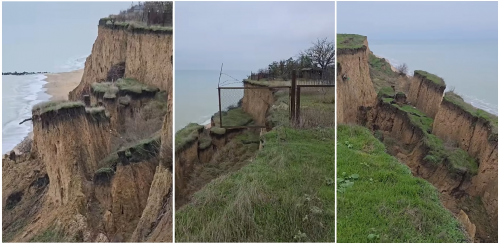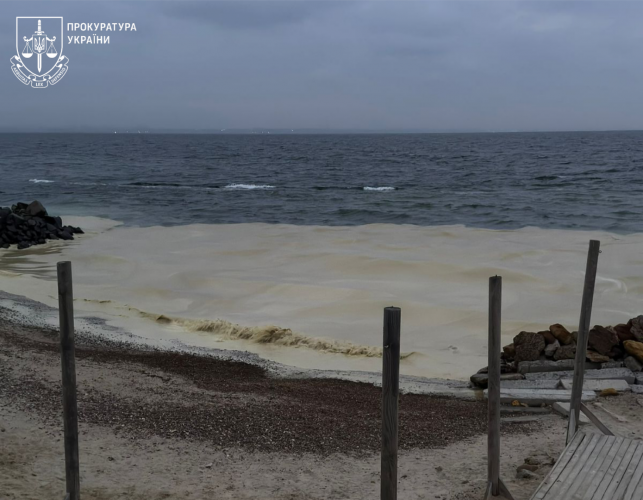
On December 20, the enemy attacked the port of Odessa, damaging oil tanks. By December 24, the oil slick had spread over 40 km, filling the Odessa Strait and heading south. This is not the first such incident, but the Odessa Regional State Administration and relevant services have not yet developed algorithms for eliminating such disasters and have tried to silence the scale of this one.
This is according to Vladislav Balinsky, head of the Green Leaf NGO and research associate at the Tuzlivski Limany National Nature Park. The scientist accuses the authorities of criminal inaction and calls on the State Bureau of Investigation and the prosecutor's office to launch an investigation.
A chain of negligence and manipulation
Lack of an action plan. The activist claims that the authorities and responsible bodies had more than a year to develop an effective protocol for action in the event of such substances entering the sea. He cites the disaster of December 15, 2024, in the Kerch Strait involving tankers from the Russian shadow fleet, as well as the oil spill on the Southern Bug River, as precedents. However, there is still no algorithm, as evidenced by the scale of the ecological disaster.
Downplaying the danger. The oil was manipulatively called "safe organic matter," although it affects the marine ecosystem in the same way as petroleum products—it blocks oxygen access and leads to the death of marine life and birds. In terms of threat level, oil is equated with petroleum products according to US standards, and according to the international maritime convention MARPOL, vegetable oils are dangerous marine pollutants.
Failure of engineering protection. According to the scientist, there were no obstacles preventing the oil from entering the sea. He raises the issue of the absence of a sealed wall around the tanks and calls the entire engineering protection of the structures fictitious. At the same time, Vladislav Balinsky questions the effectiveness of the port system.
"The storm sewer acted as a direct pipe to the sea. The valves were not shut, the oil catchers failed," the eco-activist writes.
Inaction of services. Between December 20 and 22, the spill area experienced calm weather, which gave an opportunity to collect the compacted oil and block it at the 'throat' of the Adzhalytskyi estuary. The authorities did not seize this chance and merely simulated oil collection.
"Boom barriers without active skimmer pumping (NMZ) don’t work. Under wave pressure, oil simply dives under the booms. Where are the reports on the amount of oil collected in the first three days? There are none," the scientist noted.
An environmental catastrophe has already occurred
The Kuyalnytskyi estuary is now under critical threat. Water flows there by gravity. According to scientists, “if the sluices were not physically closed in time, the oil is already in this unique ecosystem.” At the same time, it is no longer possible to clean the water of polymerized oil.
The 'migration' of the oil has harmed hundreds of birds. Their contaminated plumage does not retain heat, so the birds freeze and sink. Volunteers and the local zoo are saving birds, but their resources are insufficient. For its part, the Regional Military Administration did not organize shelter stations or allocate funds for animal rescue, shifting responsibility to biologists and concerned citizens.
Call for inspections and accountability
Environmental activists are demanding a detailed report from the Odessa Regional State Administration on the actual measures that were taken to prevent the disaster from escalating. In particular, environmentalists want to know which oil skimmers and skimmers were actually working in the Adzhalyk Estuary when the exit from it was blocked and how much oil was actually removed from the water.
Environmentalists are also appealing to law enforcement agencies and central authorities to investigate the criminal delay by officials.
One of the steps the state should take is to rescue the affected birds. Activists are demanding that funds be allocated to the Wildlife Rehabilitation Center.
"The state must take responsibility for saving the birds. The ecological disaster, started by the enemy, has become so large precisely because of your inaction. Instead of saving the sea, you were busy writing 'reassuring' reports," Balinsky concludes.
EcoPolitic previously reported on the pollution of the Ladyzhyn Reservoir in Vinnytsia region by oil products. The leak occurred from a thermal power plant owned by DTEK after a Russian attack.