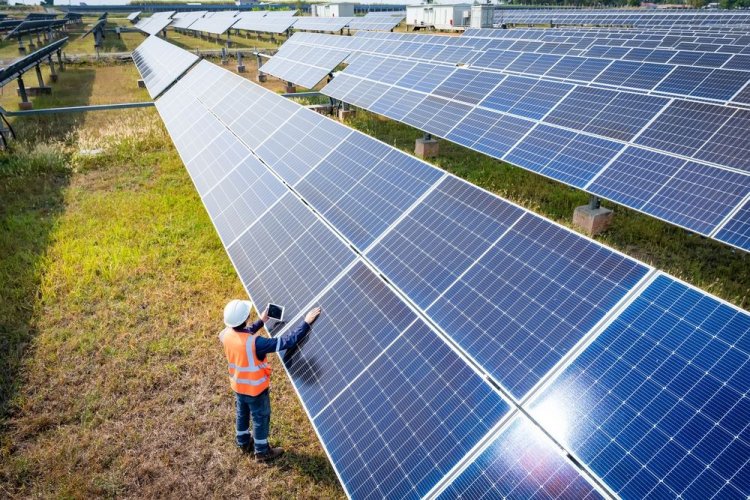
The solar energy market is undergoing a technological transformation. More and more players are choosing solar power plants combined with energy storage systems (BESS) instead of "classic" solar power plants. The advantage of this model is faster payback and the ability to use energy when it is needed, not when it is generated.
As YASNO CEO Serhiy Kovalenko said in an interview with Latifundist.com, a few years ago, the key request from businesses was to install only solar panels. However, companies are now shifting their focus to BESS.
"The sun is good, but it shines during the day. When there is a lot of solar generation, the price of electricity drops significantly during the day. At the same time, the main consumption is in the morning and evening. As a result, electricity is cheapest when it is least needed," Kovalenko explained.
There is a colloquial name for this phenomenon: the "Texas butterfly." Its essence is as follows: due to the high intensity of energy generation, a surplus is created, so the market price shows a sharp drop. In some cases, prices even become negative. Therefore, it is sometimes more profitable for an electricity producer to pay extra for consumption than to put the entire solar power plant on hold.
Currently, the payback period for a typical solar power plant is about two years, so building them remains a profitable solution for mid-sized businesses. However, if panels are combined with energy storage, the effect is maximized and payback becomes faster. Depending on technological characteristics, the cost of BESS for storing 1 kWh of energy is about $200.
"If you properly balance between electricity from the grid, your own generation, and batteries, the result of “solar + storage” will be much better than just solar. For more than half of our clients, the savings are noticeable already at the level of internal consumption," noted the CEO of YASNO.
EcoPolitic previously reported that during 2025, energy storage installations (ESI) with a total capacity of 500 MW were built in Ukraine.
The energy storage sector is developing intensively across the globe, stimulated by a global decline in battery prices. Last year, 87 GW of solar generation capacity with energy storage were commissioned.