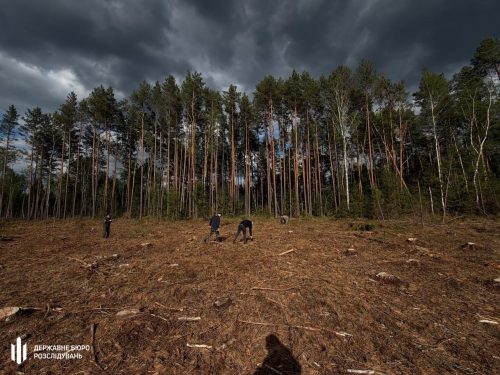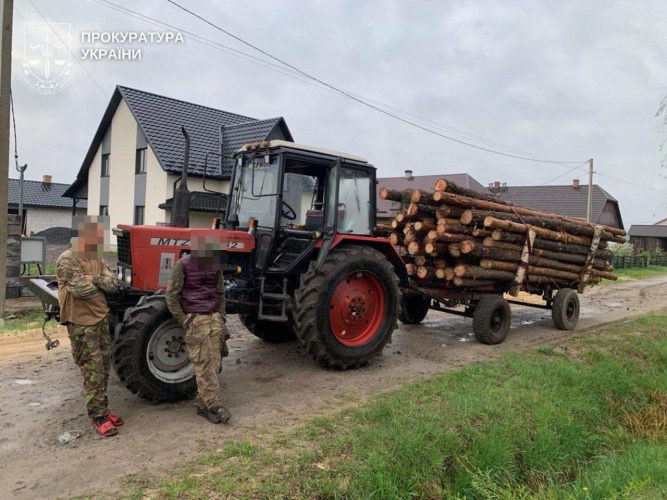
Ukraine’s forests are falling victim to the self-serving motives of officials in the forestry sector, in particular employees of the state-owned enterprise ‘Forests of Ukraine’. The scale of the crimes is so vast that representatives of the State Geocadastre, local authorities and businesspeople are also implicated in the schemes. There are a total of 29 suspects.
This was reported by Ukraine’s Prosecutor General Ruslan Kravchenko on his Telegram channel.
The circle of suspects
Ukraine’s forests are being illegally destroyed on an industrial scale. Officials from “Forests of Ukraine” — representatives of forest districts, chief foresters and forest supervisors — are involved in these illegal activities. Also contributing to the deforestation of the country are heads of agroforestry enterprises, officials from the State Geocadastre, the head of one of the territorial communities, businesspeople and other members of organised criminal groups.
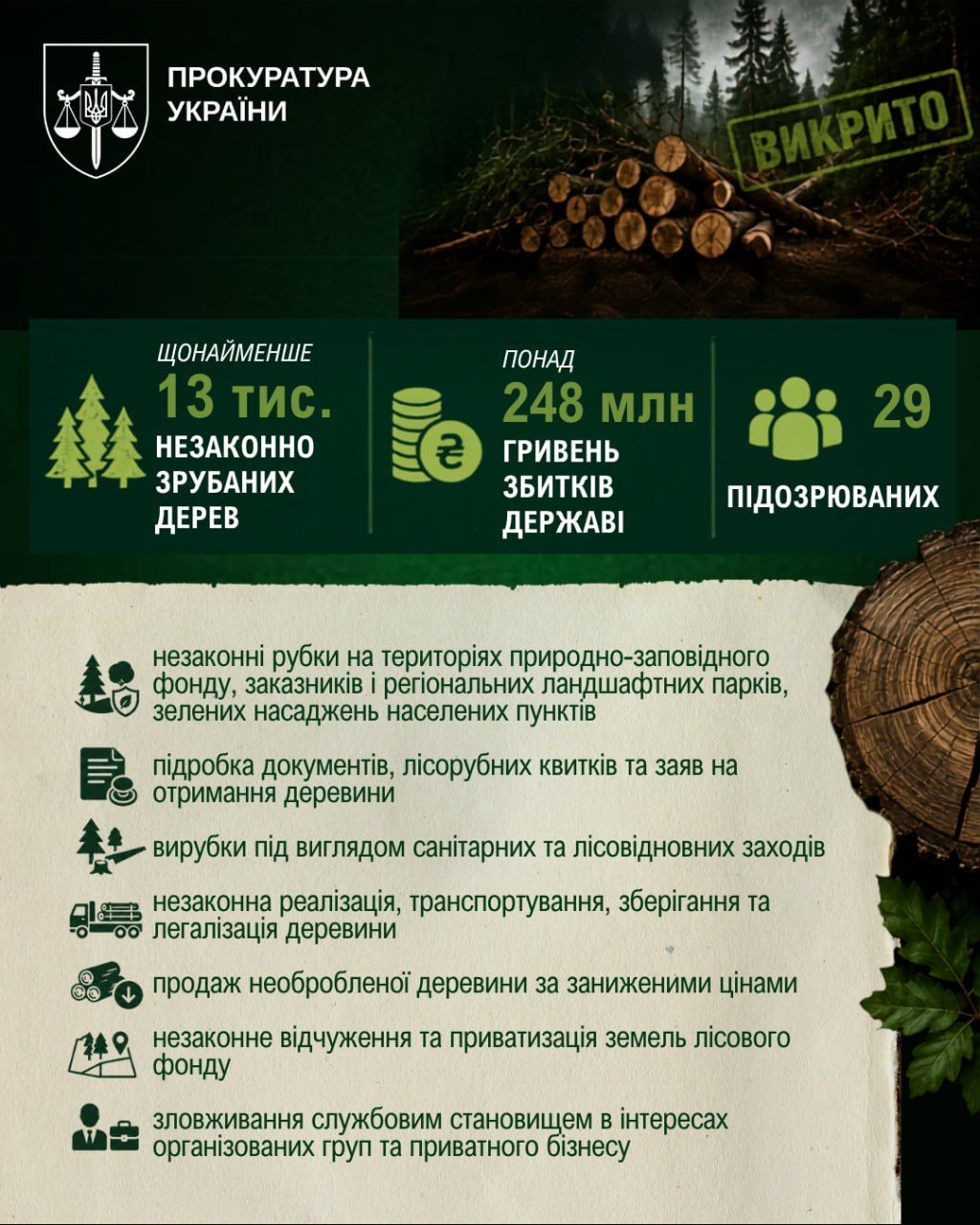
Source: Prosecutor General of Ukraine
Types of violations
The Prosecutor General emphasizes that these crimes were not incidental. All unlawful activity was planned, and the perpetrators were fully aware of the harm inflicted on nature and the state.
Among the offenses in which the suspects are implicated:
- destruction of forest stands within protected areas, preserves, regional landscape parks, and green zones within local communities;
- forgery of documents, logging tickets, and applications for timber harvesting;
- concealing forest destruction under the guise of sanitary felling and reforestation activities;
- illegal sale, transportation, storage, and legalization of timber;
- illegal alienation and privatization of forest fund lands.
EcoPolitic reported on one of the most egregious cases in its weekly digest of environmental crimes. Over 100 business entities were involved in a scheme to legalize valuable timber. The scheme was orchestrated by forestry officials who entered fictitious records into the electronic timber accounting system. With forged "legal" documents, the timber was exported – more than 10,000 oaks.
“And in all other detected cases, we are talking about dozens, hundreds, or sometimes even thousands of illegally felled trees. Some of them are especially valuable species, which take centuries to recover. This is not just a loss for the state, but irreparable harm to natural populations, ecosystems, and future generations,” emphasized Ruslan Kravchenko.
Another way to destroy forests is to transfer them to private use. For example, over 220 hectares of forest in Zakarpattia were turned into a hunting and recreational complex owned by the wife of a former Member of Parliament from the Opposition Platform – For Life (OPZZh), while about 10 hectares of forest, home to Red Book species, became a quad bike rally area for a hotel linked to an incumbent MP.