As of the morning of November 4, most major Ukrainian cities show a low level of pollution, although there are some exceptions. However, the situation with pollutant levels is fairly "even": their concentration in Chernivtsi, currently the dustiest city, is only 3.5 times higher than in Ternopil, which has the cleanest air.
This is evidenced by data from the international monitoring platform IQAir.
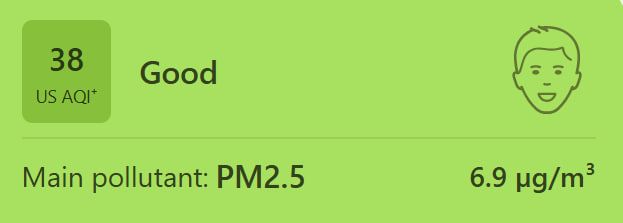
On average, the air in Kyiv is of good quality with a low level of pollution. The highest content is that of fine particulate matter PM2.5, with a concentration of 6.9 µg/m3. According to the WHO, the upper limit of the average monthly standard for this indicator is 5 µg/m3.
Moderate pollution is recorded at some locations, including Kyrylivska Street (13.6 µg/m3), Akademika Zabolotnoho Street (17.8 µg/m3) and Omelianovycha-Pavlenka Street (9.5 µg/m3).
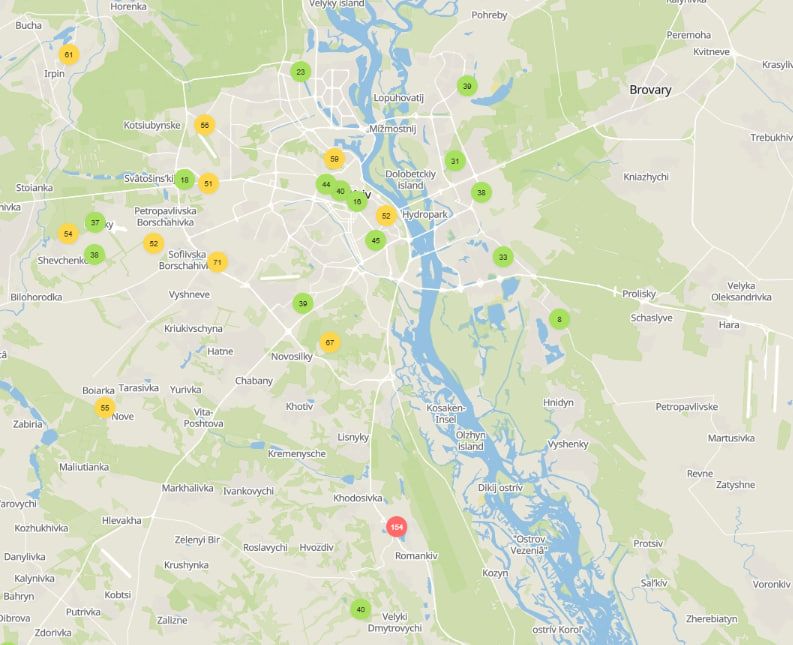
Moderate air pollution is also observed in the following cities:
- Chernivtsi – 11.4 µg/m3;
- Kherson – 11.4 µg/m3;
- Chernihiv – 10 µg/m3;
- Cherkasy – 9.8 µg/m3;
- Rivne – 9.3 µg/m3;
- Zaporizhzhia – 9.2 µg/m3. A fire is also recorded;
- Kharkiv – 9.1 µg/m3.
In the remaining regional centers, the air quality index is in the "green" range, which poses no threat to the population:
- Mykolaiv – 8.9 µg/m3;
- Odesa – 8.1 µg/m3;
- Dnipro – 7.9 µg/m3;
- Zhytomyr – 7.4 µg/m3;
- Ivano-Frankivsk – 7 µg/m3;
- Vinnytsia – 6.7 µg/m3;
- Lviv – 6 µg/m3;
- Poltava – 5.2 µg/m3;
- Khmelnytskyi – 4.9 µg/m3;
- Lutsk – 4.8 µg/m3;
- Uzhhorod – 3.4 µg/m3;
- Ternopil – 3.2 µg/m3.
As a reminder, environmental pollution is an important factor in public health. In particular, a persistent excess of foreign particles in the air can trigger exacerbations or even the onset of respiratory and cardiovascular diseases.