

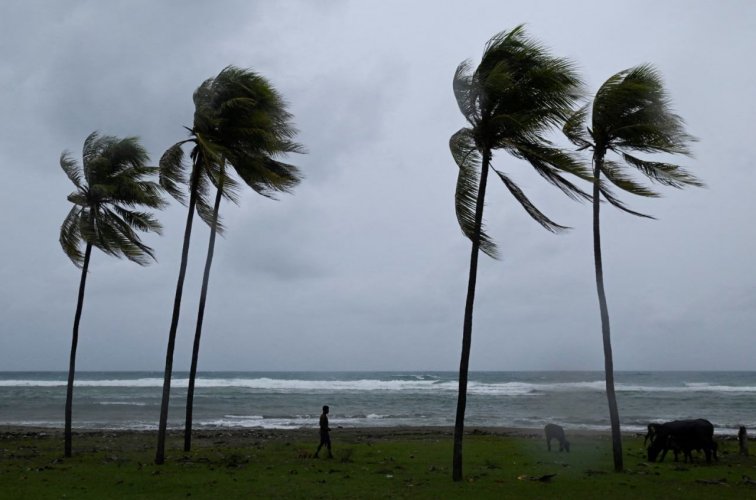
On Tuesday, Melissa hit Jamaica with winds of up to 300 km/h. It is the strongest hurricane ever recorded on the island and the third strongest in the Caribbean.
After weakening slightly, the storm regained strength and reached Cuba on Wednesday. Authorities there have already announced the evacuation of more than 700,000 people. Flooding, destruction, uprooted trees — the region looks apocalyptic. Scientists believe that human activity is the cause of the storm's colossal force.
This is reported in The Guardian.
The destructive power of the storm
On Saturday, Melissa was just a tropical storm, but by Monday, the US National Hurricane Center had assigned it the highest danger category, 5.
It is too early to talk about the final consequences — the storm is still raging and threatens to move further, towards the Bahamas. Jamaica has been declared a disaster area, and local officials will announce the damage on Thursday. A state of emergency has been declared in six eastern regions of Cuba – part of the island is without power, and schools, businesses, and government offices have been closed in Haiti. There are already reports of seven deaths.
Global warming has intensified the storm
Melissa shows an alarming trend – its strength is increasing too quickly. This is the fourth hurricane this year in the Atlantic, where a similar increase in the power of the storm has been observed. The reason is said to be the rise in ocean temperatures, which in turn is caused by the climate crisis due to human activity.
The storm accelerated over ocean waters whose temperature is 1.4 °C above average. This was discovered by researchers from the non-profit organization Climate Central. They also noted that it was the climate crisis that created the conditions for the formation of such a destructive force of nature — these conditions increased the likelihood of such a strong hurricane occurring by 700 times.
Therefore, similar storms may occur in the region more and more often, with an increased potential for destruction.
Earlier, EcoPolitics reported that 96% of the world's oceans have been affected by heat waves.