As of the morning of 22 September, the air quality in virtually all major cities in Ukraine is safe. There are isolated instances of exceedances, but these do not pose a threat to public health.
This is evidenced by data from the international monitoring platform IQAir.
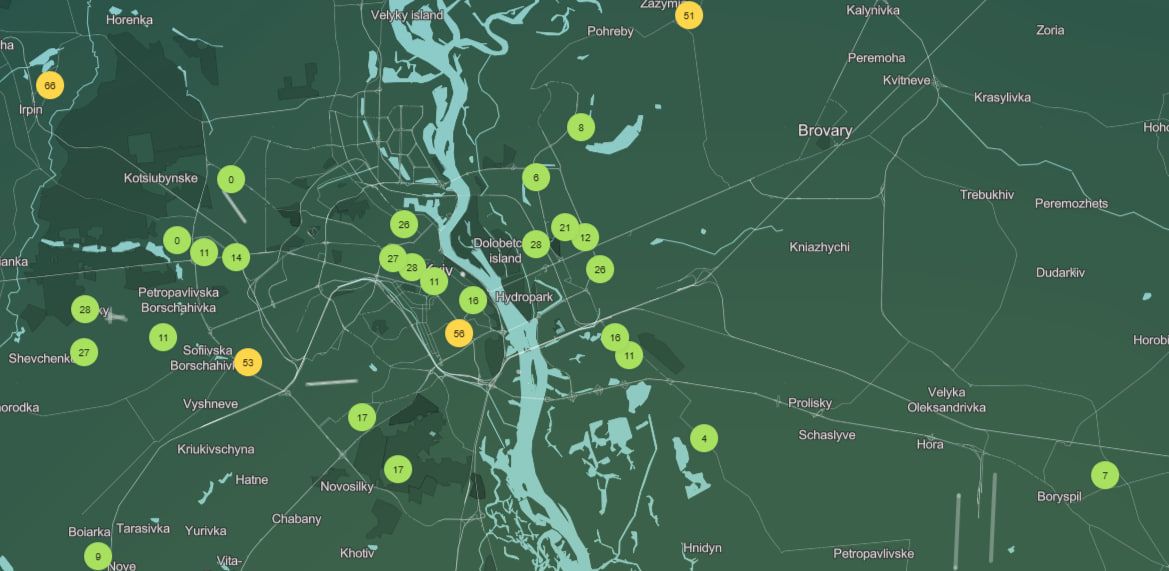
On average, air quality in Kyiv is good. The main pollutant is PM2.5 fine particulate matter, and its concentration is less than half the World Health Organisation’s upper limit of 2.5 µg/m3, standing at 5.5 µg/m3.
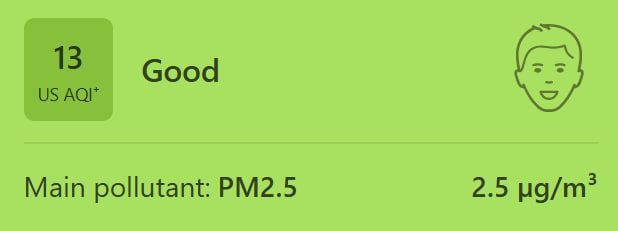
All monitoring stations show that, in terms of harmful pollutants, air quality is within the ‘green’ range. With the exception of one location – on Yevhen Konovalets Street. There, the dust concentration is 11.6 µg/m3. The average pollution level is also recorded in the suburb of Sofiivska Borshchahivka – 10.1 µg/m3.
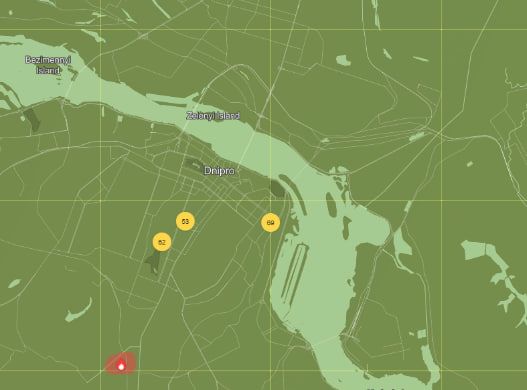
In Dnipro, air quality is in the ‘yellow’ zone. The air is no longer entirely safe, but it is not so polluted as to pose a threat to people. The particulate matter level there is 12.5 µg/m3. Active fire sources are also being recorded there.
In other regional centres, monitoring stations are recording relatively clean air:
- Kharkiv – 8.6 µg/m3;
- Zaporizhzhia – 6.3 µg/m3;
- Vinnytsia – 5.8 µg/m3;
- Poltava – 4.5 µg/m3;
- Mykolaiv – 4.4 µg/m3;
- Cherkasy – 4.3 µg/m3;
- Odessa – 3.1 µg/m3. Fires are being reported in the vicinity;
- Khmelnytskyi – 2.8 µg/m3;
- Chernivtsi – 2.6 µg/m3;
- Lviv – 2.4 µg/m3;
- Rivne – 2.4 µg/m3;
- Uzhhorod – 2.3 µg/m3;
- Zhytomyr – 2.2 µg/m3;
- Ternopil – 1.9 µg/m3;
- Ivano-Frankivsk – 1.7 µg/m3;
- Lutsk – 1.6 µg/m3;
- Chernihiv – 1 µg/m3.
EcoPolitic previously reported that Ukrainian scientists had investigated the impact of the war on air quality. You can find out more about this in this article.