As of the morning of 14 September, air quality is generally good in the regional centres of Ukraine. However, in a number of major cities, there are still significant exceedances for the main type of pollution.
This is evidenced by data from the international platform IQAir.
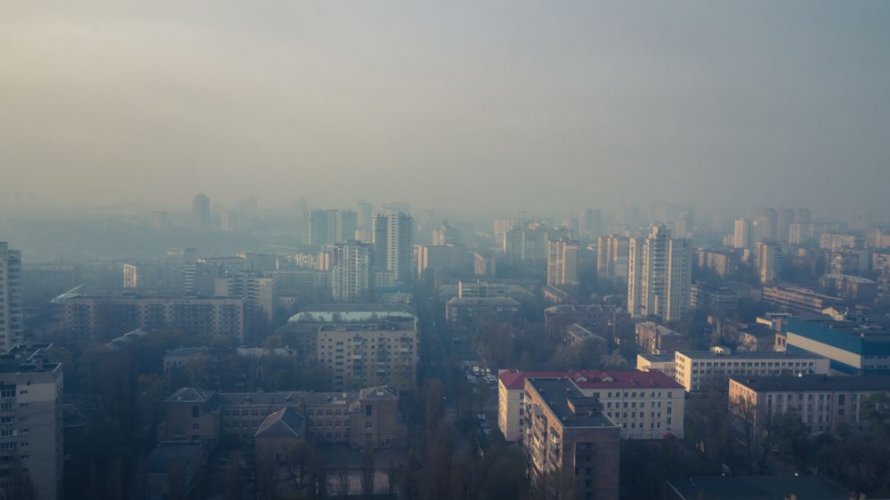
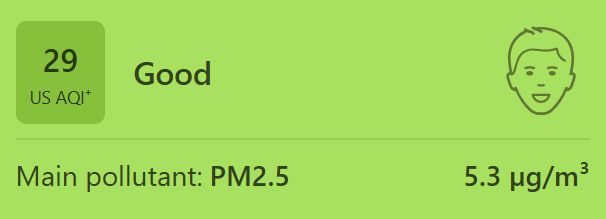
Air quality in Kyiv is generally rated as good. The main pollutant is PM2.5 fine particulate matter. Its average concentration is 5.2 µg/m3. This is below the upper limit of the standard set by the World Health Organisation at 5.5 µg/m3.
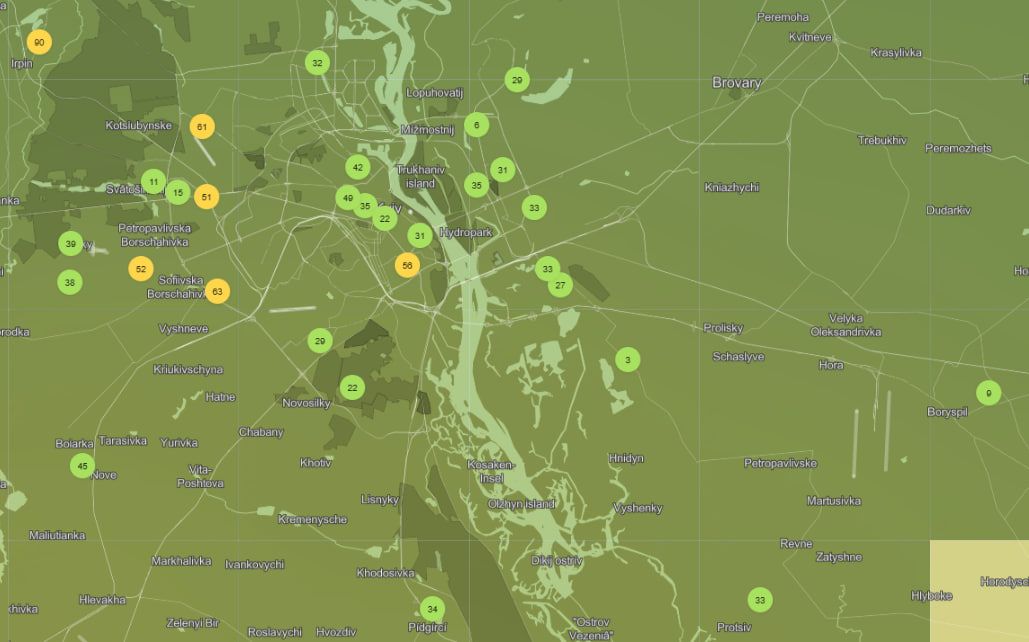
Among the specific locations where a ‘yellow’ pollution level has been recorded is Yevhen Konovalets Street. There, the dust concentration is estimated at 11.9 µg/m3. In the suburban town of Sofiivska Borshchahivka, on Hryhorovych-Bars’kyi Street, monitoring equipment is recording 15.8 µg/m3 of dust, whilst in Kotsyubynske the figure is as high as 17.5 µg/m3.
As of the morning of 14 September, air quality is generally not a cause for concern, particularly in regional centres. Dust concentrations in some towns:
- Lviv — 6.2 µg/m3;
- Vinnytsia — 5.1 µg/m3;
- Poltava — 6.4 µg/m3;
- Cherkasy — 5.4 µg/m3;
- Lutsk — 4.1 µg/m3;
- Zhytomyr — 4.7 µg/m3;
- Chernivtsi — 5.8 µg/m3;
- Chernihiv — 3.5 µg/m3;
- Kropyvnytskyi — 7.4 µg/m3;
At the same time, there are also regional centres where air quality is rated as moderate. However, this does not mean that the air poses a health risk to residents.
- In Dnipro, the concentration of particulate matter is 18 µg/m3;
- in Rivne — 11.8 µg/m3;
- in Ivano-Frankivsk — 10.8 µg/m3,
- in Kharkiv — 10.2 µg/m3;
- in Ternopil — 10 µg/m3;
- in Odessa — 9.4 µg/m3.
EcoPolitic previously reported that Ukrainian scientists had investigated the impact of the war on air quality. You can find out more about this in this article.