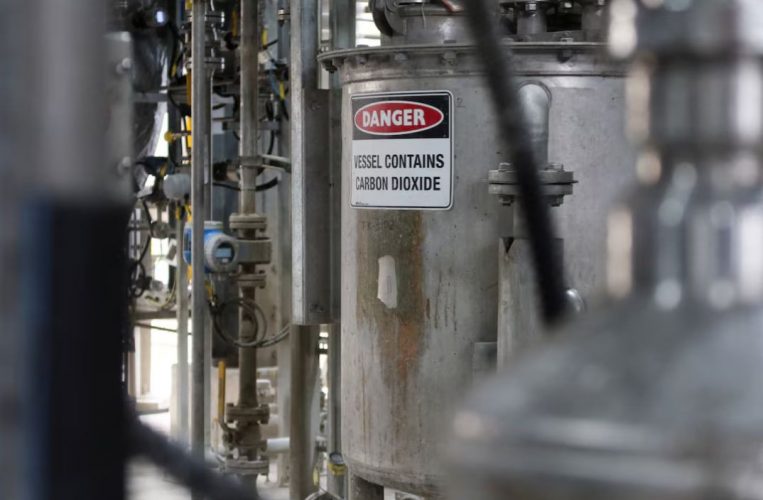
The carbon dioxide produced by Orica’s ammonia plant will be converted into paper, glass and concrete. This conversion will be carried out by Australia’s first facility for processing captured CO₂, operated by MCI Carbon, which utilises the Myrtle Carbon Capture Utilisation and Storage project.
According to Reuters, the demonstration plant is capable of converting up to 2,500 tonnes of CO₂ annually.
“MCI Carbon’s technology is based on what is known as mineral carbonation. This is a natural process on Earth whereby CO₂ is removed from the atmosphere and turned into rock,” said CEO and co-founder Marcus Dave during the opening ceremony.
Australia’s plans
Australia currently produces 400 million tonnes of greenhouse gases annually. However, the country has ambitious plans to reduce these emissions. By 2035, emissions are set to fall by 62–70 per cent compared to 2005 levels.
Such technologies could support the country’s efforts towards global decarbonisation. MCI Carbon also announced that it intends to scale up carbon capture to an industrial level. Specifically, this involves the construction of a large plant with a capacity of 50,000 tonnes of CO₂ per year.
Norway has taken a different approach. As reported by EcoPolitics, captured carbon there is stored permanently at a depth of 2.6 km beneath the seabed.
In China, however, they are experimenting with carbon-free technologies. There, they have developed a coal-fired power station that operates without burning coal and produces zero emissions. At the same time, this type of power generation could be twice as efficient as traditional methods.