As of the morning of 15 September, air quality in a number of regional centres across Ukraine is rated as moderate. This does not yet pose a risk to vulnerable groups.
This is evidenced by data from the international platform IQAir.
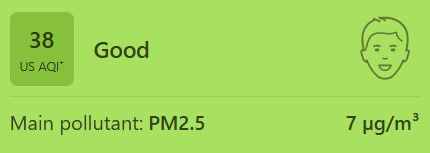
Air quality in Kyiv is in the ‘green’ zone. This refers to the average figures from all monitoring stations. The IQAir system identifies PM2.5 as the main pollutant. Its average concentration is 7 µg/m3. This is slightly above the WHO standard of 5.5 µg/m3, but not critically so.
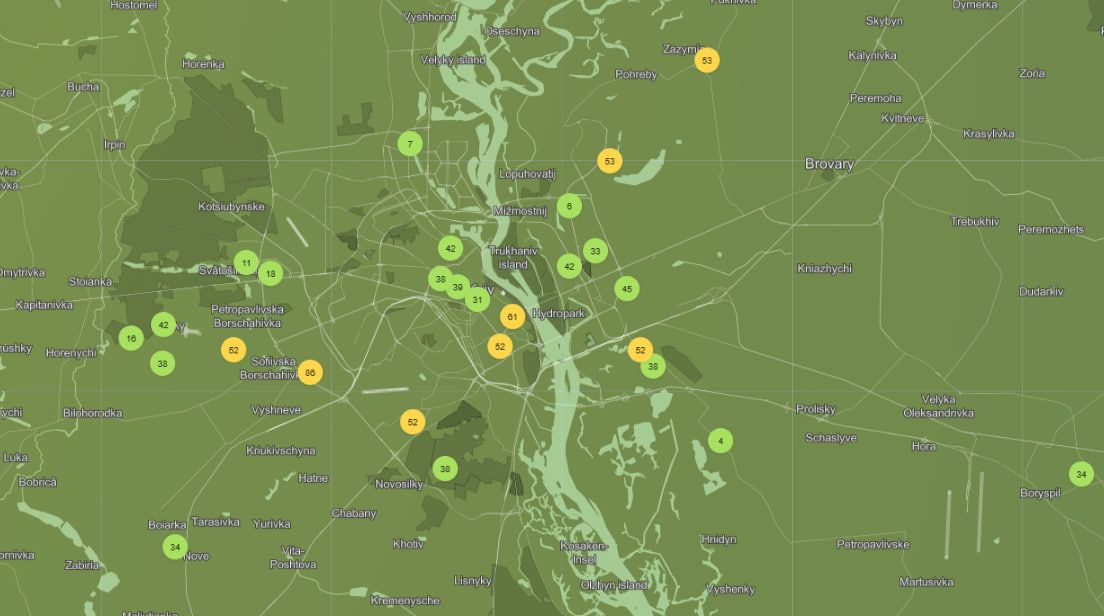
The vast majority of locations where pollution levels are measured have good air quality as of this morning. However, there are some places with moderate pollution levels. These include Konovaltsia Street, with a dust concentration of 9.7 µg/m3, Hotkevych Street – 10 µg/m3, and Horlivska Street – 9.9 µg/m3.
No city in Ukraine has recorded dangerous levels of pollution. The average air quality in these regional centres (in terms of particulate matter) is as follows:
- Odessa – 9.1 µg/m3;
- Vinnytsia – 9.1 µg/m3;
- Rivne – 12.1 µg/m3;
- Ivano-Frankivsk – 14.9 µg/m3;
- Ternopil – 9.3 µg/m3;
However, there are more towns where the air quality is rated as ‘good’ by IQAir:
- Dnipro – 7.4 µg/m3;
- Kharkiv – 7.7 µg/m3;
- Lviv – 7.9 µg/m3;
- Zhytomyr – 6.3 µg/m3;
- Poltava – 3.5 µg/m3;
- Chernihiv – 4.5 µg/m3;
- Lutsk – 6.9 µg/m3;
- Cherkasy – 4.4 µg/m3;
- Kropyvnytskyi – 3.7 µg/m3;
- Khmelnytskyi – 3.6 µg/m3.
Ukrainian researchers have investigated how Russian attacks might affect local air pollution. Concentrations of harmful substances could rise up to tenfold. EcoPolitics reported on this in more detail previously.