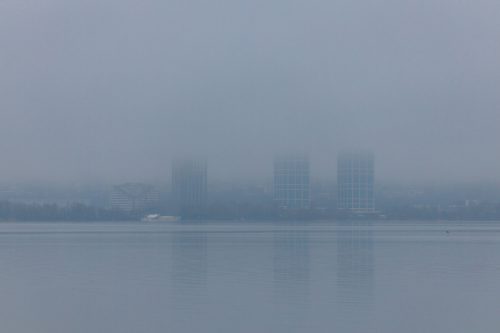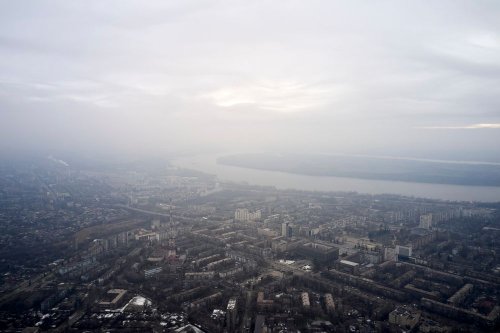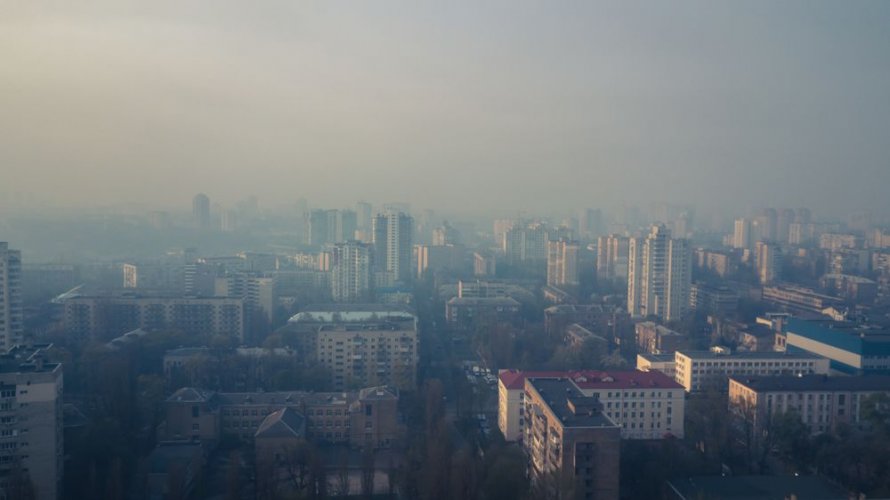
Following the Russian strikes, it is dangerous to be outdoors in some districts of the capital due to pollution. As of the morning of October 27, a number of regional centers show a moderate concentration of pollutants.
This is evidenced by data from the international monitoring platform IQAir.
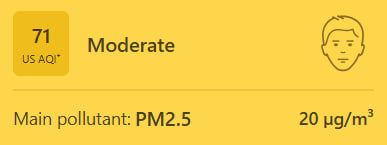
Kyiv's air shows a moderate level of pollution. The average concentration of the main pollutant, fine particulate matter PM2.5, reaches 20 µg/m3. The upper limit of the WHO standard is 5.5 µg/m3.
However, at certain locations in the capital, the air is currently unhealthy for sensitive groups. An "orange" pollution level is recorded on Horlivska Street (37.7 µg/m3), Trostianetska Street (38.5 µg/m3), as well as near the National Academy of Sciences (41.5 µg/m3) and on Akademika Zabolotnoho Street (48.2 µg/m3). Kyiv residents should be especially careful on Sichovykh Striltsiv Street, where the air pollution is unhealthy for all population groups without exception, with a dust concentration of 60.7 µg/m3.
Near the capital, a "red" pollution level is also recorded in Irpin (63.7 µg/m3 of dust) and in Romankiv (104.1 µg/m3).
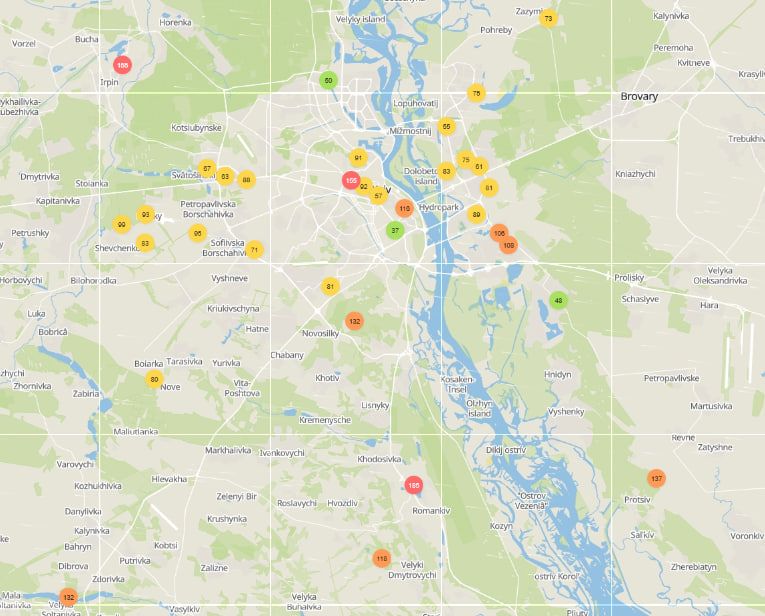
With such significant pollution, it is advisable to limit time outdoors and keep windows closed.
A number of major cities currently have a moderate level of air pollution:
- Chernihiv – 17.3 µg/m3;
- Zaporizhzhia – 16.6 µg/m3;
- Dnipro – 16 µg/m3;
- Mykolaiv – 14.5 µg/m3;
- Lutsk – 14 µg/m3;
- Odesa – 12.7 µg/m3;
- Kharkiv – 11.8 µg/m3;
- Ivano-Frankivsk – 10.8 µg/m3;
- Lviv – 10.2 µg/m3.
In the other regional centers, air quality poses no danger to people. The dust concentration there is as follows:
- Zhytomyr – 8.6 µg/m3;
- Vinnytsia – 8 µg/m3;
- Cherkasy – 7.6 µg/m3;
- Rivne – 6.8 µg/m3;
- Ternopil – 5.1 µg/m3;
- Kherson – 4.1 µg/m3;
- Uzhhorod – 3.7 µg/m3;
- Khmelnytskyi – 3.3 µg/m3;
- Poltava – 2.9 µg/m3;
- Chernivtsi – 2.1 µg/m3.
As a reminder, polluted air can cause the exacerbation of respiratory and cardiovascular diseases, and with prolonged exposure, lead to their onset in a healthy person. More on how the environment affects the body – in this article.