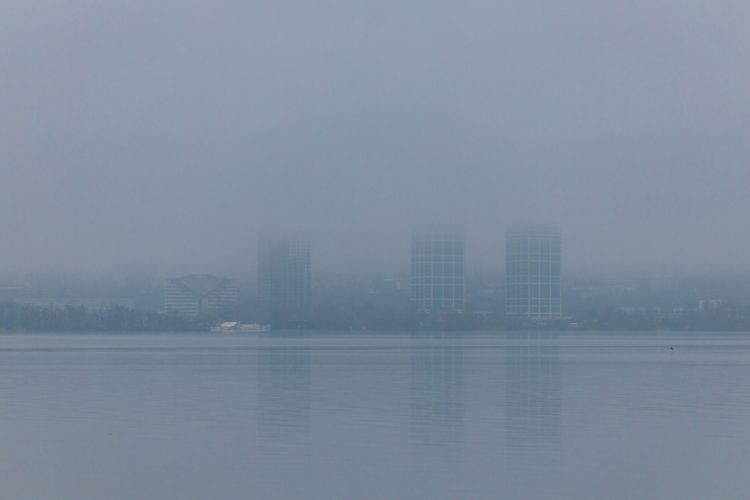
On the morning of 5 October, the air is completely safe in only a few regional centres across Ukraine. In most cities, however, pollution levels are moderate, with localised dangerous exceedances.
This is evidenced by data from the international monitoring platform IQAir.
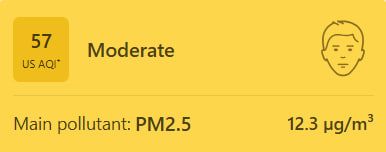
Moderate levels of pollution have been recorded in Kyiv. The most significant pollutant at present is PM2.5 fine particulate matter. Its concentration is more than double the World Health Organisation’s upper limit — 12.3 µg/m3 compared with 5.5 µg/m3.
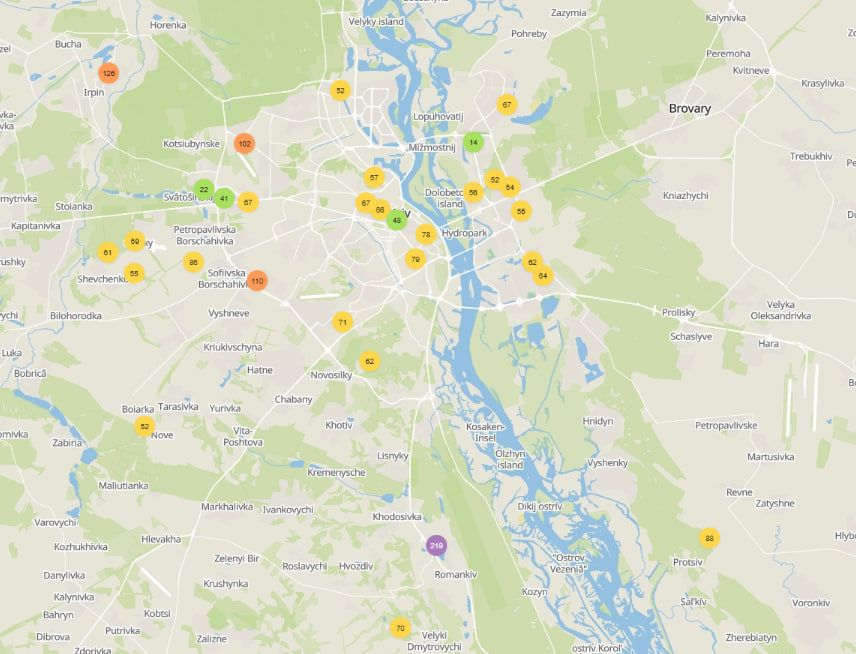
At some locations, dust levels are even higher than the average. On Sichovykh Striltsiv Street and Konovaltsia Street, they stand at 17.9 µg/m3, whilst near the National Academy of Sciences they are 25.7 µg/m3.
In some suburban areas, pollution levels are hazardous to the public. For example, an ‘orange’ hazard level has been recorded in Kotsyubynske and Sofiivska Borshchahivka — under such conditions, people with sensitive respiratory and cardiovascular systems are advised to limit their time outdoors. There, dust concentrations stand at 36 and 36.5 µg/m3 respectively. In Irpin, pollution is also in the orange zone, with a dust concentration of 45.8 µg/m3. In Velyki Dmytrovychi, however, the air is hazardous for everyone, regardless of sensitivity. Pollution levels there are at the red danger level. Dust levels stand at 123.1 µg/m3, and the US AQI index is 198. This is higher than in the world’s most polluted cities — Delhi, Dazhi and Lagor.
Generally speaking, air quality in regional centres is most often at a moderate level of pollution. This is not yet a major concern for spending time outdoors. Here are a few examples of dust concentrations:
- Lutsk — 22.5 µg/m3;
- Rivne — 21.2 µg/m3;
- Vinnytsia — 20.5 µg/m3;
- Odessa — 20.4 µg/m3;
- Lviv — 18.3 µg/m3;
- Chernivtsi — 15 µg/m3;
- Cherkasy — 14.5 µg/m3;
- Chernihiv — 13.7 µg/m3;
- Zhytomyr — 13.3 µg/m3;
- Dnipro — 12.8 µg/m3;
- Khmelnytskyi — 12.8 µg/m3;
- Poltava — 12.1 µg/m3;
- Kharkiv — 11.4 µg/m3;
- Zaporizhzhia — 11.2 µg/m3;
- Ternopil — 9.9 µg/m3;
- Ivano-Frankivsk — 9.8 µg/m3.
Low levels of pollution are rather the exception. They have been recorded in the following cities:
- Kherson — 8.4 µg/m3. In addition, a warning is in place regarding an open source of pollution caused by fires;
- Mykolaiv — 7.9 µg/m3;
- Uzhhorod — 3.7 µg/m3.
It should be noted that enemy shelling has a direct impact on local pollution. Near the site of an attack, the concentration of pollutants can be up to ten times higher than normal.