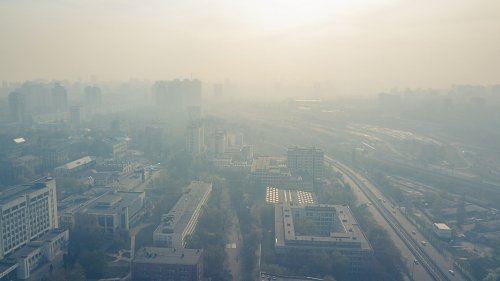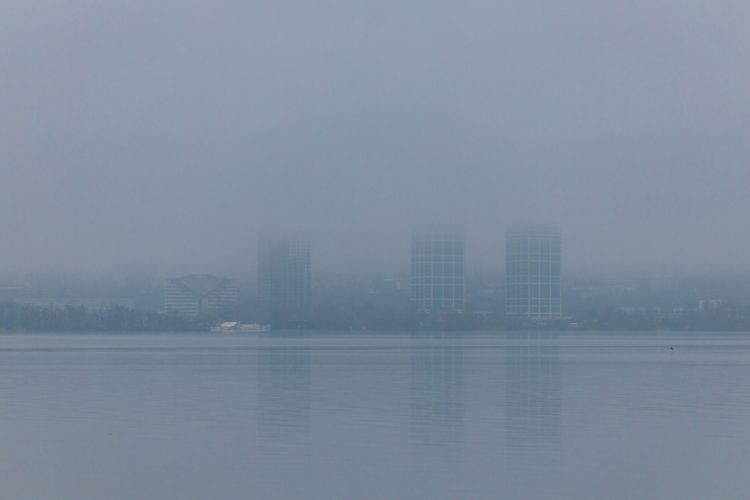
As of the morning of 21 September, air quality is generally good in most regional centres across Ukraine. However, there are exceptions where pollutant levels are more than three times the WHO standard.
This is reported by EcoPolitic based on data from the international monitoring platform IQAir.
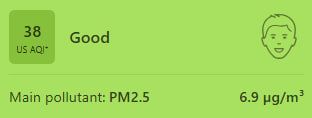
In terms of pollutant concentrations, the air quality in Kyiv this morning is in the ‘green’ zone. The average concentration of PM2.5 particulate matter is 6.9 µg/m3. The upper limit for this indicator, as set by the World Health Organisation, is 5.5 µg/m3.
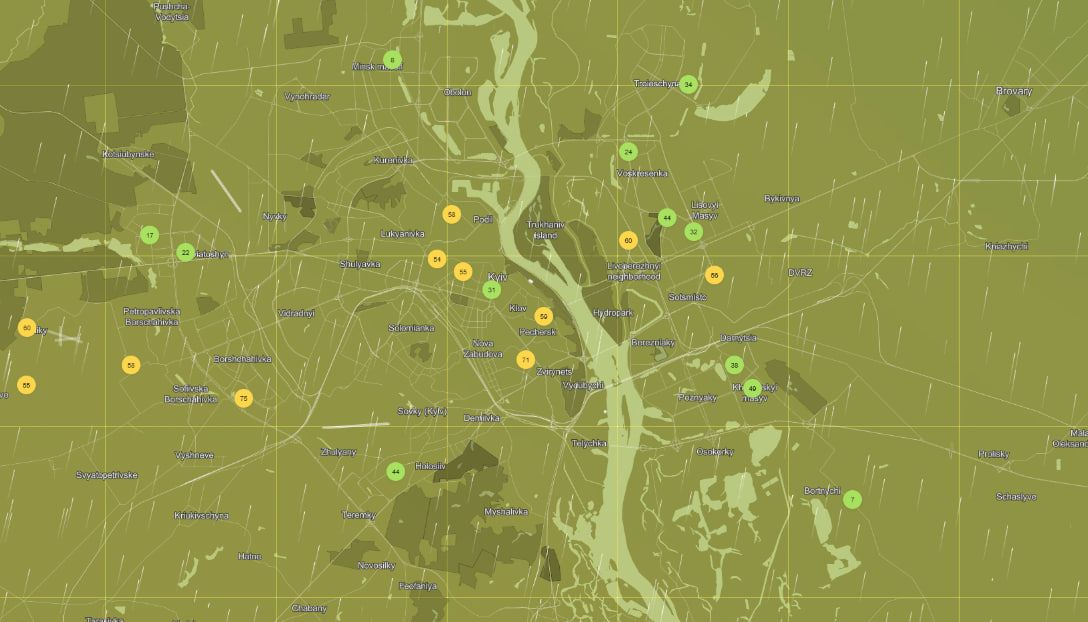
On average, air quality is good, according to data from all monitoring stations. However, at some specific locations, dust levels are still recorded as exceeding the limit, so the pollution level there is classified as moderate. For example, the dust concentration on Konovaltsia Street is 19.8 µg/m3, on Kakhovska Street — 15 µg/m3, and on Hotkevych Street — 12 µg/m3.
In a number of regional centres, air pollution levels are also moderate. There, too, PM2.5 was found to be the main pollutant:
- Dnipro — 18.5 µg/m3;
- Cherkasy — 15.2 µg/m3;
- Odessa — 13.7 µg/m3. At a specific location on Pishonivska Street, IQAir classifies the air as very unhealthy. The main pollutant here is PM10 particulate matter;
- Poltava — 14.4 µg/m3;
- Mykolaiv — 11.7 µg/m3;
- Kharkiv — 11.4 µg/m3;
- Zaporizhzhia — 10.1 µg/m3.
In the ‘green’ zone, air quality in the following cities is as follows:
- Lviv — 4.4 µg/m3;
- Chernihiv — 6.3 µg/m3;
- Zhytomyr — 5.8 µg/m3;
- Chernivtsi — 5.9 µg/m3;
- Vinnytsia — 9 µg/m3;
- Lutsk — 3.7 µg/m3;
- Ternopil — 3.6 µg/m3;
- Khmelnytskyi — 3 µg/m3;
- Uzhhorod — 1.8 µg/m3;
- Ivano-Frankivsk — 1 µg/m3;
- Rivne — 1 µg/m3.
Localised spikes in pollutant levels may be linked to the aftermath of Russian attacks. Ukrainian scientists have previously found that missile or drone strikes can increase pollutant concentrations by up to tenfold.