As of the morning of 18 September, air pollution levels in none of Ukraine’s regional centres have exceeded critical limits. In a number of regional centres, air quality is slightly above normal and corresponds to the average level of pollution.
EcoPolitic reports on this, based on data from the international monitoring platform IQAir.
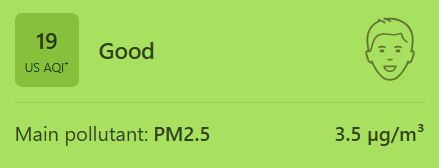
In Kyiv this morning, air pollution levels are generally low, ensuring good air quality. The concentration of PM2.5 fine particulate matter is 3.5 µg/m3. As a reminder, the upper limit set by the World Health Organisation is 5.5 µg/m3.
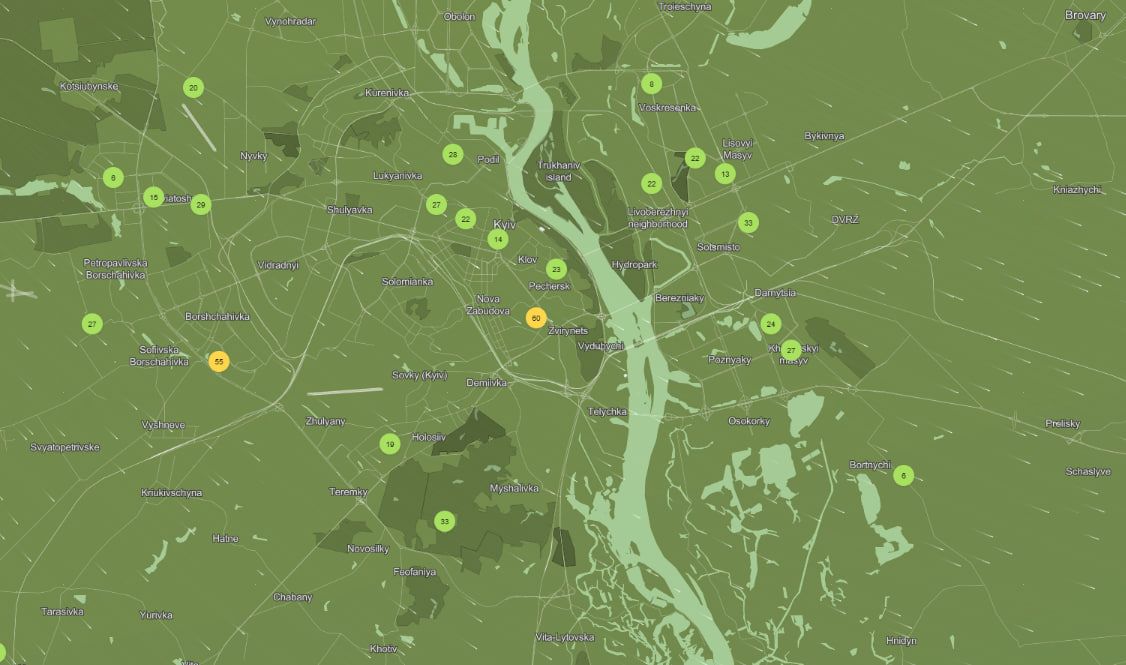
The equipment at all monitoring stations has not recorded any critical exceedances of pollution levels. As of this morning, the ‘yellow’ alert level was in effect only on Yevhen Konovalets Street. There, the dust concentration stands at 14.1 µg/m3. Similarly, in the capital’s suburbs, in Sofiivska Borshchahivka, an average pollution level was recorded, with a dust concentration of 11.4 µg/m3.
A similar average level of pollution is observed in the following regional centres:
- Dnipro – 19 µg/m3;
- Zaporizhzhia – 13.7 µg/m3;
- Kharkiv – 11.5 µg/m3;
- Poltava – 10.4 µg/m3;
- Mykolaiv – 10.5 µg/m3.
However, in most large cities, the air is clean enough to fall within the ‘green’ range:
- Odessa – 3.5 µg/m3;
- Lviv – 3 µg/m3;
- Uzhhorod – 3 µg/m3;
- Chernivtsi – 3.2 µg/m3;
- Zhytomyr – 2.7 µg/m3;
- Vinnytsia – 3.3 µg/m3;
- Ternopil – 4.2 µg/m3;
- Chernihiv – 4.8 µg/m3;
- Ivano-Frankivsk – 5.1 µg/m3;
- Exactly – 6.9 µg/m3;
- Cherkasy – 8.4 µg/m3;
- Lutsk – 2.5 µg/m3;
- Khmelnytskyi – 5.2 µg/m3.
It is worth noting that local air pollution levels may be affected by Russian attacks. As Ukrainian researchers have demonstrated, concentrations near the epicentres of strikes can exceed the norm by up to ten times.