As of the morning of 16 September, no critical exceedances of pollution levels have been observed in Ukraine’s major cities. However, in some regional centres, the concentration of fine particulate matter is almost three times the standard limit.
This is evidenced by data from the international monitoring platform IQAir.
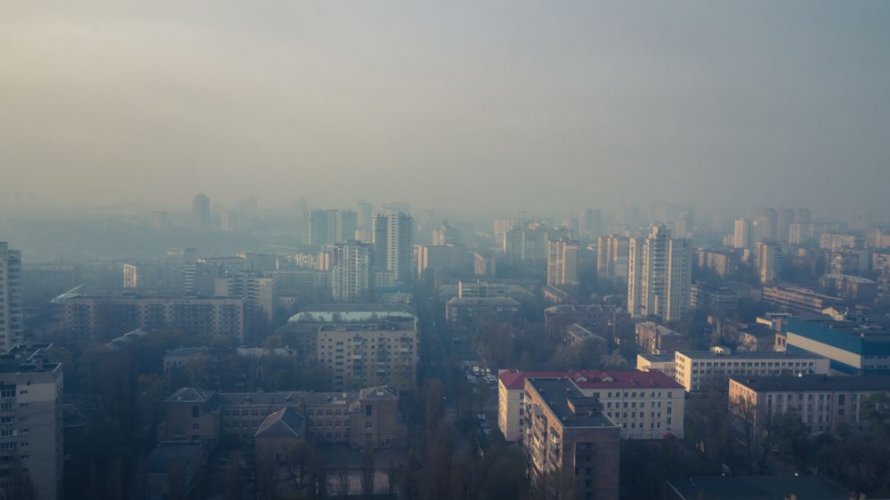
As of 09:00, air pollution levels in the capital are assessed as moderate. The concentration of PM2.5 fine particulate matter is more than twice the upper limit set by the World Health Organisation — 12.3 µg/m3 compared with 5.5 µg/m3.
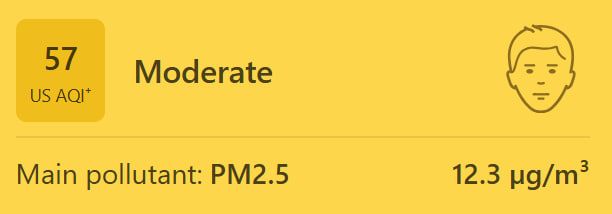
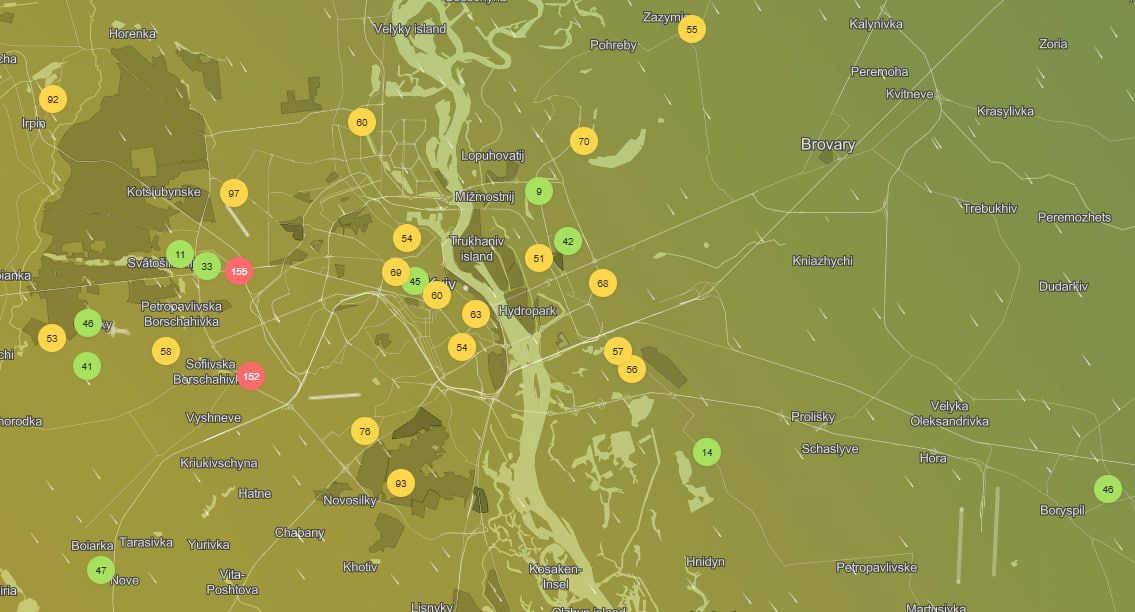
Only a few monitoring stations are recording good air quality. The rest, however, show that the air is in the ‘yellow’ zone. For example, near Kyiv City Council, the dust concentration is 12.4 µg/m3, on Hotkevych Street it is 18 µg/m3, and on Kyrylivska Street it is 10.6 µg/m3.
In some areas of the capital’s western suburbs, pollution levels are quite high. Breathing the air outdoors there is dangerous for people with sensitive respiratory or cardiovascular systems. For example, in Sofiivska Borshchahivka, the dust concentration is 50.3 µg/m3, and in Kotsyubynske — 41.2 µg/m3.
In other regional centres across Ukraine, air quality is in the ‘green’ or ‘yellow’ pollution categories. This does not entail any restrictions on spending time outdoors.
Yes, the air quality is good in the following cities:
- Lviv — 6.7 µg/m3;
- Dnipro — 8 µg/m3;
- Poltava — 7.9 µg/m3;
- Vinnytsia — 7.9 µg/m3;
- Rivne — 7.8 µg/m3;
- Cherkasy — 6.7 µg/m3;
- Mykolaiv — 5.6 µg/m3;
- Chernivtsi — 7.1 µg/m3;
- Chernihiv — 6.1 µg/m3.
An average level of pollution has been recorded here:
- Odessa — 10.8 µg/m3;
- Kharkiv — 10.6 µg/m3;
- Zaporizhzhia — 10.1 µg/m3;
- Ternopil — 16 µg/m3;
- Zhytomyr — 11.2 µg/m3;
- Lutsk — 14.8 µg/m3;
- Ivano-Frankivsk — 10.1 µg/m3;
- Khmelnytskyi — 9.1 µg/m3.
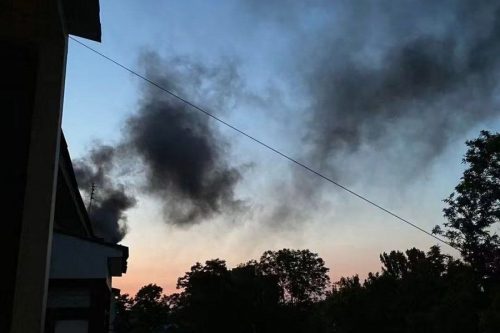
It should be noted that enemy attacks may temporarily increase pollution levels at the point of impact. According to research by Ukrainian scientists, levels may be up to 10 times higher than normal.