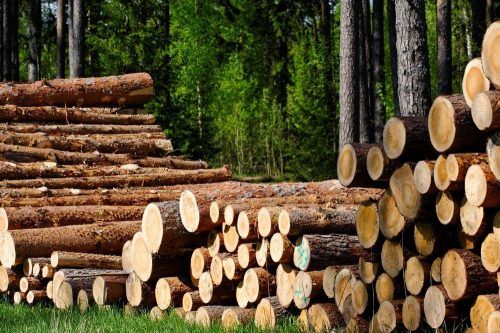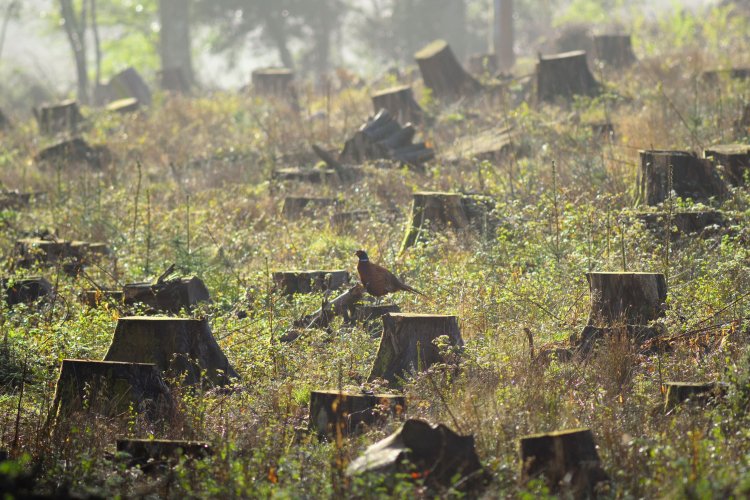
In the Kherson region, over 2,000 trees were destroyed in the Velykooleksandrivka Forestry. The alleged reason for the illegal logging was enemy shelling, and an additional scheme involving the fragmentation of plots allowed the parties to avoid the environmental impact assessment (EIA) procedure.
According to the State Bureau of Investigations, the suspects in the case have already been notified of the charges and could face up to ten years in prison.
According to the investigation, the crime was organized by the head of one of the region’s forestry and hunting enterprises, which is part of the state-owned enterprise “Forests of Ukraine.” The accomplices were a forest ranger and an employee of the interregional forestry and hunting administration.
Avoiding environmental "formalities"
The illegal logging was officially classified as forest sanitation. The criminals’ argument was that the forests had allegedly been damaged by fires. These were fires that occurred following enemy shelling.
The suspects managed to avoid inspections of the forest’s actual condition. To do this, they prudently divided the logging area into plots of up to 1 hectare. This allowed them to bypass the environmental impact assessment procedure.
Thus, more than 2,000 trees were illegally cut down in Velykooleksandrivske forestry. The crime caused the state losses amounting to 7.9 million UAH.
The head of the enterprise and the forester were charged with abuse of office and illegal logging by prior conspiracy with serious consequences. The employee of the Interregional Administration is accused of aiding in abuse of office and illegal logging.

Source: State Bureau of Investigation
EcoPolitic recently reported on another case of manipulation involving sanitary logging. Under this pretext, forests worth almost 9.5 million UAH were cut down in Chernihiv region, as reported.
Forestry sector experts have repeatedly emphasized that the procedure for sanitary logging often becomes a tool for the illegal destruction of forests.
For example, in Zakarpattia, activists inspected sites designated for logging. They found that all of these areas showed signs of abuse, as the actual condition of the trees did not correspond to what was stated on paper.
At the same time, the environmental community discovered that the government was preparing to cancel the EIA procedure for clear sanitary logging, concealing this from the public.